 This material was produced as part of the project “Promoting Democratic Integrity and Governance in Ukraine”, implemented by the Civil Network OPORA with the support of the EU. Its content is the sole responsibility of the Civil Network OPORA and does not necessarily reflect the position of the European Union.
Introduction
The right to stand for election is part of the guarantees provided for in Article 3 of the First Protocol to the European Convention on Human Rights. The European Court of Human Rights has repeatedly emphasised that states have a wide margin of appreciation in establishing electoral rules, but such restrictions must not render the right illusory. Any requirements for candidates must have a legitimate aim and be proportionate.
One such requirement in national legislation is the residence requirement — the requirement that a person must have resided in the country for a specified period prior to election day (voting day). In Ukraine, this requirement is enshrined at the constitutional level for national elections. Candidates for the position of Member of Parliament are required to have resided in Ukraine for the past five years, whilst candidates for the presidency must have resided in Ukraine for the past ten years. The residence requirement does not apply in local elections.
The Electoral Code stipulates that a person is considered to be resident in Ukraine if their single trip abroad for private reasons did not exceed 90 days, and the total duration of their stay outside Ukraine in each annual period during the relevant five- or ten-year period did not exceed 183 days. At the same time, current electoral legislation provides for certain exceptions, in particular for stays abroad on official business, for study or for medical treatment. In other words, Ukrainian legislation combines a formal requirement for long-term residence with certain exceptions designed primarily for peacetime conditions. However, forced displacement as a result of armed aggression is not included among the legislative exceptions.
The issue of the proportionality of the length of the residency requirement has repeatedly been the subject of international assessments. The OSCE/ODIHR Final Reports on the 2019 presidential and parliamentary elections noted that the five-year and ten-year residency requirements are unduly restrictive and do not fully comply with international obligations of Ukraine and good electoral practice. OSCE/ODIHR experts also refer to paragraph 15 of General Comment No. 25 of the UN Human Rights Committee on Article 25 of the International Covenant on Civil and Political Rights, according to which the right to be elected should not be restricted by unreasonable or discriminatory requirements, in particular those relating to place of residence.
Furthermore, the Venice Commission’s Code of Good Practice in Electoral Matters states that a residence requirement may only be imposed for participation in local or regional elections, and that the required period of residence should not exceed six months. Thus, the Ukrainian model, with five- and ten-year periods of residence for national elections, appears to be one of the longest in European practice.
In this context, the case law of the European Court of Human Rights regarding the application of residence requirements takes on particular significance. It confirms that even a formally legitimate provision cannot be applied automatically, without an assessment of the specific circumstances and the principle of proportionality. Thus, in the case of “Melnychenko v. Ukraine”, the ECHR recognised that the residence requirement is permissible as such, but emphasised the need to take the candidate’s specific situation into account. The Court also noted that Ukrainian legislation does not clearly distinguish between “permanent” and “legal” residence, nor can it be applied formally without an assessment of the circumstances. The decisive argument was the applicant’s justified fears for his own safety, which were confirmed by his refugee status in the US (for more details, see OPORA’s report “ECHR Standards on the Right to Stand for Election: Vetting of Candidates and Residence Requirement”).
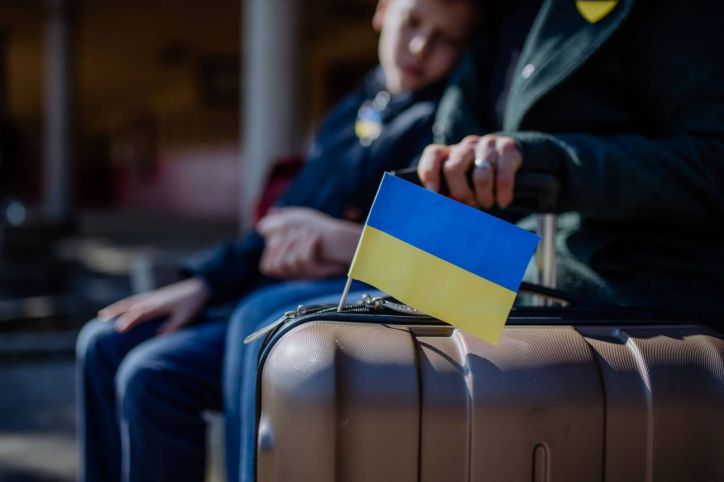
Thus, the Court’s approach confirms that: even if the residence requirement is legitimate, its application must not disregard the forced nature of a person’s stay abroad. In wartime, this takes on particular significance. Russia’s full-scale aggression has triggered an unprecedented wave of forced migration. According to various estimates, between 5 and almost 9 million Ukrainian citizens have left the country since 24 February 2022. The majority of them are women and children who have been granted temporary protection in EU countries.
Consequently, the issue of the residency requirement for the first post-war elections is not merely a technical detail of electoral legislation, but also a test of whether Ukrainian democracy complies with human rights standards and the principle of non-discrimination.
The findings of the parliamentary working group on the residency requirement: approaches and possible consequences
At the end of December 2025, a working group was established in parliament to prepare legislative proposals regarding elections during exceptional or post-war periods. Within this group, seven thematic sub-groups were formed, one of which is working on election administration issues, including the residency requirement for candidates in national elections. The sub-group members have developed several approaches to addressing this issue.
The first approach is reflected in the draft proposed by the Central Election Commission of Ukraine in Resolution No. 1 of 07 January 2026 “On proposals for the legislative regulation of the specific features of organising and conducting national elections following the termination or lifting of martial law in Ukraine”. It provides that the presence of a person, for any reason and on legal grounds, outside Ukraine during the period of martial law shall not be considered a violation of the residency requirement. In the absence of a consensus on other approaches, this particular option was adopted as a working model for further development. At the same time, discussions at the level of the parliamentary subcommittee, which took place back in 2024, showed that this structure currently lacks support in the Verkhovna Rada (for more details, see OPORA’s article “Parliamentary subcommittee rejected both draft laws on combating sexism in electoral processes”).
The second approach involves rejecting any special exceptions. Its proponents proceed from the assumption that the law cannot alter or expand the scope of the constitutional requirement of residence in Ukraine. By this logic, even a forced stay abroad during wartime cannot be regarded as an exception to the residency requirement. This approach emphasises the formal certainty of the constitutional provision, but at the same time has significant implications for the exercise of the right to stand for election.
The third position is a compromise model proposed by the Civil Network OPORA. It is based on the need to take into account the forced nature of citizens’ stay abroad due to the Russian Federation’s armed aggression. This concerns millions of people, predominantly women with children, who legally left the country after 24 February 2022. OPORA proposes to “exclude” from the residency requirement only stays abroad that are necessitated by the war and undertaken in compliance with the law (in particular regarding mobilisation, military registration and rules for crossing the state border), with the introduction of a mandatory declaration by the candidate and verification of the relevant circumstances by state authorities. This model seeks to reconcile constitutional requirements with the principle of proportionality and the realities of wartime. Further details of the proposals are set out in the OPORA article “What to do about the right to stand for election for Ukrainians abroad?”.
It should be noted: the chosen regulatory model will have long-term consequences for the exercise of the right to stand for election. If no special exception is established for persons who were forced to remain abroad during martial law, the residence requirement will be applied in the general manner.
This means that a person who has been abroad, for example, since the end of February 2022 and returned to Ukraine, for example, in the second half of 2026, will have to live continuously in Ukraine for the period established by the Constitution. For standing in parliamentary elections, this period is five years, which effectively postpones the possibility of standing for election until at least 2032. For standing in presidential elections, the period is ten years, which means the potential to stand for election no earlier than 2037.
Another example is also illustrative. A significant number of Ukrainian citizens spent a relatively short period abroad — from February-March to October-November 2022, that is, during the period of greatest threat and the siege of Kyiv. These people returned to Ukraine immediately after the security situation had stabilised to some extent and part of the country’s territory had been liberated. However, even in such a case, the formal application of the residency requirement would mean an interruption of the period of residence. In other words, a person who spent just over 183 days abroad in 2022 would only be eligible to stand for parliament in 2028, and for the presidency in 2033.
As we can see, the current framework does not distinguish between the duration and nature of stays abroad: a short-term, forced departure during a period of active hostilities is legally equated with many years of residence outside Ukraine. This indicates a potential disproportion in the restriction, particularly given that a significant proportion of those who were abroad continued to maintain close ties with the state and returned once security risks had decreased.
The absence of specific regulations could lead to a long-term restriction on the right to stand for election for a significant proportion of citizens, even if they return immediately after the lifting of martial law. Given the scale of forced migration, this is not a matter of isolated cases, but of a potentially systemic impact on the structure of political competition and representation in the post-war years.
The voice of Ukrainians abroad: results of OPORA’s facilitated dialogues
Another important element of the discussion was the outcome of the structured dialogues that the Civil Network OPORA held with Ukrainian communities in Lithuania, the United Kingdom, Germany, Poland and Italy.
These consultations demonstrated that internally displaced Ukrainians do not see themselves merely as recipients of temporary protection. They increasingly see themselves as active participants in the reconstruction, democratic development and European integration of Ukraine.
Participants in the dialogues view the tools of digital democracy in Ukraine — e-petitions, open appeals and other mechanisms for remote participation — positively. Many note their accessibility and effectiveness compared to public participation mechanisms in their host countries. At the same time, Ukrainians abroad are calling for more institutionalised forms of interaction — advisory mechanisms, parliamentary consultations, and thematic expert platforms. There is a clear demand for systematic channels of communication between the state and citizens living abroad.
Respondents also emphasise their willingness to share professional expertise gained in EU countries, particularly in the areas of public administration, governance reforms, and the harmonisation of legislation with EU law. The diaspora should be viewed not only as an electorate but also as a strategic resource for the reconstruction and integration of Ukraine into the European Union.
Despite the high level of civic engagement among Ukrainians abroad, current legislation creates barriers to their full political participation. The requirement for a five-year residence period for parliamentary candidates and a ten-year period for presidential candidates — without taking into account forced displacement — could result in millions of citizens being deprived of their right to stand for election in the first post-war elections. This will disproportionately affect women, who make up the majority of those under temporary protection abroad.
Conclusions
The issue of the residency requirement for post-war elections is complex and sensitive. It lies at the intersection of constitutional norms, international standards, political expediency and public expectations. This is not merely a technical amendment to the electoral law, but a question of determining what form Ukrainian democracy will take after the war — inclusive or restrictive.
Any decision must be the result of a broad expert, parliamentary and public debate. It must take into account the standards of the European Court of Human Rights, the scale of forced migration and the principle of equality of citizens before the law.
Depriving millions of people of their right to stand for election for years could have long-term consequences for the political system and trust in the state. At the same time, completely ignoring the legitimate purpose of the residency requirement also creates the risk of forming representative bodies from people whose connection to Ukraine has been minimised or lost.
However, Ukrainians abroad have demonstrated their engagement, professional competence and willingness to be part of the country’s political life. The legislator’s task is to find a solution that will not sever this connection, but rather strengthen it. That is precisely why work on the legislation for the first post-war elections must take place within the framework of an open and inclusive dialogue — involving constitutional experts, international experts, representatives of parliament, the Central Election Commission and civil society. Only a balanced decision, adopted on the basis of dialogue, will allow protecting the constitutional order whilst respecting every citizen’s fundamental right to be elected.
Related OPORA materials:
- Conclusion on the compliance of procedures establishing different rules for exercising electoral rights for certain categories of voters with the principle of equal suffrage
- ECHR standards on the right to stand for election: vetting of candidates and residence requirement
- What should be done about the right to stand for election for Ukrainians abroad?
- Parliamentary subcommittee rejected both draft laws on combating sexism in electoral processes