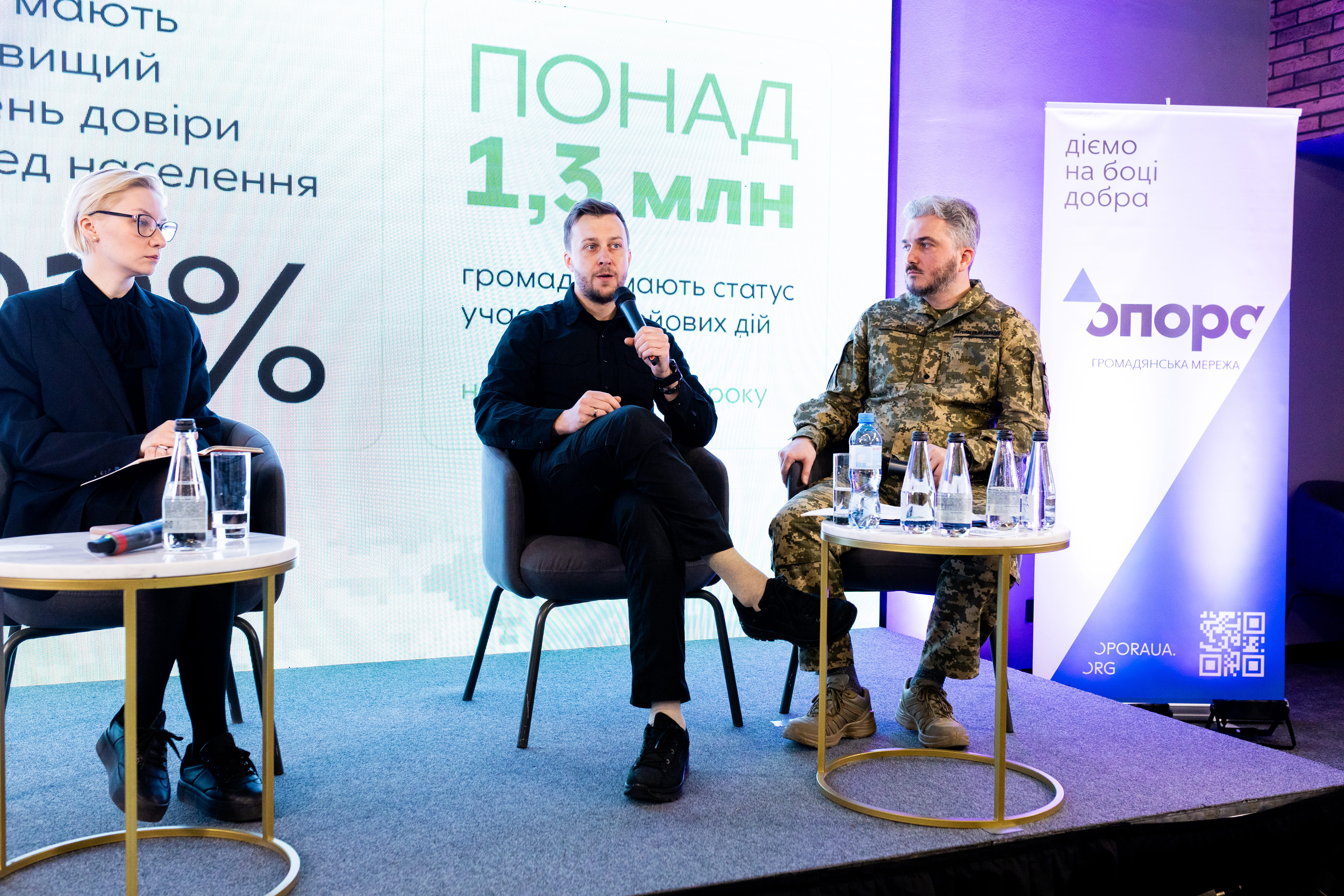
How to ensure that servicemen and servicewomen can fully exercise their right to vote and be elected, as well as how to protect the electoral process from Russian interference—these were the topics discussed during a public debate at the forum “Challenges of Electoral Democracy Caused by the Great War,” held by the Civil Network OPORA on March 23 in Kyiv.
Vitalii Plukar, Deputy Chairman of the Central Election Commission, noted that future elections will be distinguished by the sheer scale of destruction and the significant number of citizens currently engaged in military duty.
"This all means that we must focus on ensuring that the rights of military personnel—both active and passive—are guaranteed at the appropriate level. Due to the conditions of uncertainty, the process is complicated, but the work is ongoing. These issues are being discussed, and the positive message from all participants who are constructively seeking the most optimal solutions to these problems is a good indicator of cooperation among all stakeholders. While the military is defending the state at the front, we are obligated to defend their rights here and now,” he emphasized.
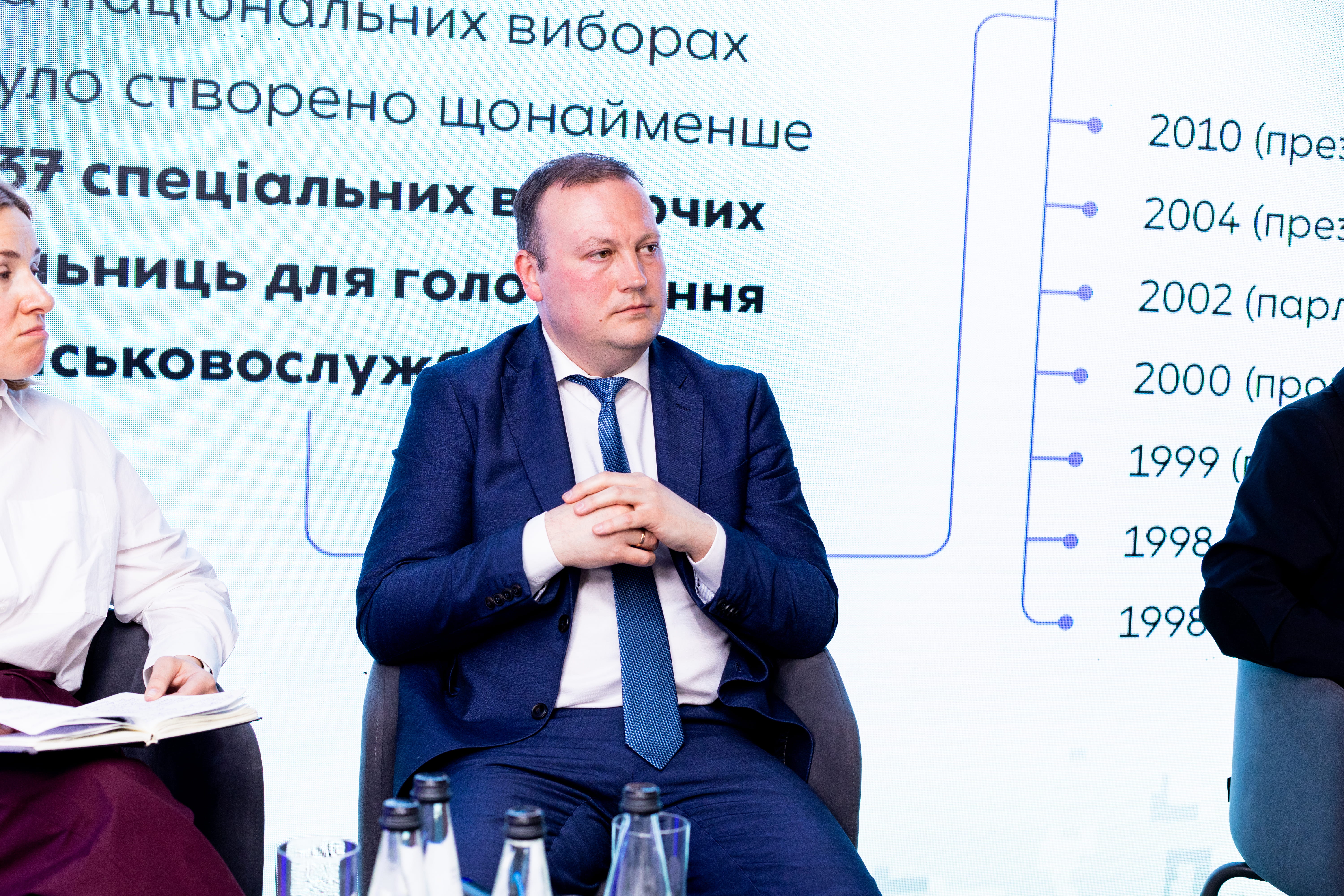
According to him, one of the most debated issues remains the creation of special polling stations for the military. “To avoid potential abuses, OPORA proposed the implementation of additional criteria for establishing such stations. Transparency and openness in the electoral process lead to trust in its results,” Plukar noted.
Roman Lozynskyi, MP from the “Holos” faction and head of the parliamentary working subgroup on the electoral rights of military personnel, emphasized the critical importance of Parliament having its say in this discussion.“If Parliament rejects special polling stations and fails to seek tools to minimize risks and make the process transparent, it will look like this: ‘You are fulfilling your mission, so you won't be able to vote, but thank you for your service.’ That is why this part is one of the most vital,” he said.
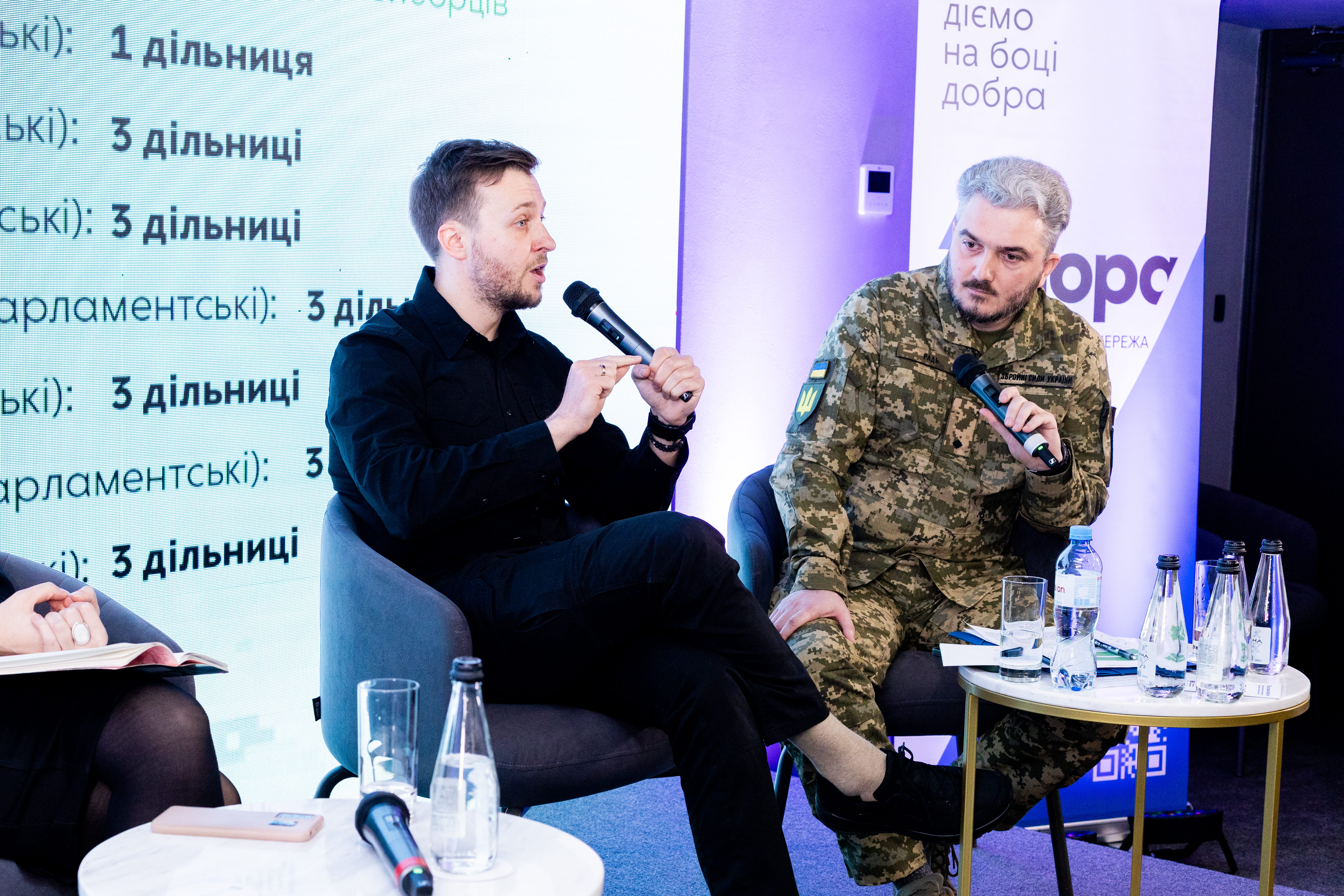
The first post-war elections must be adapted to the conditions of a "wartime democracy," said Taras Rad, a serviceman of the Armed Forces of Ukraine and former OPORA analyst, who moderated the discussion.“The old, pre-war democracy, let’s call it ‘vegetarian’, is often unable to react effectively, swiftly, and preemptively to the challenges of war and security threats,” Rad noted.
Mariia Kucherenko, Senior Analyst at the Come Back Alive Initiatives Center, drew attention to another key challenge: the very understanding of what “post-war” actually means.
“What does 'post-war' mean in our understanding? If we are talking about elections under a mere ceasefire, then full security is out of the question. A ceasefire does not equal a settlement,” she emphasized.
According to her, it is necessary to analyze Russian influence on political processes along with security concerns: “The influence of the Russian Federation currently broadcast across the political landscape is not only a problem for our state. We see what is happening in Europe now; we see the influence of Russian political consultants. Yes, it is a derogatory term in some circles, but in the Russian case, we are talking specifically about political strategists who can alter the entire geopolitical landscape of whole continents. To influence a geopolitical situation, Russia doesn't always need a battalion of militants: one political strategist is enough. Therefore, the component of analyzing their information influence must be present and updated to meet today's requirements,” Kucherenko noted, adding that the civil society analytical community must play a vital role in this.
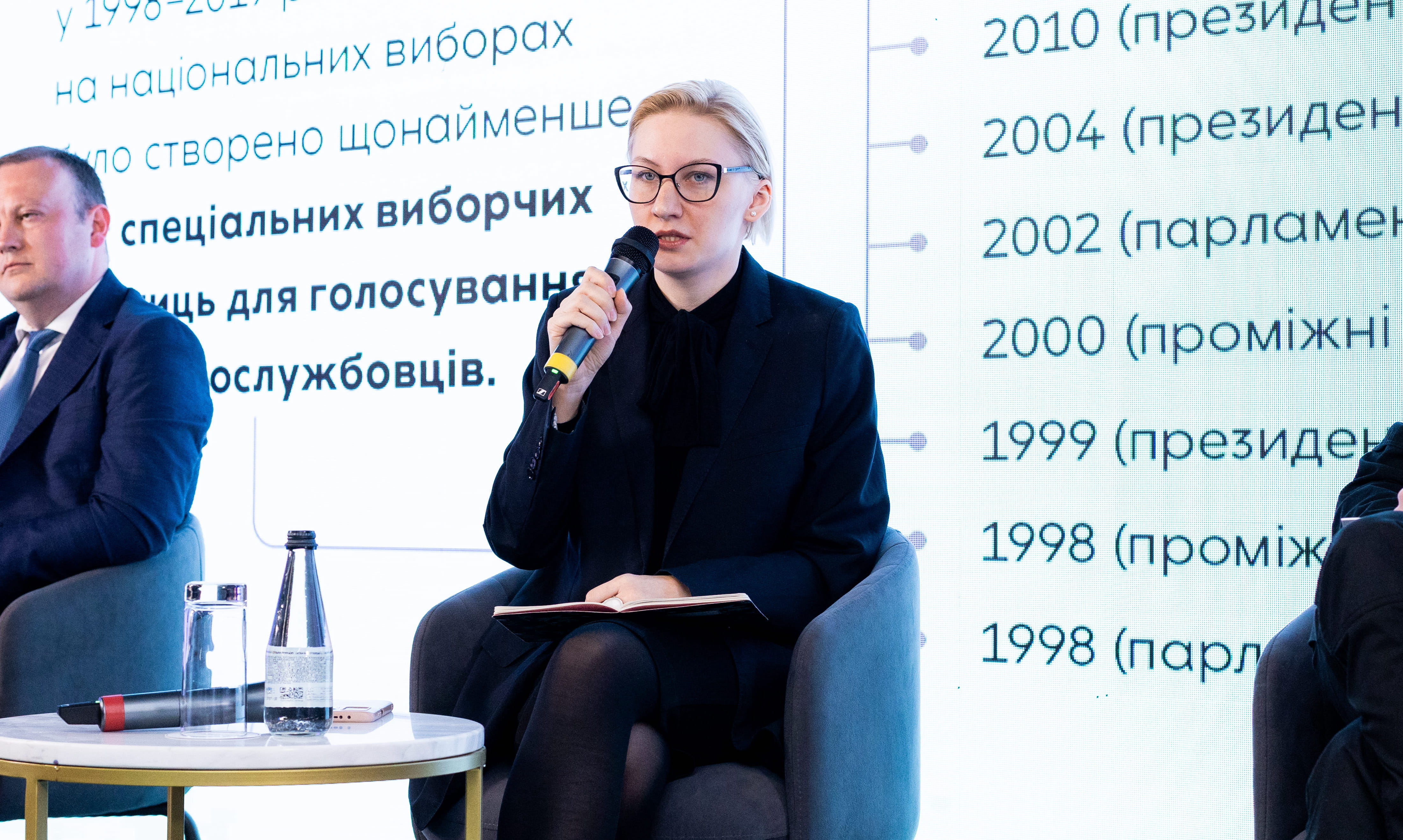
Olga Kotsiuruba, Senior Legal Advisor at the Civil Network OPORA, provided examples of foreign interference. She noted that Russian interference in Moldova's elections has already been documented in OSCE reports, and its tools are rapidly evolving, ranging from banking schemes to cryptocurrencies. She also cited the example of Hungary, where, according to a Washington Post investigation, Russian entities planned an information operation to influence the electoral discourse.
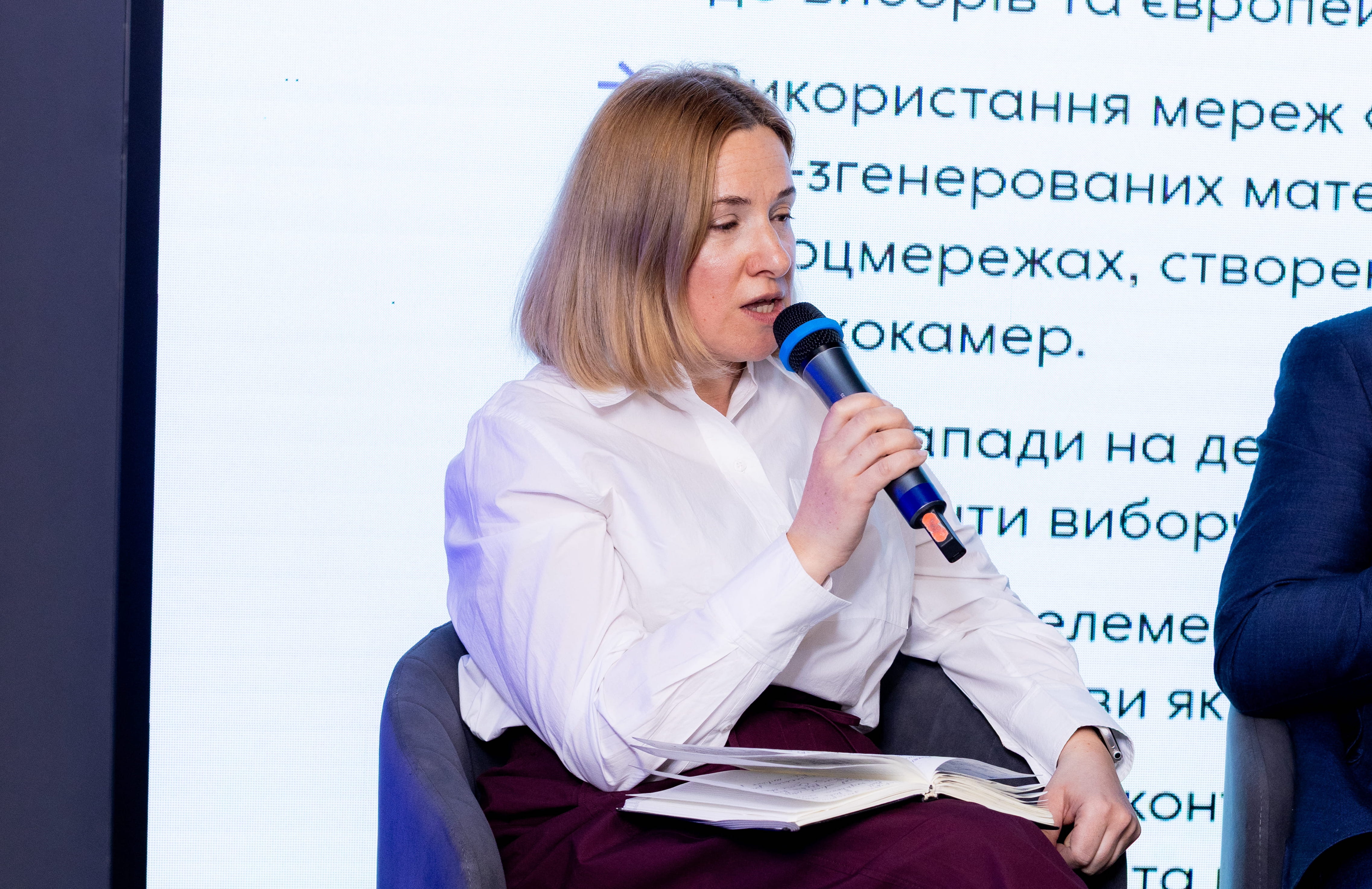
“Yes, the European Union is developing countermeasures against Russian interference, but these processes are moving very slowly. In 2022, a Special Committee on Foreign Interference in all Democratic Processes in the EU, including Disinformation, was established. A month ago, the European Centre for Democratic Resilience became operational. All of this looks very good on paper. However, the EU still has time, while we no longer do. Therefore, we will have to invent our own mechanism to counter Russian interference,” Kotsiuruba emphasized.
Regarding security challenges during the first post-war elections, Vitalii Plukar also cautioned that, regardless of the conditions created, our neighbor. the Russian Federation, is not going anywhere, and the threat from Russia will remain.
“Instead of tanks, there will be manipulative campaigns and the financing of political actors. Instead of missiles—information leaks, disinformation, and attempts to destabilize society and undermine the legitimacy of the electoral process. We must be ready to respond to these challenges. When all agencies are involved, from the Central Election Commission and the National Council on Television and Radio Broadcasting to the National Agency for Corruption Prevention, the Security Service of Ukraine, the State Financial Monitoring Service, and others, and when the system begins to operate through inter-agency coordination, only then will we overcome these risks, and democracy will truly be ready to defend itself,' he noted.
That is why, Mariia Kucherenko added, identifying the financing of such influences is a critical countermeasure: “In any information projects that raise suspicion within society or law enforcement agencies, the vertical of funding from the Russian Federation must be clearly proven. If we prove a vertical of funding for these projects by the enemy, the question of whether or not we can intervene in the operation of that media resource automatically disappears. This, by the way, will serve as an excellent safeguard against questions from our partners about whether we are violating freedom of speech or other rights. A combination of activities by the state and civil society will be very appropriate here.”
This event has been funded by UK International Development from the UK government; however, the views expressed do not necessarily reflect the UK government’s official policies.