 This material was produced as part of the project “Promoting Democratic Integrity and Governance in Ukraine”, implemented by the Civil Network OPORA with the support of the EU. Its content is the sole responsibility of the Civil Network OPORA and does not necessarily reflect the position of the European Union.
The Civil Network OPORA has long been actively involved in developing approaches to ensuring the electoral rights of military personnel. In particular, the organisation has contributed to the work of expert and inter-agency working groups, including those established under the Central Election Commission (hereinafter the CEC), and in 2025 conducted research through in-depth interviews with experts, representatives of state authorities and military personnel to investigate potential problems with the exercise of the active and passive voting rights of military personnel. OPORA also developed a Roadmap for ensuring the organisation of post-war elections in Ukraine, and in 2024 the International Foundation for Electoral Systems, the Civic Network OPORA and the Centre for Political and Legal Reforms prepared a White Paper on the preparation and conduct of post-war elections.
In-depth expert interviews confirm that, when planning the post-war electoral process, the key issue remains that of ensuring that voting procedures are genuinely accessible to military personnel, given the absence of widespread demobilisation and the varying nature of their duties (in particular, extended duties and duty rosters). The interviews also revealed that practical models for ensuring voting depend significantly on the actual deployment of units: a significant proportion of combat units do not have permanent bases, may be temporarily stationed in civilian facilities, and may be dispersed for security reasons, which makes it difficult to link military personnel to the “traditional” network of ordinary or special polling stations. Furthermore, the interviews revealed that without proper regulatory definition (regulation) of procedures and the responsibilities of officials, the risk of a formalistic approach (“the law exists, but the mechanism does not”) increases, as in practice a significant proportion of decisions regarding the military’s participation in electoral procedures are implemented only upon the receipt of directives (telegrams, orders) from higher command.
With a view to legislatively regulating the specifics of organising and conducting nationwide elections following the termination or cancellation of martial law in Ukraine, the Central Election Commission has developed proposals, approved by Resolution No. 1 of 07 January 2026 (hereinafter — the Draft Law), which may serve as a basis for discussions within parliamentary sub-groups.
Based on its existing experience and expertise, OPORA supports the legislative regulation of the specific arrangements for the exercise of voting rights by military personnel; at the same time, it considers it necessary to draw attention to a number of provisions in the Draft Law that require further clarification or refinement in light of constitutional principles and electoral law standards.
Analysis of provisions of the Draft Law requiring improvement or discussion
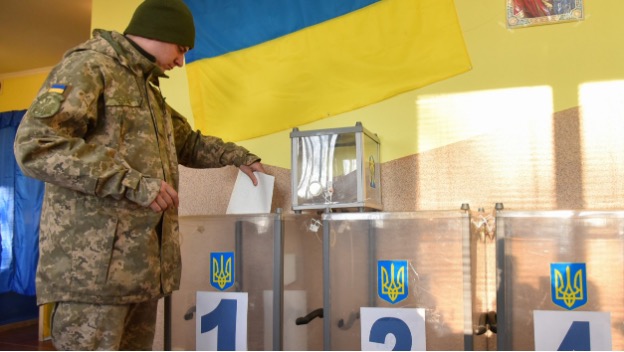
The Draft Law contains a number of provisions designed to ensure the proper exercise of the right to vote by military personnel. In particular, according to Article 14 of the Draft Law, military personnel may vote:
- at a regular or additional polling station located outside the military unit (formation);
- in exceptional cases — at a special temporary polling station established by the Central Election Commission on the premises of the military unit (formation) 10 days before polling day, upon the submission of a request by the Ministry of Defence (the request must be submitted no later than 13 days before polling day);
- if it is impossible to vote at special temporary polling stations established in exceptional cases due to military personnel carrying out their duties — at their actual place of residence.
During the in-depth interviews conducted by OPORA, respondents emphasised the advisability of locating temporary special polling stations (should they be established) outside restricted areas, but in civilian facilities near the temporary locations of military units — given that combat units may be located far from existing polling stations or may not have a permanent base. Separately, those surveyed pointed to the possibility of organisationally “spreading out” the flows of military personnel by increasing the number of polling stations/election commission members and (subject to a political decision by the legislative authority) considering the issue of extending the voting period as a compensatory mechanism in the event of restrictions on rotations and to prevent the simultaneous departure of a significant portion of military personnel. However, as noted in the Roadmap for the Organisation of Post-War Elections in Ukraine, voting over several days may require an interpretation by the Constitutional Court of Ukraine as to whether the concepts of “election day” and “voting day” are identical within the meaning of the Constitution.
It follows from the Draft Law that military personnel do not have the right to choose their polling station independently, but are included in the electoral rolls at polling stations upon the recommendation of the commanders of the relevant units. When military personnel are included on the electoral roll at a polling station, the relevant Precinct Election Commission (PEC) is obliged to notify the body responsible for maintaining the State Register of Voters at the polling station’s location. Regardless of the specific polling station at which a service member votes, the draft law provides for all service members to be granted at least four hours’ leave on polling day or the opportunity to vote during their off-duty hours (if the service member is on duty or duty roster).
However, interviews have revealed that in units with 12-hour and 24-hour duty shifts, even the provision of a formal “four-hour leave” does not guarantee the ability to exercise the right to vote, which necessitates additional alternative mechanisms, in particular, mobile voting by an independent electoral commission operating as part of a regular polling station rather than as a separate special polling station. Furthermore, the interviews indicate that for such leave to be effective, it is essential to introduce mandatory administrative decisions at the level of senior military leadership (in the form of directives/orders), which would prevent the ad hoc restriction of individual military personnel’s participation in voting at the discretion of their immediate commanders and ensure predictability in duty planning on polling day.
According to the draft law, where a special polling station is established on the premises of a military unit (formation), candidates, their trusted representatives, authorised party representatives and observers (including those from civil society organisations, foreign states and international organisations), as well as media representatives — provided, however, that they have been granted permission for such attendance by the Ministry of Defence, may be present at meetings of the PEC of such a polling station, during voting in the polling station and during the counting of votes. The procedure for obtaining such permission will be determined separately by the Ministry of Defence and the CEC.
According to the interview results, respondents consider access to restricted facilities via temporary passes to be practically feasible, provided that responsible officials are designated within the military unit (in particular, those responsible for security protocols and communications), and provided that preliminary briefings are conducted for authorised persons. At the same time, it is emphasised that the recording of procedures (in particular, photo or video recording) must be subject to special regulation: allowing control over compliance with procedures, it is necessary to prevent the disclosure of information regarding the location, infrastructure or other elements that may constitute restricted information; in this regard, one compromise option mentioned was a mechanism whereby recorded materials are not subject to public disclosure and are stored in accordance with established procedures for the purposes of handling complaints or conducting inspections. Respondents also highlight the advisability of centralised standardisation of such procedures at the level of senior military command to minimise the risks of selective access.
Ensuring the right of military personnel to vote in elections is part of upholding the principles of universal and equal voting rights. However, ensuring these principles must not violate the principles of secret voting, free elections and the transparency of the electoral process. Furthermore, legislation must ensure a balance between the transparency of organising such voting and compliance with the operational regime of the relevant units and subunits, which may entail restrictions on both physical access to certain premises and certain limitations on observing the work of electoral commissions.
Interviews confirm that it is precisely the organisation of voting “within” restricted facilities that is perceived by military personnel as the most challenging aspect in achieving such a balance; in this regard, it is proposed that preference be given to solutions that allow voting to take place outside the restricted area, wherever objectively possible.
In view of the above and the content of the draft law, it does not fully ensure compliance with the principles and balances necessary for the conduct of democratic elections, namely:
1. The draft law does not specify the exact “exceptional circumstances” under which special temporary polling stations are to be established. It is precisely at these polling stations that confidentiality measures must be ensured, related to the functioning of the military units and formations, on the territory of which they are established. The mass and unjustified establishment of such polling stations could create fertile ground for collective (organised) voting, the influence of administrative resources on voting results, restrictions on the free expression of will, and complications in observing the voting process and the work of the commissions in general. It would also contradict common European practice (in most EU states, military personnel vote either by post or at a polling station in their place of permanent residence) and the Venice Commission’s Code of Good Practice in Electoral Matters. Interviews have revealed that, where combat units are significantly distant from the network of existing polling stations, the legislator should not provide for the mass establishment of polling stations on military unit premises, but rather an algorithm for setting up temporary polling stations in civilian facilities (municipal infrastructure, other available premises) located near the actual locations of the units, subject to proper coordination with military commands.
2. The draft law does not clearly define the grounds on which military personnel may vote at their place of deployment. In effect, any military personnel who is “on duty and unable to reach a polling station to vote” may vote at their place of deployment. At the same time, the draft law does not provide for the presence of anyone other than the two members of the Precinct Election Commission organising the vote. Mass voting by military personnel at their place of deployment (as well as mass voting by voters at their place of residence due to health reasons) creates conditions for the violation of the principle of free expression of will and for fraud, and intensifies the impact of security and logistical risks on the organisation of voting (since commission members would have to travel long distances under conditions of significant security risks), and increases the probability of disclosure of military secrets or other restricted information. The draft law also fails to answer the question of on the basis of which specific documents (the serviceman’s own request or a submission from the unit commander) military personnel are included in the extract from the electoral roll to vote at their place of deployment. Interviews confirm that, for frontline areas and districts close to the former or potential line of contact, the logistics of mobile voting by PEC members can be disproportionately risky and resource-intensive — in such cases, an alternative worth considering is to bring polling points (temporary polling stations) closer to military units outside restricted facilities, which could potentially reduce the amount of movement of PEC members in dangerous conditions.
3. The draft law lacks a balance between election observation and the need to maintain the operational regime of the military unit where the special polling station is established. This could lead to restrictions on the rights of observers and others present at PEC meetings or during voting or vote counting (for example, restrictions on the right to take photos or videos) on the grounds of maintaining secrecy — or the cancellation of their registration due to a breach of the relevant security regime, which would reduce the transparency of the voting process at special polling stations. Furthermore, the grounds for obtaining permission from the Ministry of Defence to attend meetings of the PECs at special polling stations, as well as during voting or vote counting, are not clearly defined. This increases the risk of such permissions being granted selectively or of unjustified refusals to provide them. The interviews further indicate that, in order to ensure the practical implementation of the right to observe, it is necessary to introduce a uniform procedure across all military units for briefing and monitoring compliance with security requirements for authorised personnel, including the recording of any breaches, but without creating risks of disclosure of sensitive information, as well as to provide for a centralised “departmental” mechanism for making decisions on admission, which would minimise the influence of subjective factors at the level of individual units.
4. The draft law does not provide for the possibility of a military serviceman choosing a polling station (in the case of voting at a standard polling station). This increases the risks of controlled voting and interference in the free expression of will.
5. The draft law does not answer the question of which polling station’s electoral roll a military serviceman should be included in if the commander of the military unit (formation) has proposed including him on the electoral rolls at different polling stations. This creates risks of multiple voting in the event of inclusion on the electoral rolls at different polling stations.
6. It follows from the draft law that the votes of military personnel are considered to have been cast for the electoral lists nominated in the territorial constituencies to which the polling stations where they vote belong. This approach was entirely justified when the total number of military personnel engaged in combat operations and the intensity of hostilities were relatively low (prior to the full-scale invasion, while the Minsk agreements were in force). However, if the number of military personnel in a particular electoral region exceeds the number of all other registered voters in that region, their inclusion in such a region could significantly influence the election results and create electoral advantages for certain parties, particularly pro-government ones (the Ministry of Defence is a central executive body and cannot be considered politically neutral). The inclusion of special polling stations, whose electoral rolls include military personnel, within an electoral region may also reinforce the closed nature of the lists, as military personnel, lacking information about individual candidates on the lists, are likely to vote for the party’s regional list rather than for a specific candidate included therein. Therefore, the issue of which candidate lists military personnel should vote for in the first post-war parliamentary elections — whether only for the national list (like voters in the overseas constituency) or also for the list of candidates in the relevant electoral region (like the rest of the voters within Ukraine) — remains open to political debate. Given the significant increase in the number of military personnel in certain electoral regions, the legislator must clearly specify in the Draft Law whether they are entitled to vote only for national lists in parliamentary elections, or also for regional lists in the relevant electoral region and the candidates included therein.
7. The Draft Law establishes guarantees for the exercise of the passive right to vote; however, specific mechanisms and measures to counter obstruction may be required. The Draft Law provides for military personnel to be granted leave without pay for a period of not less than 5 calendar days to submit documents for registration as a candidate in national elections. It is also prohibited to refuse to grant release from military service duties for the period from the time of their registration as a candidate in national elections until the end of the electoral process (or cancellation of registration), with leave without pay (unpaid leave) being granted. Furthermore, the draft law replicates the provisions of Part 2 of Article 5 of the Law of Ukraine “On the Social and Legal Protection of Military Personnel and Members of Their Families”, which imposes a duty on commanders (superiors) to create appropriate conditions for military personnel to exercise their right to stand for election. However, in practice, according to the results of the interviews, the exercise of this right depends to a large extent on the position of the immediate command. A military serviceman is obliged to report his intention to stand as a candidate, in particular in order to obtain leave to submit documents to the relevant electoral commission, which effectively makes the exercise of the passive right to vote dependent on the commander’s administrative decision.
The practical aspect of the exercise of military personnel’s passive electoral right in national elections requires separate attention, given the legal requirement to pay a financial deposit and the associated procedures. Whilst in the case of parliamentary elections the financial and organisational burden of providing the deposit falls on the nominating body (the political party), in presidential elections this means that a serving military personnel must effectively decide in advance on a political party that will agree to nominate them and ensure the payment of the deposit. In the case of self-nomination, however, this obligation falls directly on the candidate, which, given the conditions of military service, significantly complicates the exercise of this right.
Thus, if the electoral process were to begin on 1 January 2026, the amount of the financial deposit would be 5,620,550 UAH. Based on the minimum monthly pay for enlisted personnel of 20,130 UAH, even taking into account possible savings accumulated through additional payments for combat duties, it is highly likely that a service member would need to seek external financial resources or organise a fundraising campaign to raise such a sum. At the same time, accumulating the required amount of the cash deposit within a short timeframe and whilst on active service, carrying out combat or routine duties, and with limited access to the actions and procedures necessary for candidate registration may be virtually unachievable without additional guarantees for the exercise of the passive right to vote at stages earlier than candidate registration.
This issue is not unique to military personnel. Similar difficulties may arise for other categories of persons in public service who are subject to restrictions on their official duties (in particular, civil servants, local government officials, law enforcement officers and other individuals for whom the law establishes special requirements regarding political neutrality or restrictions on the compatibility of service with political activity). At the same time, these restrictions are more intense for military personnel, as they are compounded by subordination to the chain of command, the nature of military service and heightened security requirements.
In the absence of a specific procedural mechanism to ensure the payment of a cash deposit by a serving military personnel, this may lead to: (1) the payment of the deposit by third parties, which creates risks of the candidate becoming dependent on donors even before the electoral process begins and increases the risks of non-transparent financing; (2) informal organisational assistance from political forces or individuals, which also creates risks of hidden political influence; (3) the inability to exercise the right to stand for election due to the inability to meet the condition of paying the financial deposit before the end of the candidate registration phase.
In this context, it is advisable to consider the possibility of introducing additional procedural safeguards aimed at ensuring that military personnel can exercise their passive voting rights in the post-war period, in particular: (a) ensuring exemption from official duties from the moment of announcing the intention to stand for election until the completion of procedures relating to the payment of a deposit and the registration of the candidate; (b) ensuring the possibility of appointing authorised (trusted) persons to carry out organisational and financial activities on behalf of a military serviceman intending to stand for election, in compliance with the requirements of transparency, accountability and oversight of the legality of such actions (in particular by requiring such an authorised (trusted) person to declare their assets, income, expenditure and financial liabilities in the same way as candidates); (c) establishing guarantees to prevent any obstruction of military personnel’s right to stand for election and requiring commanders to assist military personnel during the nomination and registration stages.
At the same time, it is necessary to take into account the risks of misuse of such guarantees, in particular the possibility of formally using the exemption from official duties without any genuine intention to stand for election. In this regard, it would be advisable to provide for mechanisms to cancel the relevant exemption in the event that the deadline for submitting documents for the registration of a candidate in the elections expires, or if a candidate’s registration is refused after the deadline for appealing such a decision has passed, as well as the possibility of holding a military serviceman or woman accountable under disciplinary law in the event of proven abuse of rights. The form of such a declaration will also be subject to discussion. In addition, it is worth considering during the sub-group’s meetings the issue of legal mechanisms for fundraising to pay the election deposit and conduct an election campaign (prior to registration as a candidate), which may be particularly relevant for military personnel, given the development of a “donation” culture in Ukraine. Such fundraising is not regulated in electoral legislation, so general provisions will apply, primarily those of civil, tax and financial monitoring legislation.
8. The Draft Law contains no mechanisms for responding to violations of military personnel’s rights. An advantage of the Draft Law is the inclusion of a separate Article 14, “Guarantees for the Exercise of Military Personnel’s Electoral Rights”. At the same time, it does not contain specific mechanisms for responding to violations of military personnel’s electoral rights or for effective response. Although this may be provided for in other regulations (for example, the Law of Ukraine “On the Social and Legal Protection of Military Personnel and Members of Their Families”), it is important to establish specific guidelines for military personnel’s conduct in cases where their electoral rights or the principles of elections and the electoral process are violated (in particular, cases of administrative pressure, controlled voting, breaches of voting confidentiality, inaction by the command regarding the organisation of elections and the provision of conditions for the exercise of electoral rights, etc.). During the interviews, respondents emphasised the importance of ensuring the anonymity of reports to prevent persecution and pressure from the command. The interviews further substantiate the need for a regulatory definition of the role of human rights institutions (the Ukrainian Parliament Commissioner for Human Rights, the Military Ombudsman) in safeguarding the electoral rights of military personnel, in particular through: (1) the development and dissemination to units of procedures for exercising the right to vote and the right to stand for election; (2) an institutional mechanism for submitting and considering complaints regarding the actions or inaction of commanders; (3) cooperation with the Ministry of Defence and the General Staff regarding rotation procedures, transport and organisational guarantees. Separately, respondents propose strengthening preventive mechanisms to counter unlawful influence on the expression of will by military personnel: the introduction of special information materials in military units (similar to the anti-corruption information boards) setting out a clear procedure for reporting violations and guaranteeing the anonymity of whistleblowers. The interviews also contain proposals to strengthen legal liability for unlawful influence on the expression of will by military personnel, with an emphasis on the need for effective, rather than merely declarative, sanctions capable of preventing the use of administrative resources in military units. There is a need to assess the capacity of law enforcement agencies and their exercise of powers to investigate electoral offences (as provided for in Articles 157–160 of the Criminal Code of Ukraine) and other related offences, in particular the obstruction of the exercise of electoral rights, as well as to ensure a response (in particular, the drawing up of reports) to administrative offences provided for in the Code of Ukraine on Administrative Offences.
Conclusions
The regulation of military personnel’s electoral rights must ensure a balance between the need for them to exercise their right to vote, the requirement to ensure the closed nature of military units (formations) functioning, the transparency of the electoral process, the confidentiality of the expression of will, and the principle of free elections.
The draft law must provide for:
- a clear list of grounds for establishing a special polling station in exceptional cases on the premises of a military unit (formation) and for voting at the place of a service member’s stay at such a station (the list of grounds for voting at the place of stay must be as limited as possible);
- the possibility of observing the voting process at the place of a service member’s stay, whilst respecting the operating regime of the military unit (formation);
- the procedure for including a service member on the electoral roll at a polling station in cases where the commander of the military unit (formation) suggested including them on the electoral rolls at different polling stations simultaneously;
- the possibility for a military serviceman to independently choose a regular polling station for voting within the duration of the leave granted;
- an exhaustive list of grounds for the Ministry of Defence to refuse permission to attend a meeting of the PEC of a special temporary polling station, during voting and the counting of votes;
- an exhaustive list of restrictions on observing the work of the PEC of a special polling station, voting and the counting of votes, due to the need to comply with the operating regime of the military unit (formation), as well as the time limits for applying these restrictions to ensure the possibility of appealing against them;
- the possibility for a member of the armed forces to apply for permission to stand as a candidate in elections, which should serve as grounds for granting them leave or temporary release to enable them to raise funds for the deposit, submit documents for candidate registration, and appeal against a refusal to register.
In addition, the following issues require further discussion during the sub-group’s meetings:
- whether military personnel should be entitled to vote only for national lists in parliamentary elections, or also for regional lists in the relevant electoral region and the candidates included therein;
- how to ensure a balance between election observation and the need to maintain the operational regime of the military unit where the special polling station is established;
- what the procedure and content of briefings and monitoring of compliance with security requirements should be for persons admitted to restricted facilities, including the recording of possible violations but without creating risks of disclosing sensitive information;
- what mechanisms to guarantee the exercise of the passive right to vote for military personnel should be enshrined in law, and what amendments need to be made to legislation on military service to ensure such guarantees and bring these acts into line with electoral law;
- whether or not it is appropriate to introduce a mechanism whereby authorised (trusted) representatives pay a cash deposit on behalf of candidates, with such representatives being required to declare their assets, income, expenditure and financial liabilities in order to confirm the legitimacy of the sources of the funds;
- what countermeasures and protocols for military personnel should be introduced in cases where their electoral rights or the principles of elections and the electoral process are violated (in particular, in the event of administrative pressure, controlled voting, violations of the confidentiality of the expression of will, inaction by the command regarding the organisation of elections and the creation of conditions for the exercise of electoral rights, etc.), as well as guarantees against persecution by the command;
- what role human rights institutions (the Ukrainian Parliament Commissioner for Human Rights, the Military Ombudsman, etc.) should play, and what mechanisms for their cooperation should be defined in legislation to ensure an appropriate response to violations of military personnel’s electoral rights;
- whether legal liability for unlawful influence on the expression of will by military personnel and obstruction of their right to stand for election is effective, and whether law enforcement agencies are capable of effectively investigating electoral offences (as provided for in Articles 157–160 of the Criminal Code of Ukraine) and other related offences, as well as responding (in particular, by drawing up reports) to administrative offences provided for in the Code of Ukraine on Administrative Offences.