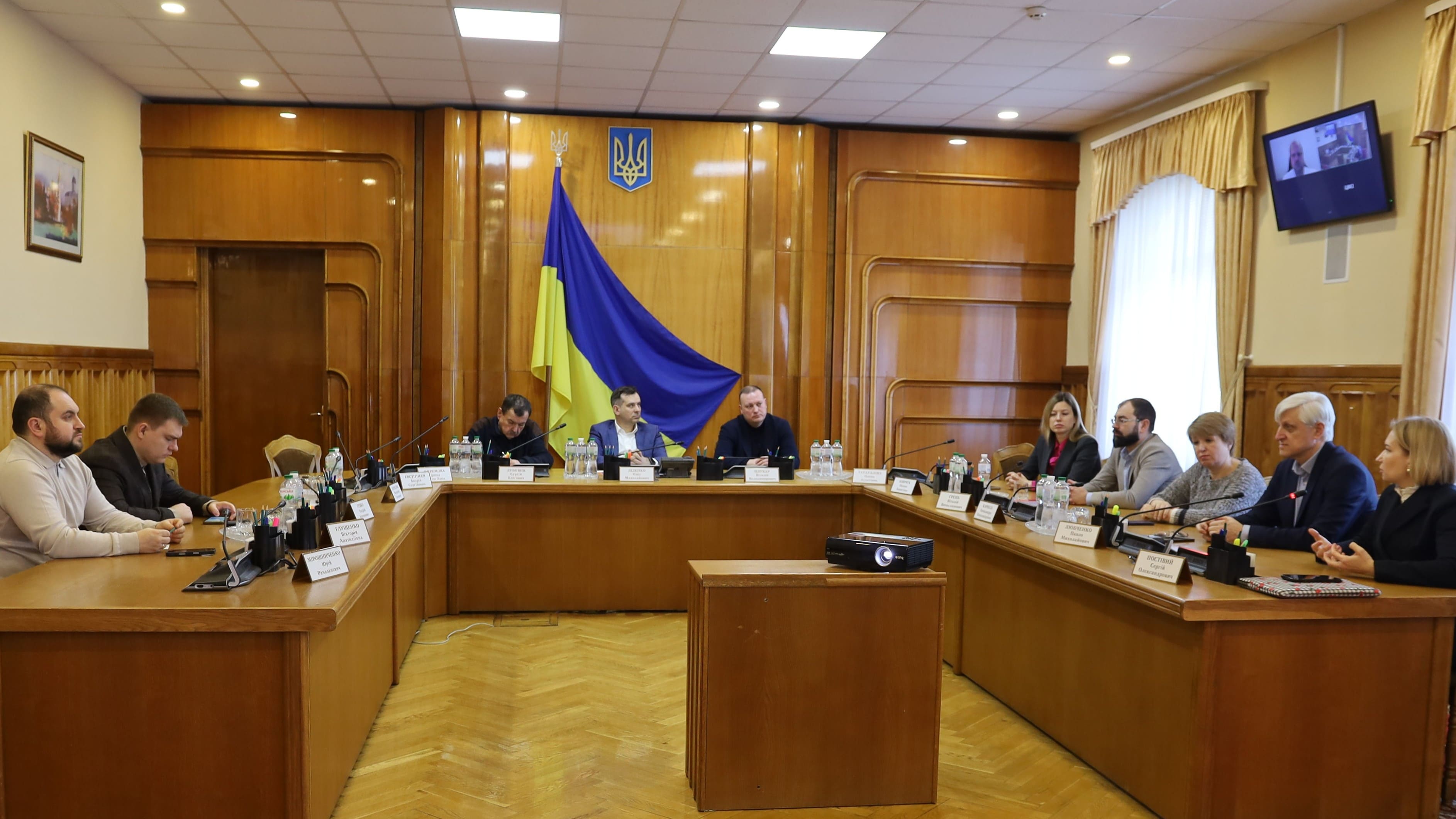
On 27 February, representatives of the Civil Network OPORA presented to the members and secretariat of the Central Election Commission the concept of a comprehensive study aimed at updating the State Voter Register, which they plan to carry out in the coming six months.
The study is intended to provide a practical basis and tools for the further search for systemic solutions ahead of the post-war elections. It will help highlight the challenges voters face in using the existing methods to update their personal data, as well as identify the most effective channels of communication with voters.
The architecture of OPORA’s research will consist of several complementary components:
- a national survey with regional breakdowns;
- a survey of Ukrainians abroad;
- focus group discussions and in-depth interviews;
- analysis of aggregated data from mobile operators;
- expert validation of the collected data.
OPORA Chair of the Board, Olha Aivazovska noted: “We do not view this process as an audit of the State Voter Register or the Central Election Commission. However, we are all discussing in our working groups that the issue of the State Voter Register will pose a major challenge to the recognition of the elections’ legitimacy. The CEC and the State Voter Register are indeed doing everything they can to ensure the voter register is as up-to-date as possible, but, based on official data, we realise that they are far from reality. Because the movement of citizens within the country and abroad is significantly greater than what is recorded in the official registers.”
.jpg)
“We are grateful to OPORA for its active participation and practical assistance in finding solutions to the complex issues Ukraine faces as it prepares to organise and hold post-war elections, once the conditions are appropriate. Updating the State Voter Register is one of the major challenges for the CEC, which is already a key focus and requires the involvement of the state and civil society. There are no simple answers here, so we need to work together to find the most effective solutions,” said Chair of the CEC, Oleh Didenko.
As Deputy Chairperson of the CEC, Serhii Dubovyk noted, he is ready to support this research as much as possible, as it is important to have a variety of information to answer not only technical but also philosophical questions: “The Voter Register is, first and foremost, about the right to exercise one’s rights, and then, secondarily, about the list of voters.” Therefore, he believes that the issue of active voter registration and voters’ willingness to undergo this procedure remains relevant.
Vitalii Plukar, Deputy Chairperson of the CEC, believes that the study will be useful for future legislative work: “The context of a number of issues you plan to include, particularly regarding the State Voter Register, and the convenience and accessibility of these services, is very important to us. This will allow us to draw certain conclusions regarding organisational aspects.”
.jpg)
According to Andrii Savchuk, Analyst at the Civil Network OPORA, migration figures are changing very rapidly, and official data from different sources may vary: “We are talking about 4.5 million officially registered internally displaced persons, but this figure does not always reflect reality. If we take data from local communities, we get completely different figures, as a large number of people do not register, many leave the country but do not cancel their registration as IDPs, as they may lose contact with their homeland. It is also common practice to live away from one’s place of registration, as not everyone owns property, etc. 4.2 million citizens have temporary protection status in EU countries, of whom around 70% will be eligible to vote. Clearly, this will place a significant burden on both the upcoming elections and the State Voter Register authorities. Furthermore, there is the issue of military personnel missing in action, as well as people who are being held captive or have been forcibly taken to Russian territory.”
The analyst believes that the situation where voters could see their deceased relatives on the electoral roll at polling stations was already quite distressing for people. Currently, with a significantly larger number of groups of people whose data is inaccurate, this issue may become even more painful in the upcoming elections.
.jpg)
Pavlo Romaniuk, legal adviser to the Civil Network OPORA, emphasised: “In the CEC’s proposals (draft legislative amendments), one of the tools for including Ukrainians in the register is active voter registration, in particular via the “Diia” application or web portal. But using “Diia” could also be relevant when it comes to changing one’s registered address or polling station. We therefore propose that such changes should become standard practice and, perhaps, even be incorporated into the Law of Ukraine “On the State Register of Voters”, rather than just being covered by an ad-hoc law for the post-war elections. That is precisely why some of the questions in the survey questionnaire will concern the convenience of procedures and tools for changing one’s electoral address,” he noted.
The lawyer pointed out that OPORA experts are including questions in the questionnaire which may subsequently be put into practice as part of proposals for legislative amendments.
Following the meeting, the participants agreed that members of the CEC would contribute to the development of the questionnaire for the sociological survey. The survey results will also be taken into account in joint awareness-raising campaigns by the CEC and OPORA.
.jpg)
.jpg)
.jpg)
 The project is being implemented by the Civil Network OPORA with financial support from the German Federal Foreign Office