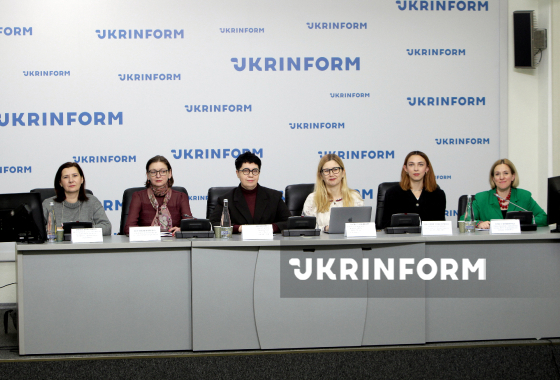
On December 10, the Draft Law "On Political Parties" No. 14289 was registered in the Verkhovna Rada. The bill was initiated by several MPs from various factions, and the drafting team included experts from civil society organizations, including Civil Network OPORA. The bill is a new version of the law on political parties and provides for comprehensive reform, specifically with respect to registration, membership, internal party democracy rules, financing, accountability, and related areas.
According to Viktoriia Podhorna, Member of Parliament and co-chair of the working group that developed the draft law, very few bills in the Verkhovna Rada undergo such a unique development procedure.
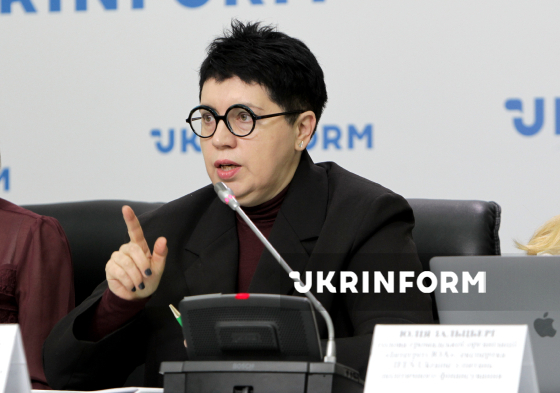 "We held two large cycles of public consultations and three cycles of consultations and work with parliamentary factions, each lasting three months. We had heated discussions with political parties because current parties, unfortunately, are more conservative and not inclined to change the norms they find comfortable. However, there is a public demand. Accordingly, we discussed this not only with factions and civil society representatives but also with rank-and-file party members and experts from the Venice Commission, who are the world's leading experts on political parties," she stated on December 17 during a public press presentation of the bill.
As noted during the presentation of this document by Olga Kotsiuruba, Senior Legal Advisor to the Civil Network OPORA and one of the co-authors of the bill, according to Ukraine's obligations under the First Cluster on the path to European integration, a Law of Ukraine ensuring that party legislation complies with key international standards and previous recommendations of the Venice Commission and OSCE must enter into force by the fourth quarter of 2027. This draft law has undergone two iterations of these recommendations. However, it is only one piece of the puzzle regarding obligations under the Roadmap on the Functioning of Democratic Institutions.
She also discussed the process of drafting this law. Specifically, all civil society organizations involved in drafting the bill—Civil Network OPORA, the Centre for Policy and Legal Reforms, the International Foundation for Electoral Systems (IFES), the National Institute for Strategic Studies, NGO "Integrity UA", the CHESNO Movement, and many others—regularly track and monitor the problems existing in this field. Once a pool of such issues had accumulated, representatives of these organizations compiled them into a joint list, selected the core issues, and began drafting the legal norms intended to resolve them. Afterward, the draft law was submitted to the Venice Commission and OSCE ODIHR for analysis.
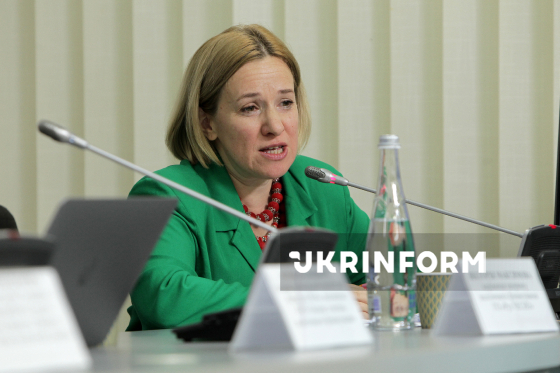 "Following the opinions we received, there was some resistance within the Working Group. This was because we sought to address all of these issues, but in several instances, the Venice Commission identified potential threats to freedom of association. We subsequently reviewed every point in the Venice Commission and OSCE ODIHR opinions and considered all possible remarks. Now, in our view, this draft law complies with the guiding principles for the regulation of political parties," Kotsiuruba emphasized.
According to her, even in the second edition of the Joint Guidelines on Political Party Regulation by the Venice Commission and OSCE/ODIHR (2020), it is emphasized that, given modern consequences, all Council of Europe countries are undergoing a transformation from minimal regulation and restrictions on political party activities toward increased restrictions while maintaining a reasonable balance.
Work on the draft law has been ongoing since 2019: "We truly tried to achieve this balance as much as possible, and it is clearly visible. For example, we are proposing deregulation regarding the registration of political parties, but we are strengthening mechanisms intended to ensure financial transparency and accountability."
However, she stressed that, for the norms of this bill to become operational, it will be necessary to amend several other Codes, which fall outside the scope of this Working Group.
"We have been developing this draft law for six years, but we only have two years to fulfill all these points of our European integration obligations. We hope for a constructive process from the Ukrainian parliament," the expert concluded.
In general, the draft law aims to simplify procedures for party creation and registration, particularly by abolishing mandatory signature collection and introducing electronic registration, and by establishing clearer requirements for founders, the territorial development of parties, and party names. Special attention is given to regulating party activities during temporary occupation and to preventing manipulations involving the "resale" of parties.
The document also strengthens internal party democracy and the institutional capacity of political forces. It introduces the possibility of adopting a code of ethics, establishing party arbitration, and maintaining a mandatory electronic system for member accounting. Furthermore, it sets minimum requirements for the number of members and territorial representation that parties must meet to participate in national elections.
A separate block addresses national security—proposing a ban on cooperation with foreign parties and organizations that pose a threat to Ukraine's sovereignty, based on a special official list.
The draft law also significantly revises approaches to both private and state financing of political parties. It proposes limiting private contributions based on the donor's income, establishing clear rules for sponsorship contributions, and increasing the transparency of financial flows by strengthening the roles of banks and the NACP.
Simultaneously, an updated model for state funding is proposed, including increased support for extra-parliamentary parties, a mixed distribution principle, and clear grounds for suspension or termination. This is intended to ensure predictability, fairness, and accountability within the sphere of political finance.