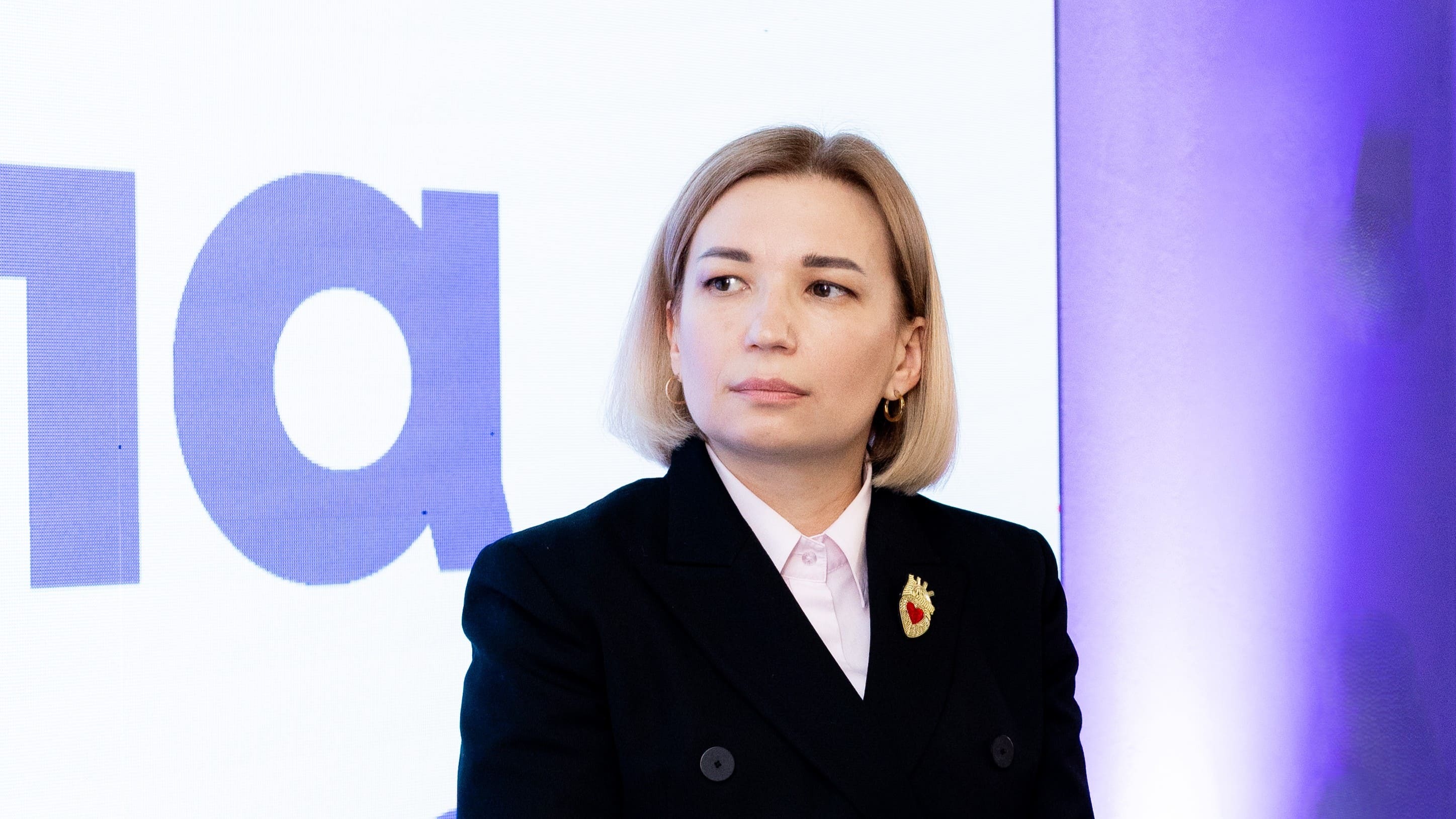
A keynote speech address by Olga Aivazovska, Chair of the Board of Civil Network OPORA, delivered at the forum "Key Challenges of Electoral Democracy after the Great War”, held in Kyiv on March 23. The full text is provided below:
We have all lived through a terrifying winter without heating, electricity, or the ability to meet the basic needs of an ordinary person in the 21st century. While the root cause is Russian aggression, another contributing factor remains the infantile conviction that the worst-case scenario could not happen to us simply because we do not deserve it. However, our positive thinking does not insulate us from the Russian Federation’s strategic goal: to destroy Ukrainian statehood by exhausting Ukrainian society through a long and illegal war. The necessary counterweights must be risk diversification, strong defence, and managerial excellence. Russia targets our energy infrastructure every year because it helps them partially achieve their objectives, and because they possess the means and resources to do so.
I see a direct analogy here with the post-war political recovery. However, while the cost in the energy sector is severe discomfort and exhaustion, the cost in the political process and post-war elections is low legitimacy, or even the loss of agency. Therefore, any errors stemming from a lack of systemic preparedness or a weak adaptation to post-war electoral challenges could prove fatal. We do not have the right to gamble with our future as if we have multiple lives or more than one Ukraine.
The electoral process will undoubtedly become a primary target for the aggressor state. Furthermore, Ukrainian society, eager for self-expression and possessing a massive demand for justice, may find itself vulnerable to populism and sophisticated campaigns by Russian specialists designed to sow division and polarization. This raises a question for us, the voters: will we be ready to distinguish populists from statesmen, mistakes from crimes, and the need for justice from a thirst for revenge over years stolen by the war that can never be recovered? The Central Election Commission, government bodies with specific roles in the process, and society as a whole must prepare for the first post-war elections as early as future Olympic champions begin their training.
Let’s be honest with ourselves: after five years without electoral cycles, the system has degraded and fallen into decay. The world around us is already experiencing a tsunami of AI usage in elections, cryptocurrencies, Russian information-propaganda operations, cyberattacks, and deepfakes, all of which feed on the fears and pain of voters triggered by global and local security crises. If we believe that the war experience has built Ukraine’s resilience against these issues, that is not entirely true. We have become very thin-skinned; every political irritant now triggers a wave of raw emotion. We do not even know how many Ukrainian citizens currently reside within the country to maintain relevant voter lists, nor do we know what life trajectories they will choose for themselves over the next three to five years of such a war.
OPORA has consistently emphasised that elections during an active phase of conflict cannot be well-organized or competitive, and that a sham, facade democracy serves only autocrats. I have frequently heard that no one expects Ukraine to meet high standards regarding the quality and democratic nature of its first post-war elections. Frankly, this has always shocked me. Ukraine has a well-established democratic practice, and our society strives for high standards of participation in governance. This is why every single peaceful revolution since the restoration of our independence occurred precisely because of a demand for genuine, rather than simulated, rights, or a profound yearning for justice.
The stability and resilience of Ukraine’s future can be guaranteed by its final integration into the EU, grounded in the Copenhagen criteria, respect for human rights, the rule of law, and a democratic framework. Democracies still do not wage war against one another, but democracies are forced to fight for themselves. Therefore, the parliamentary working group established in December 2025 to develop the legislative framework for transitional elections, though initially stimulated by peace negotiations, must continue its work, accounting for all of Ukraine’s obligations to the EU and its own society. A roadmap for the stability of democratic institutions and progress in implementing measures jointly defined by Kyiv and Brussels is a win-win trajectory for reform in this sector. There is a significant risk that the group, which has already drafted approximately 65% of the bill on transitional elections, may lose its momentum amidst new wars, less active negotiations, and other looming crises. The solution here must be simple and rational: we influence what we can control. We do not control the Strait of Hormuz or global oil prices; we control our own progress in reforms. That is why investing sound effort here is a foolproof strategy.
OPORA is an organization founded by the generation of activists of the Orange Revolution, youth who stood against the falsification of the 2004 presidential elections. Despite our institution’s mature age, we still possess a great deal of energy and ideas, driven by a sense of mission that keeps us all focused. The weight of ensuring that the first post-war elections are fair, free, and secure is of historical importance to each and every one of us. I often tell my colleagues that perhaps this is the very reason we are still together.
Ukraine will undoubtedly prevail if the political rights of every citizen are properly protected, if elections are thoroughly prepared, and if politicians, despite their exhaustion, remember their state-building mission. If we adopt human rights as our core value framework, parliamentarians will be able to handle the entire spectrum of so-called “political issues” swiftly and effectively, while we are already quite successful at navigating most of the technical and procedural challenges.