 This material was produced as part of the project “Promoting Democratic Integrity and Governance in Ukraine”, implemented by the Civil Network OPORA with the support of the EU. Its content is the sole responsibility of the Civil Network OPORA and does not necessarily reflect the position of the European Union.
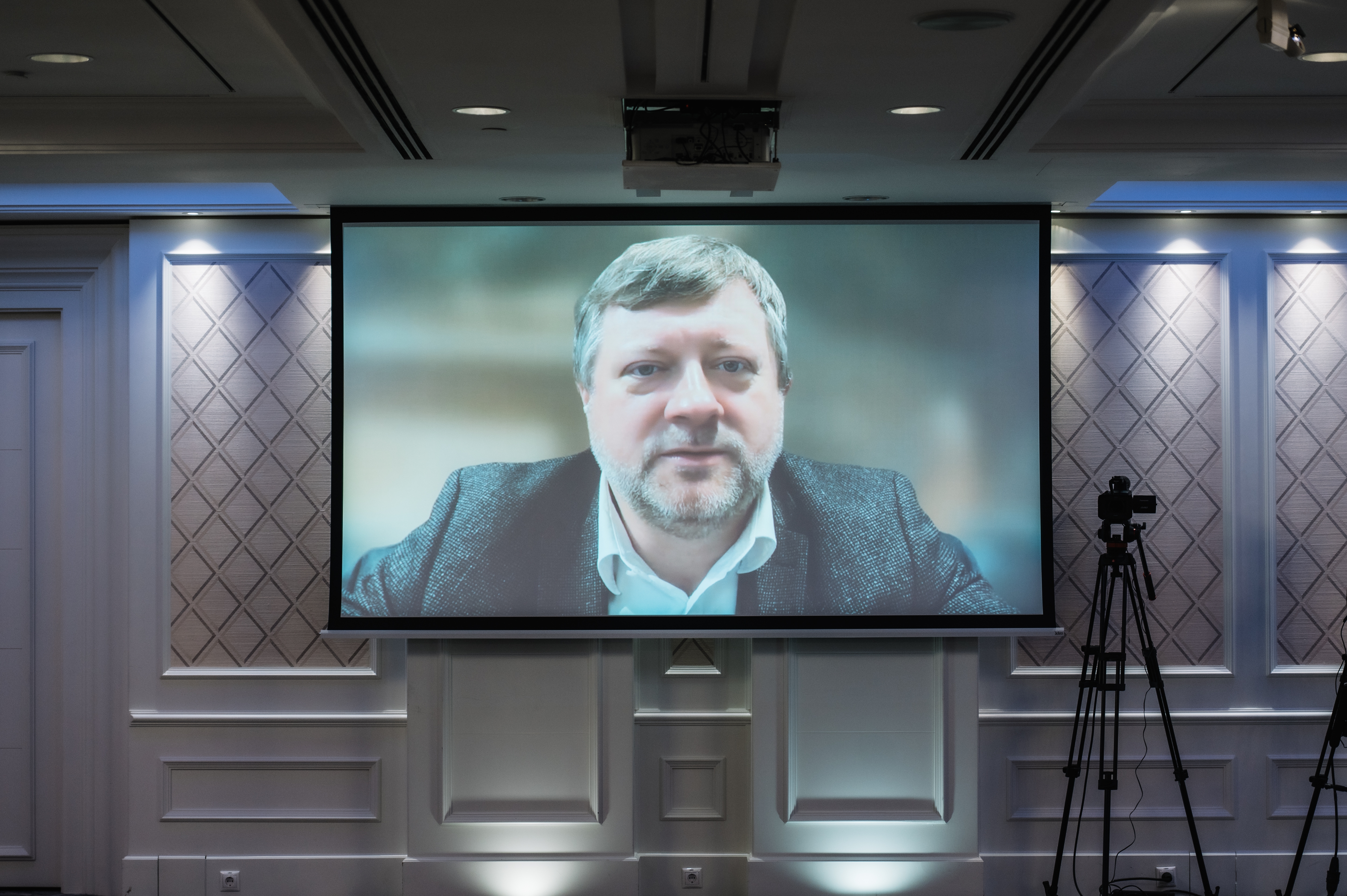
Society must find an inclusive solution to ensure the right to vote and stand for election for key voter groups, primarily military personnel who are defending the state and the millions of internally displaced persons due to Russia’s full-scale invasion. Our partners express their full confidence that this will be achieved. This was stated by Oleksandr Korniienko, First Deputy Chairman of the Verkhovna Rada of Ukraine, during the round table “Ensuring the realisation of electoral rights for specific groups of voters: challenges and prospects”, which took place in Kyiv on 5 February.
He explained that the specialised sub-groups addressing the electoral rights of military personnel, internally displaced persons and residents of temporarily occupied territories are the most active within the Parliament’s Working Group. Korniienko noted that there is already a consensus that the mechanism for changing one’s electoral address needs to be modified. “This will be the key to resolving many of the problems surrounding voting by displaced persons”, — he believes.
OPORA’s recommendations on the realisation of electoral rights for specific groups
During the roundtable, lawyers from the Civil Network OPORA presented proposals on ways to realise the electoral rights of women, military personnel, internally displaced persons (IDPs), people with disabilities and national minorities. The relevant study lasted over a year and helped to identify key issues based on in-depth interviews with representatives of these groups, as well as on an analysis of international practice.
Pavlo Romaniuk, legal adviser to the Civil Network OPORA, said that problems with the implementation of the electoral rights of certain groups, which existed even before the full-scale invasion, persist to this day. In addition, there has been a certain accumulation of challenges linked to the consequences of Russia’s armed aggression. “The issue of gender representation existed even before 2022. For example, prior to the 2019 parliamentary elections, Ukraine ranked among the lowest in Europe in terms of women’s representation — women represented about 12% of the Verkhovna Rada. The situation improved significantly following the 2020 local elections and amendments to the Electoral Code. However, the European Commission’s 2025 report explicitly states that women remain under-represented in politics and decision-making processes”, — said Pavlo Romaniuk.
.jpg)
The lawyer noted that challenges for women arise where gender issues intersect with other statuses, such as women who are internally displaced persons, female military personnel, or women with disabilities. There are also challenges in exercising the right to stand as a candidate for women who left the country after 24 February 2022. The key obstacle is the residency requirement, as current legislation does not recognise forced residence outside Ukraine due to the full-scale invasion by the Russian Federation as an exception to this requirement.
Voting by military personnel: balancing electoral rights and the country’s defence capability
According to the expert, the priority for military personnel is to ensure they can vote at their units’ deployment locations: “This will minimise the need to set up special polling stations and reduce the risk of misuse. In cases where the establishment of special polling stations is unavoidable, there must be a clearly defined and exhaustive list of grounds for their creation”.
At the same time, First Deputy Military Ombudsman Ruslan Tsyhankov expressed caution: “We must minimise the very existence of special polling stations as much as possible and apply this special provision only in exceptional cases. There are risks regarding the membership of these commissions, a certain lack of transparency, and potential security concerns. Therefore, I would like us to apply this provision as little as possible”.

.jpg)
According to people’s deputy Roman Lozynskyi, who heads the sub-group on voting by military personnel within the parliamentary Working Group on Post-War Elections, a common understanding regarding special polling stations has now been reached. “This was the most difficult issue regarding the grounds for their establishment and operation. We have reached a consensus on observers’ access to special polling stations to prevent any misuse”, said the deputy, adding that the Working Group will be provided with the position of the relevant sub-group by the end of next week.
.jpg)
Vitalii Plukar, Deputy Chairperson of the Central Election Commission, emphasised that the work of this sub-group is proceeding smoothly and effectively, and that a core theme is striking a balance between the need to safeguard the electoral rights of military personnel and the requirements of security and defence capability in Ukraine; for this purpose, work is currently ongoing to model various scenarios.
“The participation of military personnel in elections is a necessary condition for the legitimacy of the future government, trust in the election results and trust in the government as a whole, which is why we are devoting a great deal of attention to this very issue”, — noted Plukar.
.jpg)
Olena Shuliak, Chairperson of the Verkhovna Rada Committee on the Organisation of State Power, Local Self-Government, Regional Development and Urban Planning, emphasised that military service should not become a de facto ban on political participation or impose restrictions. According to her, the priorities in drafting legislative changes are to develop realistic mechanisms for participation in elections, so that in future none of these procedures can be undermined or invalidated. “Security and trust are two sides of the same coin, because any voting procedures in high-risk environments must be secure. And most importantly, the focus must be on the individual, and all decisions must be based on specific life situations, as this will relate to where a person is located and where they serve”, — noted Olena Shuliak.
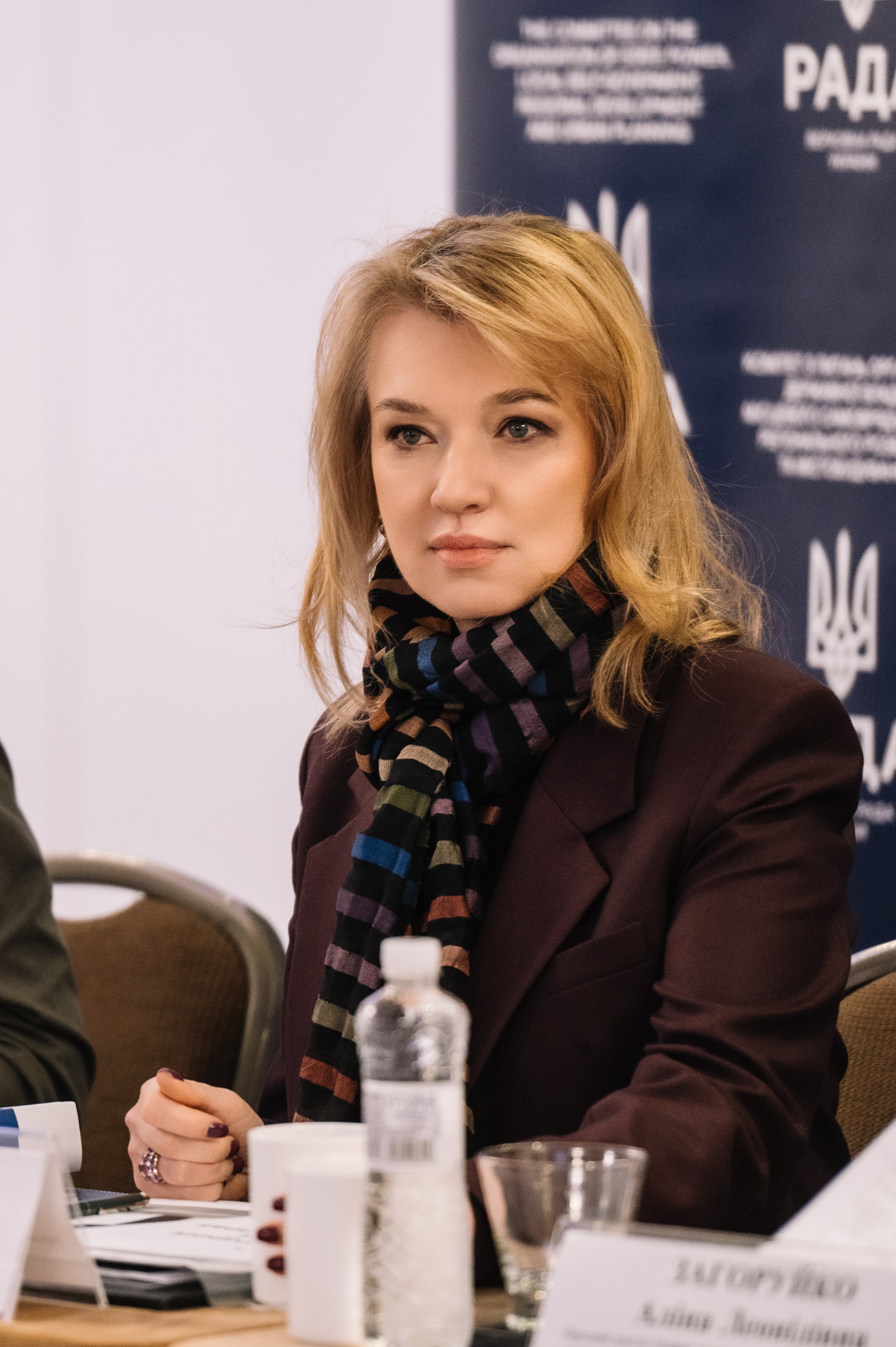
Challenges for IDPs and Ukrainians abroad: from changing one’s electoral address to exceptions to the residency requirement
A separate panel at the event was dedicated to the voting rights of internally displaced persons, Ukrainians living abroad and residents of temporarily occupied territories. Independent electoral expert Denys Kovryzhenko, who was invited by OPORA, noted that two issues are particularly relevant in this context: ensuring their right to vote, given the significant increase in their numbers, and the question of residency requirements within Ukraine for the right to stand for election.
“The CEC’s draft law, which was published on 7 January 2026 and is currently being discussed within the sub-groups of the official Working Group, provides sufficient grounds for the exercise of the right to vote. The mechanisms laid down in it, provided they are properly implemented, will enable this category of voters to exercise their right to vote in elections. As for the right to stand for election, certain exceptions to the residency requirement have also been formulated, but some issues require further discussion”, — he noted.
To ensure the electoral rights of internally displaced persons, it is important to establish clear and effective procedures, particularly regarding the determination of a polling address, temporary changes to the polling station, and the updating of data in the State Register of Voters. This was noted by Deputy Chairperson of the CEC, Serhii Dubovyk. He explained that “decisions must be made in such a way that people can vote without excessive barriers — whilst at the same time ensuring appropriate safeguards against misuse”.
Vitalii Bezghin, a Member of Parliament and co-chair of the sub-group on the electoral rights of internally displaced persons, residents of frontline and temporarily occupied territories in post-war elections, noted that, as the actual number of IDPs is unknown, all current discussions are taking place solely in the context of national elections.
.jpg)
Barriers to voting for people from temporarily occupied territories
As Tamila Tasheva, a Member of Parliament and co-chair of the aforementioned sub-group, explained, they had a separate discussion regarding citizens living in temporarily occupied territories. Holding elections there is impossible, but the state is obliged to ensure that people have access to information about their voting rights and the mechanisms for exercising them.
They will be able to vote in the territory of Ukraine under government control or abroad, with the exception of the territory of the Russian Federation and the Republic of Belarus. One important step is the proposal to allow voting on the basis of a document certifying the right to return to Ukraine (the so-called “White Passport”), as for many this is the first document that effectively confirms citizenship after leaving the occupied territories.
.jpg)
A sensitive but necessary part of the discussion was the issue of possible restrictions on the passive voting rights of individuals who collaborated with the aggressor state. “We proceed from the assumption that such decisions must comply with the Constitution and the principles of the rule of law, whilst at the same time taking into account the realities of war and society’s demand for justice. We discussed the need for clear disclosure of the relevant circumstances and the fact that only a conviction can serve as grounds for exclusion from the electoral process,” the MP noted.
Daria Svyrydova, a partner at the AZONES law firm, mentioned during the discussion that among the public’s top expectations regarding justice for the consequences of the war (as shown by surveys by the ZMINA Human Rights Centre and the Rating sociological group) - preventing individuals who have compromised themselves by collaborating with the aggressor state from holding top government and elected positions.
People in communities link this to the safety of life in those communities, Svyrydova noted. According to her, the CEC’s legislative proposals provide for the widespread informing of voters about possible links with the aggressor state; however, the criteria and facts that candidates must disclose must be defined in law. She added that it would be advisable to require the disclosure of any links with Russia dating back to 2014.
Political rights of national minorities and people with disabilities
The European Commission places particular emphasis on the need to ensure the political rights of national minorities and indigenous peoples. According to election expert Denys Kovryzhenko, relevant international experience already exists. “On the other hand, in Ukraine, there is a general reluctance to support the very idea of minority parties, as this could hypothetically lead to separatist tendencies,” he said.
Kovryzhenko also noted that since the start of the full-scale invasion, the number of people with disabilities has risen by around 10%, making the issue of safeguarding their electoral rights even more relevant: “On the one hand, there are already developed proposals for amendments to the Electoral Code regarding the right to vote. On the other hand, these do not address mechanisms to encourage greater representation of people with disabilities, despite their growing numbers.”
EU requirements and liability for violations of electoral rights
Olha Kotsiuruba, Senior Legal Advisor at the Civil Network OPORA, highlighted during the discussions the issue of liability for violations of the electoral rights of certain categories, such as military personnel. She noted that during in-depth interviews with military personnel conducted by OPORA lawyers, respondents indicated that in the event of violations of their rights, appealing to local district police stations with a complaint or to the National Police hotline is not a realistic means of protection. So this is the next step that needs to be considered, added Kotsiuruba.
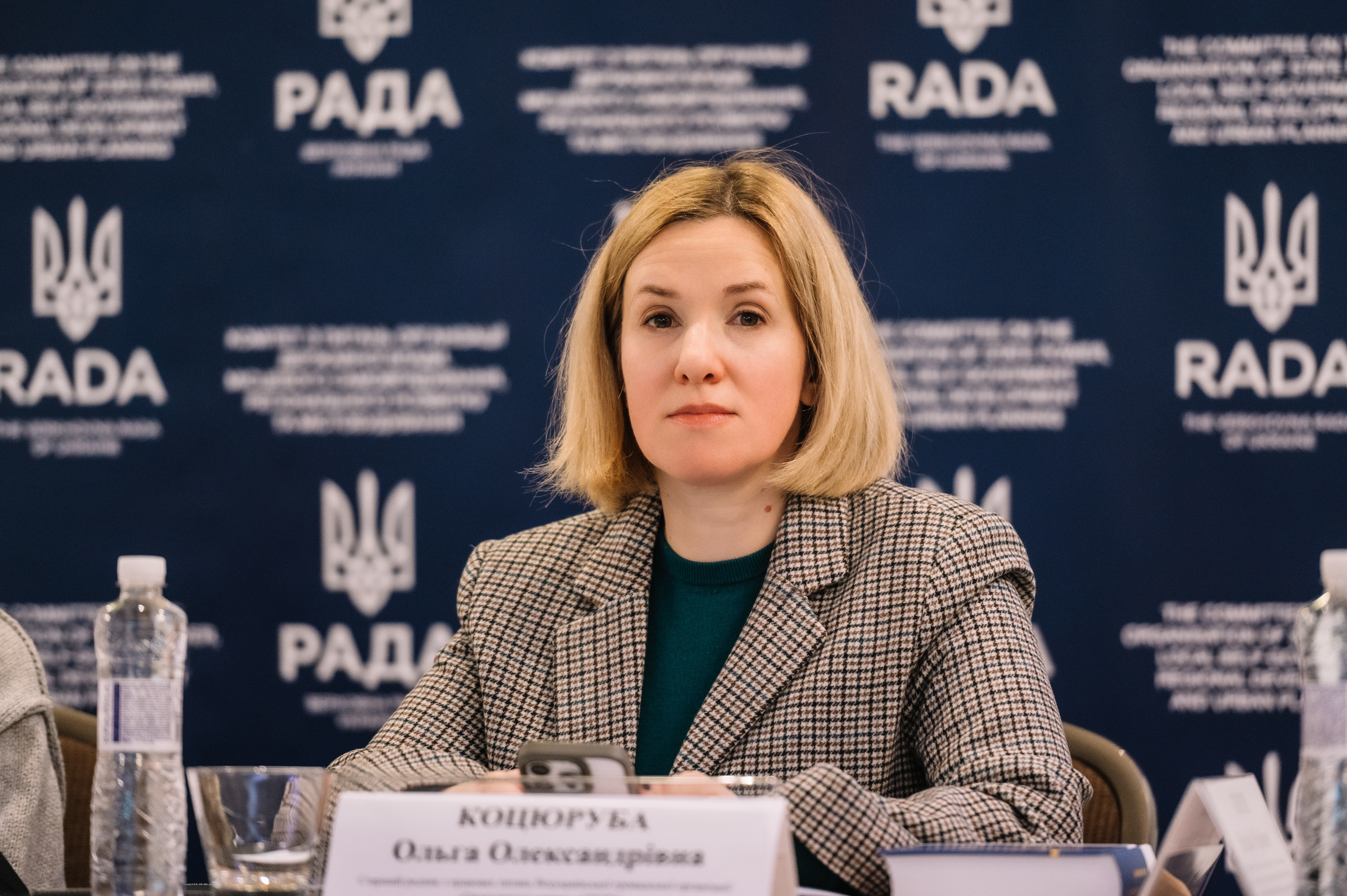
In addition, the OPORA lawyer pointed out that safeguarding the electoral rights of military personnel and internally displaced persons is crucial in the context of Ukraine’s fulfilment of its European integration commitments, in particular the provisions of the Roadmap on the Functioning of Democratic Institutions.
The event was organised by the Verkhovna Rada Committee on the Organisation of State Power, Local Self-Government, Regional Development and Urban Planning in cooperation with the Civil Network OPORA.
The event took place as part of the project “Promoting Democratic Integrity and Governance in Ukraine”, implemented by the Civil Network OPORA with the support of the EU. The event was also co-funded under the international development programme of the Government of the United Kingdom of Great Britain and Northern Ireland. The views expressed do not necessarily reflect the official policy of the Government of the United Kingdom of Great Britain and Northern Ireland or the official position of the European Union.