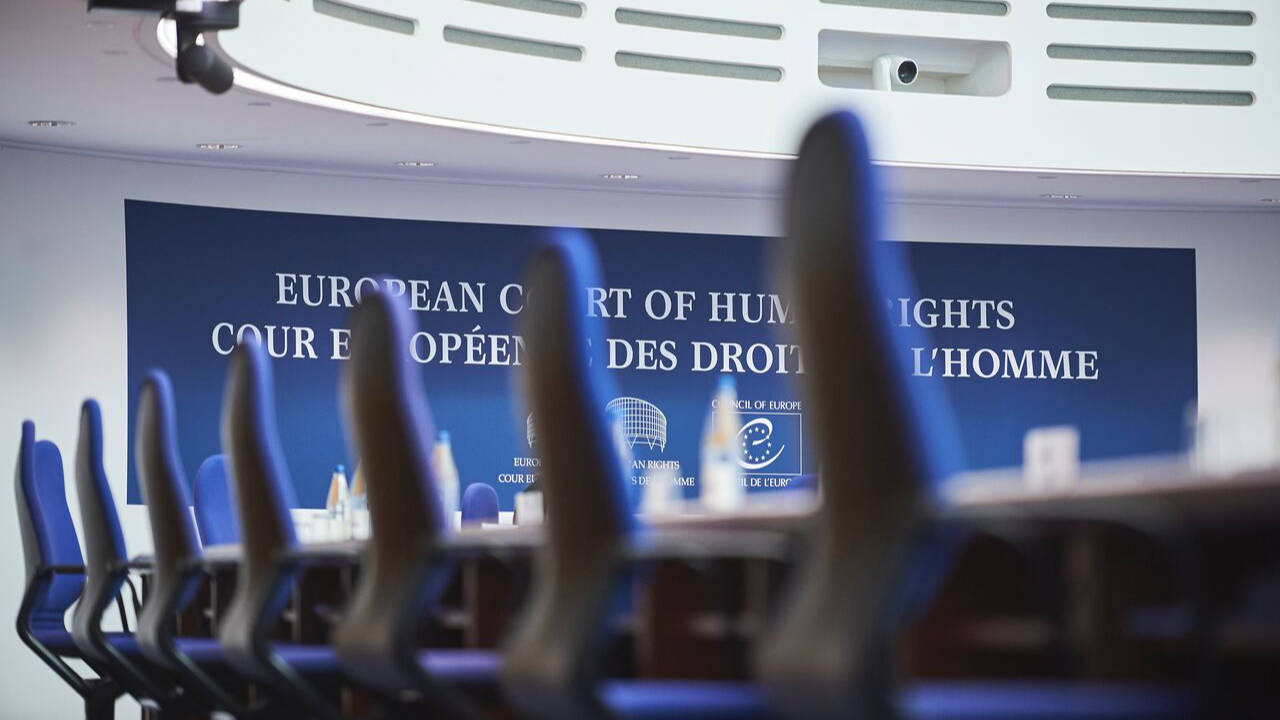
 This article is part of a series dedicated to informing readers about the current practice of the European Court of Human Rights (ECHR) concerning elections and democratic processes. Its objective is to clarify the Court's key legal conclusions, demonstrate their significance for Ukraine, and help raise public and expert awareness of the standards for protecting electoral rights.
Post-war elections in Ukraine will be more than just a symbol of democratic renewal; they will be the primary target of Russia's hybrid attacks. Information campaigns, cyberattacks, and covert financing are just some of the tools the aggressor will use to attempt to influence the will of the Ukrainian people. These threats urge us to ask: What legal obligations does the state bear in combating such interference? The recent ECHR judgment in the case of "Bradshaw and Others v. the United Kingdom," delivered on July 22, 2025, offers some critical answers and establishes an important precedent for safeguarding Ukrainian democracy.
What happened in the UK?
Three well-known (now former) British parliamentarians—Labour Party MP Ben Bradshaw, former Green Party leader Caroline Lucas, and Scottish National Party representative Alyn Smith—accused their own government of violating the right to free elections, guaranteed by the European Convention on Human Rights.
The essence of their complaint to the ECHR was that the government, despite having credible intelligence reports about Russia's attempts to interfere in British democratic processes (including the 2014 Scottish independence and 2016 European Union membership (Brexit) referendums, and the 2019 parliamentary elections), failed to properly investigate these facts. The applicants argued that the authorities did not establish an effective protection system, thereby jeopardizing the fair and free nature of the popular vote.
The applicants actively raised the issue of Russian interference in electoral processes in the United Kingdom since 2016. For instance, in 2017, Ben Bradshaw demanded that his country's government investigate Russia's influence on the results of Brexit. The politician stated, "Putin interfered in the US and French presidential elections, as well as several other European elections in 2015 and 2016. Putin has made it absolutely clear that dividing Europe was part of his plan and that he considers Brexit very beneficial."
How is countering foreign interference legally guaranteed in the United Kingdom?
The domestic UK legislation on counteracting foreign interference has been built around several key acts. For a long time, its foundation was the Representation of the People Acts 1983 and 2000 and the Political Parties, Elections and Referendums Act 2000 (PPERA), which restricted political donations to only permitted British sources. The Elections Act 2022 clarified the rules regarding non-cash expenditures and stipulated that campaign expenditures by third parties can only be incurred by organizations from the UK and by overseas voters who have the corresponding right to vote. The Act also increased transparency in the activities of third parties and introduced an obligation for the Electoral Commission to provide guidance on the application of Part 6 of PPERA, which regulates national third-party campaigns.
Furthermore, according to the RPA 1983 and PPERA, all printed materials during elections must include an imprint specifying the commissioner and the responsible person. The Elections Act 2022 expanded this requirement by introducing the "digital imprint" — mandatory labelling of online campaigning material with the name and address of the promoter or the person on whose behalf the material was disseminated.
A crucial addition was the National Security Act 2023, which introduced new offences, particularly foreign interference and interference in elections; established a clear definition of a "foreign power" and the conditions under which an act is considered carried out “for” and "on behalf" of such a power; strengthened penalties for classic espionage, sabotage, and electoral offences if they are connected to a foreign power; introduced the Foreign Influence Registration Scheme — a system of mandatory registration for political activities carried out on behalf of foreign entities; and granted law enforcement broader powers for investigation. Read more about this regulation in OPORA's article, "Countering foreign financing of parties and elections: regulation and experience of the UK, USA, Australia, Moldova, and Romania."
In addition, the Online Safety Act 2023 established a new regulatory regime for digital platforms, obliging them to counteract illegal and disinformation content, particularly that related to foreign interference.
The principal bodies responsible for the institutional enforcement of these laws in the United Kingdom are the Electoral Court (which has the authority to review election results) and the Electoral Commission. The Commission, among other duties, regulates political financing and ensures the transparency of electoral processes. A significant role is also played by the National Security Online Information Team (NSOIT, formerly the Counter Disinformation Unit). The NSOIT coordinates the government's response to disinformation campaigns, conducts monitoring during elections and national crises, and engages with digital platforms to limit the spread of harmful narratives.
At the political level, the government established the Defending Democracy Taskforce in 2022. This group collaborates with local councils, law enforcement agencies, and technology companies to strengthen the resilience of electoral infrastructure, protect officials from cyber and physical attacks, and counter foreign information operations. The Taskforce coordinates its work with the Parliament, intelligence agencies, the private sector, and civil society. Crucially, it reports directly to the National Security Council, which ensures political oversight at the highest level.
Thus, the United Kingdom has developed a multi-layered system for countering foreign interference that combines an updated legislative framework and institutional mechanisms with practical response measures. The ECHR took all these factors into account when delivering its judgment.
What did the ECHR decide?
The European Court of Human Rights (ECHR) ruling in this case contains two key elements that are of immense importance to Ukraine.
1. The state has positive obligations. The Court explicitly established that the right to free elections (Article 3 of Protocol No. 1 to the Convention) imposes a "positive obligation" on the State. This means that authorities must not merely refrain from interfering in elections, but must actively protect the electoral process from external threats, such as foreign disinformation and cyberattacks. The Court acknowledged that disinformation campaigns and foreign interference, including "hack and leak" operations, are capable of significantly affecting democracy. This impact is primarily achieved by distorting the information environment and making it difficult for voters to make informed decisions (para. 147, 158). At the same time, the Court noted the difficulty in assessing the precise impact of such actions on election results due to the lack of empirical data and the complexity of voter motivations (para. 158).
2. The state has a margin of appreciation (discretion). The ECHR granted states a "wide margin of appreciation" in choosing specific protection instruments, noting that no single approach exists for combating hybrid threats. The Court recognized that each government may select measures it deems most effective in its own context, but these measures must be balanced against the right to freedom of expression (paras. 159–162). Specifically, the Court deemed disproportionate restrictions or general prohibitions to be inadvisable, as they could potentially lead to censorship or create an atmosphere of distrust toward civil society (para. 161).
In the case itself, no violation by the United Kingdom was found. The ECHR noted that although the government's initial reaction was slow, the subsequent steps taken — including conducting two independent investigations and adopting new legislation to counter foreign influence — were sufficient for the government to fulfil its positive obligation.
What did the concurring opinion of the ECHR judge address?
Judge András Jakab, while concurring with the final judgment, used his opinion to emphasize the need for a deeper analysis of the case, given that it touches upon the very essence of the Court’s mission: the protection of liberal democracy. He noted that contemporary democratic states are facing unprecedented threats in the form of large-scale interference in elections and rapid disinformation campaigns. In his view, the Court's primary task is to prevent the destruction of democratic institutions, as these are the guarantees of peace and the protection of human rights. Therefore, legal standards require urgent updating to enable democracies to effectively defend themselves.
To enhance the resilience of democracies, the judge proposed several key directions. He stressed that the Court must clearly distinguish among three categories of measures in response to interference:
- prohibited by the Convention (e.g., foreign agent laws);
- acceptable/allowed (but not required), as far as they are proportionate;
- required as positive obligations (what states are explicitly required to do to protect elections).
According to the judge, clarity is lacking precisely in this final category — specifically, what states are obligated to do to protect the electoral process. Furthermore, he insisted that the response must depend on the source of the threat (it should be significantly stronger if it originates from a non-democratic country).
To combat digital disinformation, he proposed a series of specific regulatory solutions: mandate social networks to ensure user identification (real person, pseudonym, bot) and provide the option to filter feeds based on these categories; default feed settings should only display content from selected sources, rather than that imposed by algorithms; introduce a delay before posts are published to slow down their viral spread; consider a ban on microtargeted political advertising and implement regulations for the influencer market; propose the utilization of blockchain technology to track news sources, guarantee researchers access to platform data to study manipulation, and oblige AI chatbot developers to take measures against the dissemination of disinformation by their products.
The judge also noted that it is extremely difficult for citizens to prove exactly how covert disinformation operations affected them or the results of an election. For this reason, he argued that a clear obligation to investigate such cases must be imposed on the state; otherwise, the right to free elections becomes illusory. In conclusion, the judge urged the Court to urgently develop more detailed and modern standards for election protection to help democratic countries effectively counteract new information challenges.
How do the applicants and the British government assess the ECHR ruling?
The applicants — former Members of Parliament — and their legal team stated that they were satisfied with certain aspects of the ruling, as they succeeded in having the ECHR examine a case on the protection of democracy from foreign interference. Caroline Lucas noted, "It’s hugely significant that the court has found in favour of our case that foreign interference is a threat to our right to free and fair elections and that they recognise there will be cases when states do have a duty to investigate."
Caroline Lucas also said that, in the applicants' view, the investigations conducted by the British authorities — such as the "Russia Report" by the UK Parliament's Intelligence and Security Committee — did not sufficiently or comprehensively investigate the impact of the Russian Federation on UK election results. The "Russia Report," published in 2020, covers Russian interference in the 2014 Scottish Independence Referendum and the 2016 vote on the UK's withdrawal from the EU (Brexit). The applicants contended that the government led by Boris Johnson, for political reasons, significantly downplayed the Russian threat and deliberately sabotaged the publication of the "Russia Report."
After the EHCR ruling, a Government spokesperson said, “We note today’s judgment, which found no violation. We are committed to safeguarding our electoral processes, which is why we recently announced tougher new rules on political donations to protect our elections from the growing danger of foreign interference.” He also added that protection of elections was a part of the national security strategy and that the state had taken action to harden and sharpen its approach to threats – whether standing with Ukraine against Russia’s illegal invasion of Ukraine, placing Russia on the enhanced tier of the foreign influence registration scheme, and working with allies to monitor and counter Russian submarines and ships in UK waters.
Conclusions
The Bradshaw ruling proves that the state’s passivity to such threats is unacceptable. This case is significant for Ukraine because the methods Russia tested on the UK could be applied here with greater intensity, including mass disinformation (spreading narratives that polarize society on issues of peace, territory, accountability, and the legitimacy of power), cyberattacks (attempts to breach Central Election Commission servers, particularly the State Register of Voters, etc.), and covert financing of pro-Russian candidates, parties, or media campaigns.
In this context, Civil Network OPORA proposes a complex set of measures to counter Russian interference in Ukraine's electoral process, as these risks will persist even after the war ends. Particular attention is given to information security: it is proposed to establish dialogue with global online platforms to block disinformation and introduce its mandatory labelling, and to adapt Ukrainian legislation to EU norms (DSA, DMA). Additional steps include studying international practices, including banning the use of TikTok on civil servants' work devices, intensified control over Telegram, and implementing long-term media literacy programs, particularly within school education.
To prevent covert financing by the aggressor state, OPORA emphasizes the need to improve legislation in the sphere of political finance, specifically to adopt laws that ensure transparency in reporting and align political finance rules with ODIHR/OSCE recommendations, introduce proportional sanctions for violations, and strengthen mechanisms for monitoring the expenditures of parties and election campaigns. This is intended to create an effective control system that minimizes the risks of external influence through financial flows.
A separate set of proposals focuses on preventing Russian political influence through candidates and organizations. It is recommended to mandate a declaration of no ties to the aggressor state, create a lawful mechanism to deny election access to individuals involved in supporting terrorism or crimes against national security, and strengthen criminal liability in this area. Another important direction is informing Ukrainian voters abroad to reduce their vulnerability to disinformation, as well as building the cyber defence capacity of the Central Election Commission and the State Register of Voters. All these measures are intended to reinforce the resilience of Ukraine’s democratic processes against external threats.