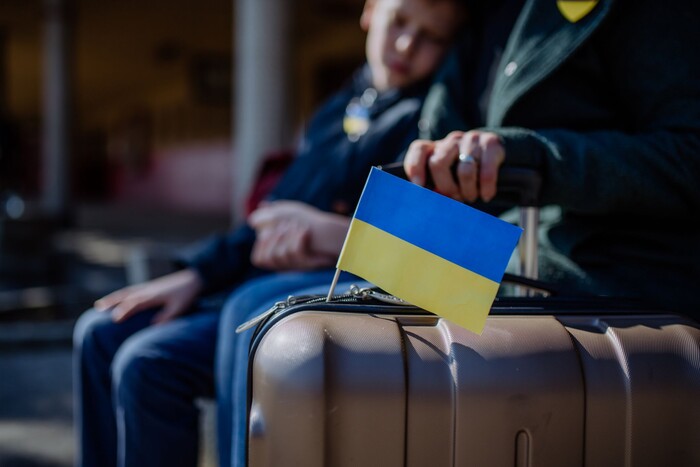
Between April 2024 and March 2026, the OPORA Civic Network held a series of facilitated dialogues in six European Union countries and the United Kingdom. One of these events took place in Dublin, the capital of the Republic of Ireland. The facilitated dialogues aim to strengthen public engagement and integrate citizens’ views into public policy, thereby ensuring its implementation, monitoring and evaluation.
Among the key objectives set by OPORA were systematising the experience of Ukrainian communities abroad, devising a strategy for their interaction with Ukraine’s democratic institutions and civil society, and building a common understanding of the problems, needs and ways of involving Ukrainian citizens abroad in policy-making within Ukraine.
The key questions around which the central discussion was organised during the facilitated dialogues were:
- What connects you to Ukraine when you are far from home?
- How and why should you get involved in Ukraine’s socio-political life whilst living abroad?
In addition, at the end of the facilitated dialogue session, the facilitators asked participants to provide anonymous written answers to two further questions:
- One challenge you face whilst living abroad.
- What is stopping you from returning home?
The data collected was anonymised, digitised, processed and incorporated into the final report on the study. Analysis of the discussion outcomes enabled the formulation of recommendations that will help address key needs and assist the Ukrainian authorities in developing future policies aimed at supporting Ukrainian communities abroad.
Recommendations
1. Ensuring the exercise of political rights by Ukrainians in Ireland.
Participation in elections
Most participants in the facilitated dialogue emphasised the need to create conditions that would enable Ukrainians abroad to participate fully in the country’s political life, including in elections. According to those surveyed, a number of practical and organisational issues need to be resolved to ensure that the electoral process abroad is legitimate and logistically feasible. The primary concern was the creation of a mechanism for exchanging information with Ukraine regarding the number of Ukrainian citizens in Ireland and the regions of the country in which they reside, which would enable Kyiv to plan its policies regarding Ukrainians abroad, including the exercise of their electoral rights.
Respondents also raised the issue of organisational readiness for holding elections abroad: ensuring an adequate number of polling stations, their security, and resolving other logistical issues. All of these require extensive preparation, and any delay in addressing them, according to those surveyed, will directly affect the legitimacy of the forthcoming electoral process. Furthermore, local information and coordination support are crucial for Ukrainians abroad to participate in the elections. In view of the above, systematic work and coordination among many Ukrainian institutions is necessary to ensure the full participation of Ukrainians in Ireland in voting in the Ukrainian elections.
The Verkhovna Rada of Ukraine should:
- Adopt amendments to the electoral legislation that address the realities of forced displacement. The current electoral legislation is not designed for a situation in which millions of Ukrainians are living abroad. Despite the existence of mechanisms for voting from abroad, without the necessary legislative changes, a significant proportion of Ukrainians abroad will effectively be unable to exercise their right to vote in the first post-war elections due to a number of restrictions, primarily logistical ones.
- Proceed with the elaboration of amendments to electoral legislation. Resume regular meetings of working groups on preparations for the first post-war elections and finalise legislative changes that address the challenges of voting abroad.
- Consider opening additional polling stations abroad. Devise, in conjunction with the Central Election Commission and the Ministry of Foreign Affairs, a mechanism for organising polling stations outside Ukrainian diplomatic missions, which will allow a greater number of Ukrainians to participate in the elections and cover those in regions where Ukraine’s diplomatic presence is limited.
- Consider introducing proactive voter registration for those living abroad. Devise a proactive registration mechanism, in collaboration with the Central Election Commission and the Ministry of Foreign Affairs, for Ukrainians living outside Ukraine, including through online registration.
- Consider extending the voting period for the overseas constituency. Assess the feasibility of extending the overseas voting period, given the logistical and security risks.
- Settle the issue of election campaigning abroad. Define permissible forms and methods of election campaigning, as well as restrictions on campaigning for Ukrainian voters and candidates outside Ukraine, by introducing a provision stipulating that rules on campaigning abroad must comply not only with Ukrainian electoral legislation but also with the legislation of the country concerned.
The Ministry of Foreign Affairs of Ukraine, in cooperation with the Central Election Commission of Ukraine (CEC), should:
- Initiate coordination with the Irish side regarding the process of organising the elections. Ireland has its own administrative particularities, which require a significant amount of time to properly arrange the rental of polling stations, ensure security, and establish cooperation with law enforcement agencies. Delays in commencing preparations may result in the inability to organise an adequate electoral infrastructure by polling day. To this end, provided that the relevant legislation is adopted by the Verkhovna Rada of Ukraine, the CEC should:
- Identify in advance the list of organisational matters requiring agreement with the Irish side. Draw up a comprehensive checklist of issues to be resolved with the Irish authorities, including obtaining data on the number of Ukrainians in Ireland, the necessary arrangements for polling stations, security measures and the logistics of ballot papers, etc.
- Commence consultations with the Irish authorities. Initiate cooperation with the relevant Irish institutions (including the Garda Síochána) in advance, given the potentially lengthy time required to complete administrative and bureaucratic procedures.
- Agree on a mechanism for establishing a network of polling stations. Determine, in conjunction with the Irish side, the optimal number and location of polling stations, taking into account the geography of the Ukrainian community across Irish regions.
- Commence consultations with the Government of Ireland regarding the opening of additional polling stations outside the Ukrainian Embassy. Should the relevant legislation be adopted, the organisation of additional polling venues outside diplomatic premises will require approval from the Irish side, which is a lengthy process. In view of the above, the following steps should be taken:
- Initiate negotiations with Ireland well in advance. Commence preliminary consultations with the Irish side regarding the legal and organisational aspects of opening additional polling stations outside the Ukrainian Embassy in Dublin.
- Conduct a survey of the Ukrainian community in Ireland in collaboration with the Irish side. Use existing data from the Temporary Protection Scheme to identify regions with the highest population of Ukrainian citizens eligible to vote. Based on these findings, identify potential problem areas in each county: significant distance to polling stations, lack of information infrastructure, security or logistical risks to the conduct of voting, etc. Based on the data, calculate the required number of additional polling stations, as well as potential locations for them.
- Coordinate organisational and security aspects with the Irish side. Commence negotiations to ensure adequate conditions for voting, including the security of polling stations and the logistics of delivering ballot papers. Establish regular communication with the Irish law enforcement agencies and build cooperation with them.
- Build a network of advisers across Ireland’s counties to explain voting rights to Ukrainian citizens. The lack of accessible information on how to exercise voting rights abroad is among the key factors that could affect the electoral participation of Ukrainians in Ireland. The Ukrainian Embassy in Dublin lacks sufficient resources to reach the entire community across the country’s various regions. That said, the Ukrainian community in Ireland has expressed its willingness to get involved in these activities, even on a voluntary basis. In view of the above, the following steps should be taken:
- Coordinate the launch of an outreach campaign for Ukrainian citizens with the Irish side. Hold discussions with the Government of Ireland regarding potential obstacles to establishing a network of advisers in the country.
- Assess the need for advisers in each Irish county. With regard to the distribution of the Ukrainian community across the various counties of Ireland, identify the areas where advisers are most needed.
- Develop selection criteria and establish a network of advisers. Define the requirements for candidates and the selection process, considering the possibility of involving representatives of local Ukrainian organisations that are already trusted by the community. Selected candidates must be provided with up-to-date information and training on the mechanisms for exercising electoral rights, in particular checking their names on the electoral roll, registering to vote (if active registration is introduced), registering with the consulate (if the current voting mechanisms in the overseas constituency are retained), etc.
- Ensure ongoing cooperation between the advisers and the embassy. Institute a regular exchange of up-to-date information between the advisers and the Embassy of Ukraine in Ireland.
The Central Election Commission of Ukraine should:
- Provide training materials for the network of advisers in the Irish counties to explain electoral rights to Ukrainian citizens. Training the network of advisers in Ireland will require training aids and materials for network staff to help them explain the mechanisms for exercising voting rights to Ukrainians abroad. In view of the above, the following steps should be taken:
- Develop methodological materials for advisers. Prepare Ukrainian-language instructions and explanations regarding the mechanisms for exercising voting rights abroad, in particular regarding checking one’s name on the electoral roll, the location of polling stations, and proactive voter registration (should relevant legislation be adopted).
- Enable regular information sharing throughout the entire electoral process. Ensure that materials for advisers are constantly updated as electoral procedures change and key stages of the electoral process approach.
- Develop and conduct an outreach campaign among Ukrainian citizens in Ireland regarding the mechanisms for voting abroad. To this end, it is necessary to:
- Develop information materials in Ukrainian. Prepare guidelines on the procedure for voting abroad, with particular regard to the possibility of opening new polling stations and the specific features of voting abroad.
- Identify channels for disseminating information. Research and utilise the channels used by the Ukrainian community in Ireland, in particular social media, Ukrainian organisations, the network of county representatives and Irish state institutions.
- Align the campaign dates with the electoral calendar. The outreach campaign should begin before the start of the electoral process and be conducted throughout all its key stages.
E-democracy tools
The exercise of political rights by Ukrainians abroad is not limited to participation in the electoral process. With a significant number of Ukrainian citizens residing outside the country, challenges arise not only regarding the right to vote or stand for election. A broader range of political rights (such as participating in consultations, public debates and policy-making) also remains unexercised.
The Ministry of Digital Transformation of Ukraine and the Ministry of Social Policy of Ukraine should:
- Conduct awareness-raising activities among Ukrainians in Ireland regarding available e-democracy tools and mechanisms for engaging with state and local authorities. Ukrainians abroad are often unaware of the digital tools available for participating in public life and do not understand the mandates and functions of Ukraine’s various state authorities. This significantly curtails their ability to engage effectively with the state and exercise their political rights. In view of the above, the following steps should be taken:
- Explore the level of engagement of Ukrainians abroad with e-democracy tools. Determine which tools are already familiar to Ukrainians abroad and which require greater promotion. Identify the key legal and logistical challenges faced by Ukrainians abroad when exercising their political rights through e-democracy tools.
- Develop accessible information materials. Prepare Ukrainian-language explanations of existing e-democracy tools, in particular the DIIA platform, e-petitions and consultations, as well as information on the functions and mandates of various state authorities.
- Organise awareness-raising events for the community in Ireland. In cooperation with Ukrainian NGOs and the Ministry of Foreign Affairs, hold outreach sessions and online events to introduce the community to digital participation tools.
- Deliver online outreach. Consider creating a permanent online resource or communication channel that will allow Ukrainians in Ireland to receive up-to-date information on tools for engaging with the state.
Engagement in political life in Ukraine
Ukrainian citizens in Ireland have expressed an interest in ensuring that their community’s voice is heard, at least at the level of Ukrainian national politics. Notably, those surveyed mentioned that they have gained experience abroad, which they would be happy to share in Ukraine.
The Ministry of Social Policy of Ukraine should:
- Devise a mechanism for engaging Ukrainians living abroad in public policy-making, the drafting of relevant legislation and regulatory frameworks concerning the Ukrainian diaspora, as well as in Ukraine’s reform processes, through open and transparent participation mechanisms. Ukrainians living in Ireland have gained experience and knowledge that could be useful for Ukraine, including in terms of introducing international best practices in various areas of socio-political life. In view of the above, the following steps should be taken:
- Study the experience of countries with large diasporas regarding the involvement of citizens abroad in socio-political life. Review the tools used by various countries around the world (Israel, Ireland, Moldova, etc.) to engage their citizens abroad, and develop recommendations for adapting them to the Ukrainian context.
- Design tools to facilitate the engagement of Ukrainians abroad in specific areas of policy-making at national and local levels. Determine which formats of participation (public consultations, expert discussions, etc.) will be most effective in terms of engaging Ukrainians in Ireland in policy-making at national and local levels.
2. Preserving ties between Ukraine and Ukrainians abroad.
The prolonged full-scale invasion threatens to gradually weaken the ties between Ukrainians abroad and Ukraine. At present, Ukrainians in Ireland remain determined to return to Ukraine and continue to be actively involved in Ukrainian public life. Maintaining and strengthening this connection is important both for Ukrainians abroad themselves and for Ukraine, which is keen to see its citizens return home.
Yet Ukraine’s institutional capacity to maintain this connection in Ireland lags behind the community’s actual needs. The embassy’s infrastructure is designed for a pre-war community of around 5,000 people, whereas since 24 February 2022, around 127,000 Ukrainian citizens have been granted a temporary protection status in Ireland. This forces Ukrainians to travel to other countries to process their documents. An additional problem is the uneven coverage: whilst a certain level of communication with the community does exist in Dublin, Ukrainians in smaller towns across Ireland are effectively overlooked by the embassy.
The Ministry of Foreign Affairs of Ukraine should:
- Adjust the operations of the Ukrainian Embassy in Ireland to meet the community’s actual needs. The embassy’s current infrastructure falls short of the community’s needs, which have grown more than twentyfold since 2022. This means that Ukrainians in Ireland have limited access to consular services and, consequently, feel that the Ukrainian state is disinterested in maintaining contact with them. In view of the above, the following steps should be taken:
- Conduct an audit of the embassy’s current workload. Identify which consular services are most sought after by Ukrainians in Ireland, and assess what resources the embassy lacks to meet the demand for them.
- Increase the embassy’s staffing levels. Increase the number of embassy staff in line with the actual size of the Ukrainian community in Ireland.
- Assess, in cooperation with the Ministry of Digital Transformation of Ukraine, the capacity for transferring certain types of services provided by the embassy to an online format. This includes expanding the functionality of the DIIA service to issue most documents remotely, or providing alternative online services for citizens for whom DIIA is unavailable for various reasons. To streamline processes, a preliminary study is required to identify which certificates or extracts are in highest demand among Ukrainians abroad. Particular emphasis should be placed on ensuring the availability of services for passport applications, documents relating to inheritance and wills, as well as child registration.
- Consider opening a branch of the SE Dokument in Dublin. Assess the feasibility of opening a branch and determine which services are most sought after by Ukrainians in Ireland and which the branch should prioritise.
- Consider involving the local community in Ireland in the performance of certain state functions abroad. The available resources of the Embassy of Ukraine in Ireland are not sufficient to fully meet the community’s needs, whereas Ukrainian organisations in Ireland have significant organisational capacity. In view of the above, the following steps should be taken:
- Identify the functions that the embassy can delegate to civil society organisations. Outline a list of tasks that would be appropriate to delegate to Ukrainian organisations in Ireland, and establish the scope of their powers.
- Consider involving volunteers in the embassy’s work. Establish a mechanism for engaging volunteers to reduce the workload on embassy staff.
- Ensure support and coordination of the civil society sector. Provide organisational support to Ukrainian organisations in Ireland.
The Ministry of Foreign Affairs of Ukraine and the Ministry of Social Policy of Ukraine should:
- Support the efforts of the Ukrainian community in Ireland. The Ukrainian community in Ireland is active but fragmented: organisations mainly cooperate through informal channels, and communication with diaspora communities in other countries is sporadic. This impedes coordinated action on important issues and reduces the overall impact of the community’s work. In view of the above, the following steps should be taken:
- Establish a structured exchange of experience within the diaspora in Ireland and between diasporas in different countries. Use an online platform and offline coordination methods to create a mechanism for regular cooperation between Ukrainian organisations in Ireland and representatives of the diaspora in other countries, to ensure the exchange of best practices and coordinated action on shared challenges.
The Ministry of Social Policy of Ukraine should:
- Create a single state-run online portal for Ukrainians abroad. Ukrainians abroad struggle with a lack of structured and up-to-date information about life outside Ukraine and opportunities to maintain their connection with their homeland. In view of the above, the following steps should be taken:
- Develop the concept and architecture of the portal. Determine the structure of the resource, with separate sections for each country of residence, ensuring it is available in at least Ukrainian and English.
- Add relevant information to the portal under key thematic sections, covering aspects such as:
- Operation of Ukrainian embassies, consulates and other state institutions, and the services they provide;
- Specifics of local legislation in areas such as migration, labour, taxation, housing and education;
- Welfare, including health insurance and social assistance;
- Education system: learning opportunities for children and adults, recognition of Ukrainian qualifications and admission to local universities;
- Employment: requirements for formal employment, opportunities for retraining and obtaining necessary licences;
- Housing: key resources and opportunities for obtaining social housing;
- Business opportunities: requirements for starting a business, grant programmes and administrative procedures;
- Ukrainian civil society organisations, cultural centres and volunteer hubs, including contact details, descriptions of activities and event calendars;
- Free online educational courses and learning materials;
- Volunteer initiatives requiring financial or physical support.
- Provide a mechanism for diaspora organisations to update information. Enable Ukrainian organisations abroad to independently update their pages on the portal, publish news, event invitations, etc.
The Verkhovna Rada of Ukraine should:
- Promote institutional support for Ukrainians in Ireland. Ukrainians in Ireland feel they lack institutional support from the state: despite the size of the community and its willingness to engage with Ukrainian society, official channels for maintaining links with the country remain underdeveloped. In view of the above, the following steps should be taken:
- Allocate funds in the state budget to expand the staff of diplomatic missions in Ireland, where the number of Ukrainian citizens has risen sharply since 24 February 2022, and the embassy’s current infrastructure does not meet the communities’ actual needs.
- Facilitate visits by representatives of the Ukrainian authorities to Ukrainian communities abroad. Participants in the dialogue noted that visits by the President and other Ukrainian political figures have a significant emotional and symbolic impact on the community, emphasise its importance to the state, and strengthen the sense of connection with the homeland. However, such visits remain isolated events, and systematic communication between the Ukrainian authorities and the community in Ireland is insufficient. In view of the above, the following steps should be taken:
- Introduce regular meetings between Members of Parliament and other representatives of the Ukrainian authorities with the Ukrainian community in Ireland. These meetings must include regional communities outside Dublin to ensure equal access to communication with government representatives for Ukrainians in different parts of the country.
3. Promoting Ukrainian education and culture in Ireland.
Preserving the Ukrainian language, culture and identity is a key prerequisite for the future return of Ukrainians from abroad. In Ireland, the Ukrainian community is highly active in this area: there are Sunday and Saturday schools, student associations, cultural initiatives and so on. However, these activities are mainly volunteer-based, with no consistent state support — either from Ukraine or from Ireland. At the same time, there are real risks of assimilation: for example, many Ukrainian children who have been in Ireland for over four years and attend Irish schools are gradually losing their connection with Ukraine, the Ukrainian language and culture.
The Ministry of Education and Science of Ukraine should:
- Promote the development of Ukrainian education in Ireland. Ukrainian children who were forced to move to Ireland following the start of the full-scale invasion are gradually losing touch with the Ukrainian language, history and culture. At present, work with children in Ireland is purely a volunteer effort, whilst state programmes to support and develop Ukrainian identity are virtually non-existent. Without systematic support, this could pose a serious challenge to the preservation of Ukrainian identity among children and teenagers and have far-reaching consequences, particularly in the context of Ukrainians’ future return home. In view of the above, the following steps should be taken:
- Offer guidance and support to Ukrainian schools in Ireland that operate on a voluntary basis. Provide Ukrainian educational institutions in Ireland with up-to-date curricula, teaching materials and guidelines that are tailored to the specific challenges of studying abroad.
- Consider co-financing volunteer-run educational institutions in Ireland. Assess the needs of Ukrainian volunteer organisations working with Ukrainian children and teenagers abroad, and propose models for co-financing these organisations.
- Develop online courses for children abroad to introduce them to the Ukrainian language and culture. Create accessible digital educational resources aimed at children studying in foreign schools who have limited contact with the Ukrainian language and culture.
- Support Ukrainian student unions at Irish universities. Provide organisational support to Ukrainian student associations in Ireland that promote Ukrainian culture and history within the academic community.
The Verkhovna Rada of Ukraine should:
- Allocate funds in the state budget to support Ukrainian educational initiatives abroad. Ukrainian educational initiatives in Ireland, such as Saturday and Sunday schools, mostly rely on volunteers and lack consistent funding. The lack of state support hampers their sustainable development and limits their ability to preserve the language, culture and identity of Ukrainians abroad. In view of the above, the following steps should be taken:
- Include a dedicated article in the state budget for the support of Ukrainian educational initiatives abroad, such as Ukrainian Saturday and Sunday schools, cultural organisations and community associations.
- Develop a transparent mechanism for the allocation of funds. Define the criteria and procedures for obtaining funding to ensure equal access for organisations in different countries.
4. Encouraging Ukrainians to return to Ukraine.
Participants in the dialogue in Ireland generally emphasised that they plan to return to Ukraine, yet highlighted a number of factors holding them back from doing so. In addition to the security situation, those surveyed pointed to a lack of economic prospects, social insecurity and difficulties in finding employment. An additional barrier is the fear of backlash from those who remained in Ukraine, ranging from rejection to open hostility towards those returning from abroad.
The Ministry of Social Policy of Ukraine should:
- Develop a comprehensive state strategy for the return of Ukrainians. Currently, Ukraine lacks a systematic state policy for the return of citizens residing abroad. Existing statements are fragmented and fail to provide a clear understanding of what support awaits Ukrainians upon their return to their homeland. In view of the above, the following steps should be taken:
- Develop a comprehensive return strategy. In cooperation with relevant state institutions and civil society, develop a strategy that addresses the security, social and economic aspects of reintegration and includes a clear action plan for return and adaptation.
- Establish an inter-ministerial working group on repatriation. Set up a group comprising officials from key ministries, including the Ministry of Economy, the Ministry of Education and Science, the Ministry of Foreign Affairs, the Ministry of Internal Affairs and the Ministry of Defence. The Ministry of Social Policy should assume a coordinating role and set the agenda for developing the necessary policies. The group should meet regularly and promptly develop solutions to meet the needs of returning Ukrainians.
- Provide comprehensive information support for the return process. Launch an outreach campaign about the opportunities available to those who have decided to return. This includes creating a section on the Single State Online Portal with step-by-step instructions on:
- obtaining housing assistance;
- replacing lost documents;
- seeking employment;
- enrolling children in Ukrainian schools;
- accessible state support programmes, etc.
This document was created as part of the Inclusive Dialogues for Democratic Reform in Ukraine, a project funded by the Irish Department of Foreign Affairs and Trade; however, the views expressed herein do not reflect the official policy of the Government of Ireland.