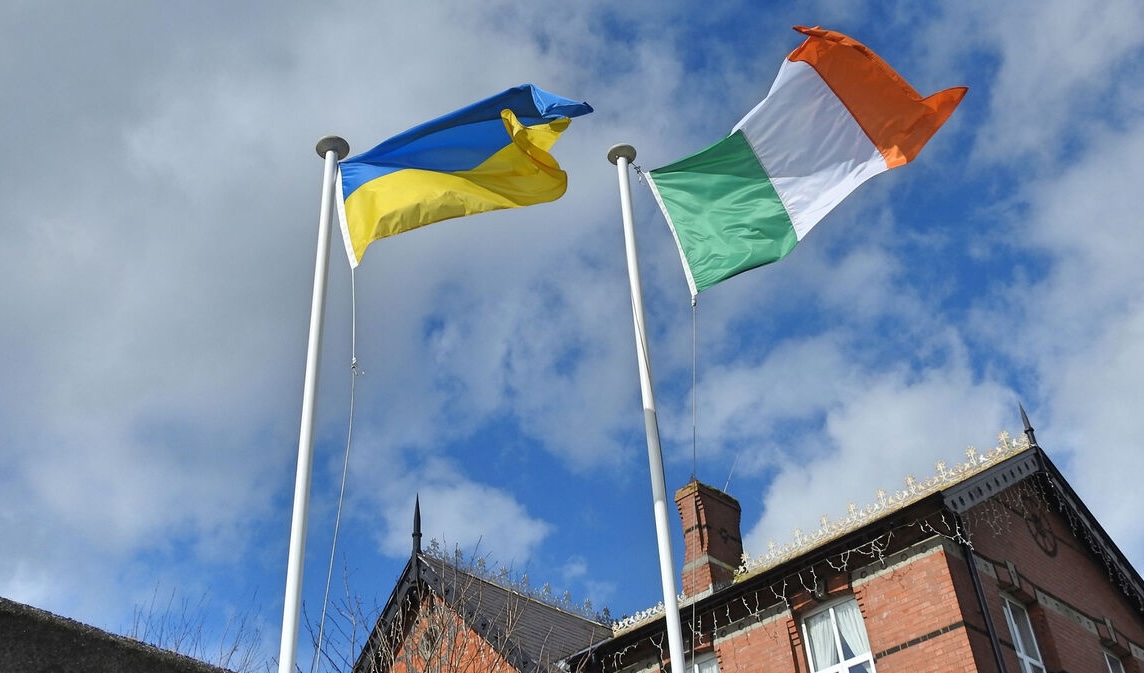
Between April 2024 and March 2026, the OPORA Civic Network held a series of facilitated dialogues in six European Union countries and the United Kingdom. One of these events took place in Dublin, the capital of the Republic of Ireland. The facilitated dialogues aim to strengthen public engagement and integrate citizens’ views into public policy, thereby ensuring its implementation, monitoring and evaluation.
Among the objectives set by OPORA were systematising the experience of Ukrainian communities abroad, devising a strategy for their interaction with Ukraine’s democratic institutions and civil society, and building a common understanding of the problems, needs and ways of involving Ukrainian citizens abroad in policy-making within Ukraine.
The key questions around which the central discussion was organised during the facilitated dialogues were:
- What connects you to Ukraine when you are far from home?
- How and why should you get involved in Ukraine’s socio-political life whilst living abroad?
In addition, at the end of the facilitated dialogue session, the facilitators asked participants to provide anonymous written answers to two further questions:
- One challenge you face whilst living abroad.
- What is stopping you from returning home?
The data collected was anonymised, digitised, processed and incorporated into the final analytical report on the study. Analysis of the discussion outcomes enabled the formulation of recommendations that will help address key needs and assist the Government of Ireland in developing future policies aimed at Ukrainian citizens.
Recommendations
1. Ensuring the exercise of electoral rights by Ukrainians in Ireland.
Most participants in the facilitated dialogue emphasised the need to create conditions that would enable Ukrainians abroad to participate fully in the country’s political life, including in elections. According to those surveyed, a number of practical and organisational issues need to be resolved to ensure that the electoral process abroad is legitimate and logistically feasible. The primary concern was the creation of a mechanism for exchanging information with Ukraine regarding the number of Ukrainian citizens residing in Ireland and their regions of residence, as well as to inform voters abroad regarding their options for exercising their full electoral rights.
Respondents also raised the issue of organisational readiness for holding elections abroad: ensuring there are sufficient polling stations and that they are safe, as well as addressing other logistical issues, requires extensive preparation; moreover, according to those surveyed, inadequate preparation will directly affect the legitimacy of the elections. Furthermore, local information support is crucial for Ukrainians abroad to participate in the elections.
1. Initiate or support the establishment, at the EU level, of a mechanism for the exchange of data on Ukrainian citizens between Member States and Ukraine. Similarly to other EU Member States, Ireland holds data on Ukrainian citizens through the temporary protection registration system. The lack of a permanent mechanism for exchanging this data with Ukraine leaves Kyiv unable to systematically plan policies regarding its own citizens abroad, including future electoral processes. However, in accordance with European legislation, notably the GDPR, the data transferred must not contain citizens’ personal data, but only aggregated information. In view of the above, the following steps should be taken:
1.1 Conduct an internal audit of existing data. Determine what data on Ukrainian citizens are collected within the temporary protection system and the format in which they are stored.
1.2 Consult with the Ukrainian government and the institutions responsible for preparing the electoral process (the Verkhovna Rada of Ukraine, the Ministry of Foreign Affairs of Ukraine, and the Central Election Commission of Ukraine). Clarify the indicators required by Kyiv for planning policies regarding its own citizens abroad, including for the preparation of the electoral process.
1.3 Facilitate the development of a data-sharing mechanism between Ukraine and the EU. Based on the findings of the assessment, support the development at the EU level of a mechanism that will enable the transfer of aggregated data on Ukrainian citizens to Ukraine and the continuous updating of this information. Advocate for this initiative within the relevant EU bodies (the Council of the EU, the European Commission and the European Data Protection Board).
2. Initiate pre-emptive coordination with Ukraine regarding the preparation of the infrastructure for holding Ukrainian elections in Ireland. Organising elections abroad is a logistically complex process that requires extensive preparation, which factors in local administrative specifics. According to the participants in the dialogue, given that the number of Ukrainians in Ireland remains at current levels, there will be a need to open additional polling stations outside the Embassy of Ukraine in Ireland. In view of the legal, security and logistical challenges, preparations for this process should begin well in advance, even before the election date is announced in Ukraine. Therefore, the following steps should be taken:
2.1 Establish an official channel of communication between Ireland and Ukraine to prepare for the electoral process. Determine which agency can be responsible for organising the elections on the Irish side, and establish its direct interaction with the Ukrainian state authorities directly responsible for organising the electoral process, including the Central Election Commission of Ukraine.
2.2 Identify the key areas of preparatory work. In collaboration with the Ukrainian side, outline the main areas requiring preparatory work, including the legal framework for holding elections in Ireland, the required number of polling stations, the logistics of ballot papers, voter registration, public information support for the electoral process, etc.
2.3 Conduct a survey of the Ukrainian community in Ireland. Use existing data from the temporary protection system, data on changes to voting addresses by Ukrainian citizens, and (should the Ukrainian authorities adopt the relevant legislation) data on active voter registration by Ukrainian citizens to identify regions with the highest concentration of Ukrainian citizens eligible to vote. Based on these findings, identify potential problem areas in each county: significant distance to polling stations, lack of information infrastructure, security or logistical risks to the conduct of voting, etc.
2.4 Begin preparations for key elements of the electoral infrastructure. Conduct a preliminary inventory of suitable polling venues (government offices, schools, community centres), taking into account accessibility requirements and security factors; determine staffing needs and the possibility of involving Irish citizens (including for technical support during the electoral process); develop logistics for the delivery and storage of election materials; and outline approaches to informing voters about polling stations and voting procedures.
2.5 Confer with Irish law enforcement agencies on ensuring security during the voting process, as well as on combating crimes against electoral rights. Engage the Garda Síochána in discussions regarding the potential security of the electoral process in Ireland, including the protection of polling stations, countering possible acts of disruption and potential violations of Ukrainian electoral law, such as pressure on voters or voter bribery.
2.6 Conduct an audit of administrative procedures. Identify the permits, approvals and regulations required to organise foreign elections in Ireland and draw up a realistic timeline for obtaining them.
3. Within the electoral process, facilitate the provision of information regarding the elections in Ireland. A lack of accessible information on the registration process, document requirements and voting logistics may reduce turnout and undermine the legitimacy of the electoral process. In view of the above, the following steps should be taken:
3.1 Collaborate with the Ukrainian side to identify the key information needs of Ukrainian voters in Ireland. In cooperation with the Central Election Commission of Ukraine, determine the information that is most critical to the electoral process and identify the current gaps in public awareness.
3.2 Ensure legal clarity regarding permissible forms of election campaigning within Ireland. Conduct an analysis of Irish legislation regarding permissible forms of campaigning in the context of foreign elections and, well in advance of the start of the campaign period, provide the Ukrainian side and participants in the electoral process with clear guidance on the permitted scope of campaigning within Ireland.
3.3 Ensure the timely dissemination of key information about the electoral process. In cooperation with the Ukrainian side, utilise existing information channels: Irish media, local authorities, and online advertising tools, so that Ukrainian voters receive timely information on the dates of the electoral process, the necessary documents, the location of polling stations, and the voting procedure.
3.4 Involve representatives of the Ukrainian community in Ireland in communication efforts. Enable members of the Ukrainian community with experience of working in elections to assist in coordinating communication between official bodies and voters, and in informing Ukrainian voters about the conduct of the electoral process in Ireland.
2. Supporting the business endeavours of Ukrainians in Ireland.
Participants in the dialogue noted that business is an important tool for supporting Ukraine and a means of maintaining ties with the country. Representatives of the Ukrainian community in Ireland expressed interest in setting up businesses and promoting Ukrainian goods on the Irish market, but noted that they face regulatory, logistical and language barriers which significantly limit their capacity to do so. In view of the above, the following steps should be taken:
1. Facilitate Ukrainian entrepreneurs’ access to existing Irish small business support programmes. Many participants in the dialogue noted that they aspire to start their own business in Ireland. However, the key barrier to setting up and developing a business for them remains the language barrier: many Ukrainians are not fluent in English at a level sufficient to navigate the business environment independently. Another barrier is the lack of information about small business support programmes available to Ukrainians in Ireland. In view of the above, the following steps should be taken:
1.1 Explore the availability of existing small business support schemes for Ukrainians. Identify which government and non-government entrepreneurship support schemes are available to Ukrainian citizens in Ireland and determine the barriers preventing their use.
1.2 Organise outreach to the Ukrainian community regarding available support schemes. Disseminate information about existing small business support programmes and the necessary documents and permits through the information channels used by the Ukrainian community in Ireland.
1.3 Provide Ukrainian-language support at key stages of starting a business. Organise access to Ukrainian-language support during business registration and interactions with government bodies, including through the involvement of translators or partnerships with Ukrainian organisations in Ireland.
1.4 In cooperation with the Ukrainian government, ensure legal clarity regarding double taxation. Agree on positions on double taxation with the Ukrainian government, prepare accessible Ukrainian-language explanations of tax rules for Ukrainians working or conducting business in Ireland, and disseminate them through existing community communication channels.
1.5 Facilitate the dissemination of information about Ukrainian-speaking businesses in Ireland. Support the creation or expansion of a directory of existing Ukrainian-speaking businesses and ensure its distribution through job centres and local Ukrainian organisations, thereby facilitating access to the labour market for Ukrainians with limited English language skills.
2. Facilitate access for Ukrainian goods to the Irish market. According to Ukrainian community representatives in Ireland, Ukrainian products have the potential to be promoted on the Irish market; however, current legislative and logistical restrictions complicate their promotion and hinder the community’s economic activity. At the same time, respondents note that simplifying access for Ukrainian goods is a key element in expanding the economic partnership between Ireland and Ukraine. In view of the above, the following steps should be taken:
2.1 Conduct an analysis of existing barriers. Identify the legislative, customs and logistical restrictions that hinder the access of Ukrainian goods to the Irish market, and determine which of these can be removed at the national level and which require changes at the EU level.
2.2 Develop targeted support measures. Based on the findings, identify practical steps to simplify market access for Ukrainian goods, including by streamlining administrative procedures for Ukrainian small businesses.
3. Promoting the adaptation and integration of Ukrainians in Ireland.
Participants in the dialogue spoke at length about the challenges of adapting to a new environment, the difficulties in mastering the language to a level sufficient for unhindered communication and employment, and, consequently, the problems with integrating into Irish society. According to the respondents, the most significant support (both material and psychological) during the adaptation period was provided by the Ukrainian community already living in Ireland.
However, those surveyed highlighted several problems faced by Ukrainians in the Irish context. First and foremost, this concerns the fragmentation of the community’s information environment: existing communication channels (Telegram chats, YouTube channels, online radio and other platforms) operate in a scattered manner and do not provide systematic coverage of the community. They also pointed to the need for shared physical spaces that would facilitate better communication within the community. In view of the above, the following steps should be taken:
1. Facilitate the creation of a unified information space for the Ukrainian community in Ireland. Scattered information about government, community and local initiatives impedes Ukrainians’ access to available resources and services, as well as hindering coordination within the community. In view of the above, the following steps should be taken:
1.1 Support the creation of a unified online information platform. Although the Ukrainian side is responsible for developing the online platform, Ireland should contribute to the content of the resource, which will bring together up-to-date information on government services, community initiatives and local events, tailored to Ukrainians in different regions of Ireland.
1.2 Involve existing Ukrainian organisations in the development and content creation for the platform. Collaborate with organisations that are already working with the Ukrainian community in Ireland and gathering its feedback to ensure the platform remains relevant to its users.
2. Promote the development of the Ukrainian community and Ukrainian student initiatives in Ireland. The lack of permanent physical spaces that could serve as a hub for community meetings and activities is one of the key challenges facing the Ukrainian community in Ireland. According to respondents, without their own meeting spaces, it is more difficult for them to preserve the cultural identity of Ukrainians, integrate into Irish society and maintain social ties within the community. In view of the above, the following steps should be taken:
2.1 Identify the community’s needs regarding physical spaces. Determine which communities in the regions of Ireland are most in need of premises and assess the available options for creating or allocating them.
2.2 Provide organisational support for community spaces. Examine mechanisms to support the creation and maintenance of physical spaces for community activities, including through existing programmes for funding community initiatives.
4. Promoting education and awareness-raising activities among Ukrainians in Ireland.
Ukrainians in Ireland feel a need to inform Irish society about the war in Ukraine, as well as Ukrainian history and culture. According to those surveyed, a significant proportion of the local population remains unaware of the similarities between the histories of Ukraine and Ireland, and the importance of decolonisation for both countries. Support for the Ukrainian community’s awareness-raising initiatives will help foster an accurate understanding of the Russia-Ukraine war among the Irish public and promote a pro-Ukrainian discourse in Ireland. Thus, the following steps should be taken:
1. Provide support for educational and cultural initiatives by the Ukrainian community aimed at raising awareness within Irish society about the war in Ukraine, its history and culture. Increasing Irish society’s understanding of the Ukrainian context helps to foster long-term public support for Ukraine and strengthen ties between the two nations. In view of the above, the following steps should be taken:
1.1 Identify existing initiatives and potential areas for support. Organise discussions with the Ukrainian community in Ireland to ascertain which educational and cultural activities the community is already undertaking, and where support from Ireland would be most appropriate.
1.2 Provide organisational and informational support for public events. Facilitate public discussions, cultural events and information campaigns organised by the Ukrainian community, including by publicising such events to the Irish community.
1.3 Facilitate partnerships between Irish cultural and educational institutions and Ukrainian civil society organisations. Support cooperation between Ukrainian organisations and Irish universities, libraries and other public institutions to broaden the reach and strengthen the impact of these initiatives.
This document was created as part of the Inclusive Dialogues for Democratic Reform in Ukraine, a project funded by the Irish Department of Foreign Affairs and Trade; however, the views expressed herein do not reflect the official policy of the Government of Ireland.