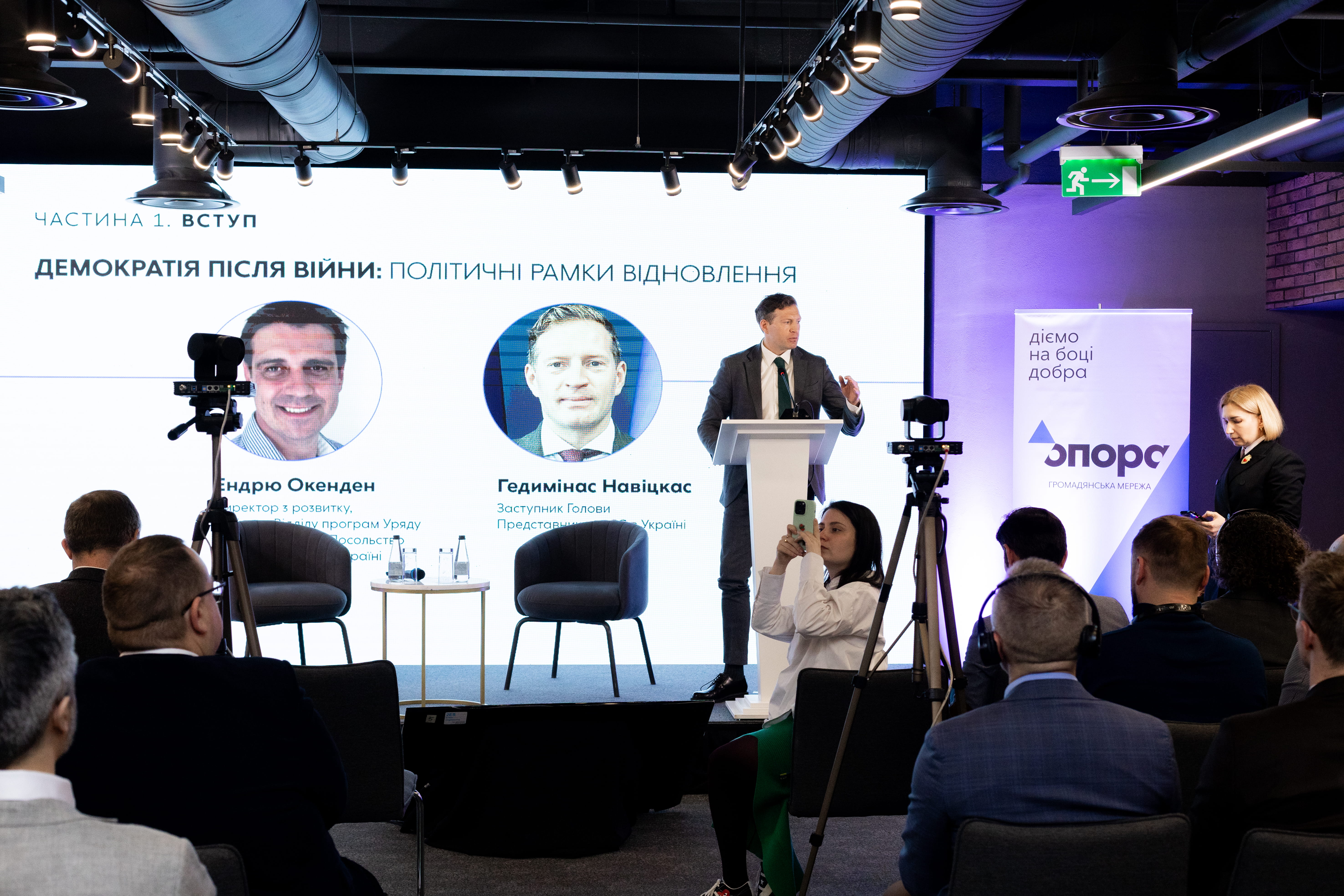
The United Kingdom stands with Ukraine and will continue its support, particularly for the critical preparatory, political, and practical measures that will ensure the successful conduct of post-war elections when the circumstances are appropriate. This was stated by Andrew Ockenden, Development Director and Head of the UK Government Programmes at the British Embassy in Ukraine, during the opening of the Civil Network OPORA forum, “Key Challenges of Electoral Democracy After the Great War”.
“When the time is right to hold post-war elections in Ukraine, these will be extremely important. They will be critical for public trust in government and underpin domestic stability and Ukraine’s long-term resilience against Russia. But they will also face some tricky issues. How can Ukraine make elections truly inclusive, with millions of people displaced inside and outside the country? And how will it include Ukrainians that are serving on the front lines? There is a whole range of logistical, politically complex issues that we need to grapple with”, he said.
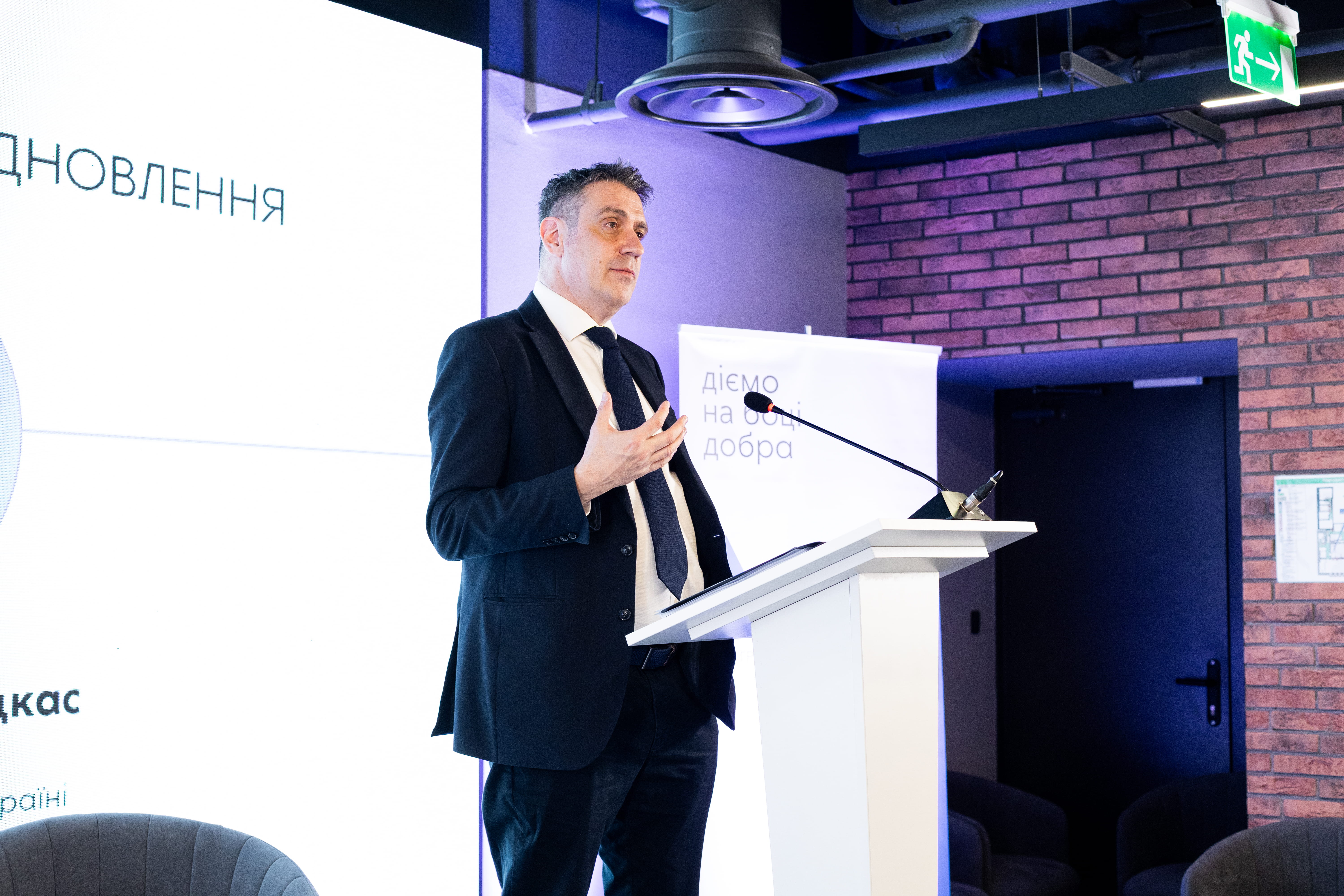
The representative of the British Embassy in Ukraine highly commended cooperation with the Civil Network OPORA, particularly in researching issues related to organizing election observation and developing a methodology for community security audits to objectively assess the feasibility of holding elections in specific regions.
“Another emerging theme is the theme of disinformation, and OPORA have been leading the work to deepen our understanding of election-related disinformation threats”, Andrew Ockended noted.
The dates and modalities of future elections will be determined solely by Ukraine. At the same time, once the decision to organize them is made, the European Union stands ready to support Ukraine and its citizens in this process. This was stated in the opening remarks by Gediminas Navickas, Deputy Head of the EU Delegation to Ukraine.
“The current inclusive process that we are observing now, with rich discussions that are already ongoing in the Verkhovna Rada, sets a very good example, and I think that this example will need to continue”, he added. According to him, the quality of the first post-war elections will define the future of the Ukrainian state.
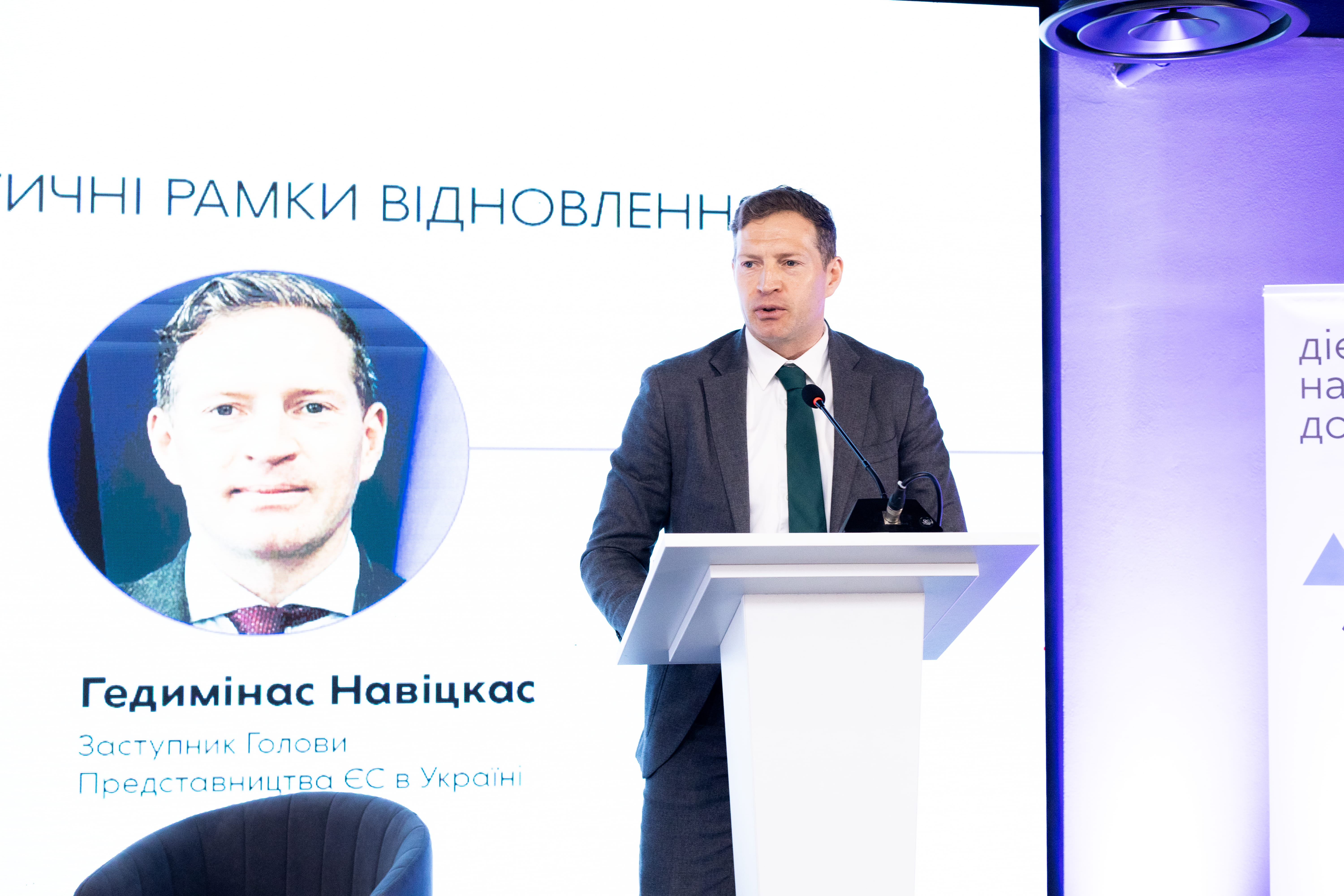
“How we will ensure legitimacy, fairness, inclusiveness for the first post-war elections, will be critical for Ukraine’s democratic resilience. Some might even say that it will define the next generation of the Ukrainian state and statehood”, the diplomat said.
The EU representative emphasized that the European Union will continue to assist Ukraine at all stages of election preparation, particularly by supporting civil society. He noted that since 2022, the EU has already provided over €200 million to Ukrainian non-governmental organizations and plans to sustain this support in the coming months.
He also announced that the EU is working with international partners, including International IDEA and the Estonian e-Governance Academy, to strengthen Ukraine’s democratic resilience, enhance citizen participation in political processes, and prepare for future elections.
The current security situation does not permit lifting martial law. Under these conditions, a parliamentary working group has been developing a special law on post-war elections since late December 2025. Over a short period, approximately 40 meetings of thematic subgroups were held, featuring high-quality expert discussions. This was stated by the First Deputy Chairman of the Verkhovna Rada, Oleksandr Korniienko.
“A number of these decisions will be purely political, and sooner or later, this dialogue will move to the platform of a formal conciliatory council or a cohort of faction and group leaders in parliament. After all, this involves changing laws and adjusting the budget. At that stage, the working group will provide its expert recommendations and conclusions,” the politician said.
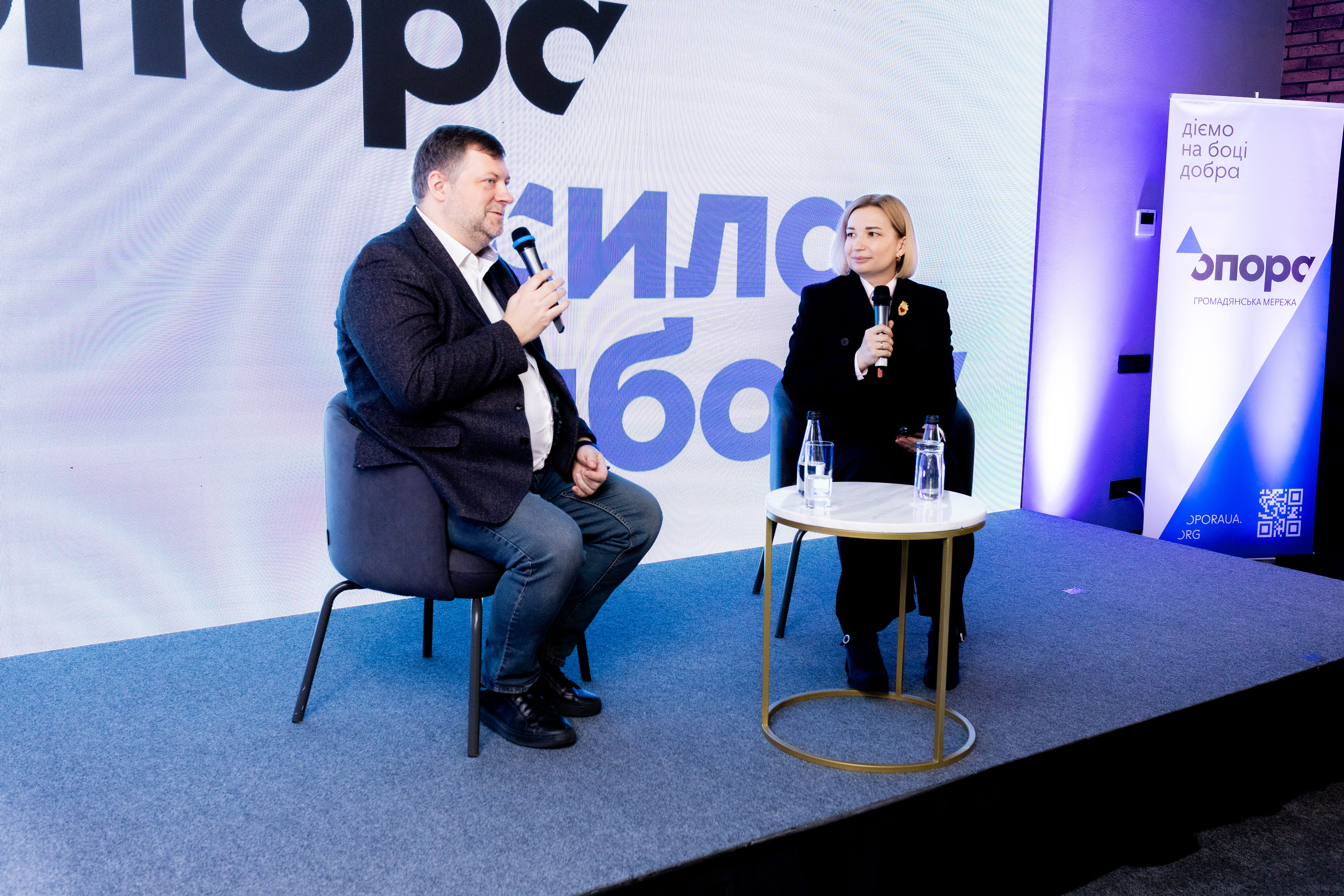
Oleksandr Korniienko predicted that political discussions would center around the organization of voting for Ukrainian citizens abroad and the realization of their right to run for office, the participation of military personnel in elections, and changes to the electoral systems for parliament and local government bodies.
'The situation with martial law has shown that any majoritarian system is inherently more vulnerable. This is because elections cannot be held, yet quorums continue to decrease. We are currently suggesting a law and will attempt to vote it so that quorums for community councils with fewer than 10,000 residents would be calculated based on the current number of members rather than the absolute total composition,” noted Oleksandr Korniienko. Another major debate will concern ensuring public awareness, freedom of speech, countering disinformation, and the roles of the media and social networks, the Vice Speaker of Parliament added.
Any failures stemming from a lack of systemic preparedness or inadequate adaptation to post-war electoral challenges could prove fatal. This was emphasized by Olga Aivazovska, Chair of the Board of the Civil Network OPORA, during her speech. “We do not have the right to gamble with our future as if we have multiple lives or more than one Ukraine. The electoral process will undoubtedly become a target for the aggressor state. Furthermore, Ukrainian society, with its massive demand for justice, may be vulnerable to populism and the sophisticated campaigns of Russian specialists aimed at sowing division and polarization,” stated Olga Aivazovska.
During the war, the electoral system deteriorated, leaving it unprepared for new challenges. “OPORA has consistently maintained the position that elections during an active phase of conflict cannot be well-organized or competitive, and that a sham facade democracy serves only autocrats. Ukraine has an established democratic practice, and our society strives for high standards of participation in governance; this is why every peaceful revolution since the restoration of independence has occurred due to a demand for genuine, rather than simulated, rights, as well as a yearning for justice,” stated Olga Aivazovska. “The stability and resilience of Ukraine’s future can only be guaranteed by its final integration into the EU, grounded in the Copenhagen criteria, respect for human rights, the rule of law, and a democratic framework.”
According to Aivazovska, there is a significant risk that the working group, which has already drafted approximately 65% of the bill on transitional elections, may lose its momentum amidst new wars, less active negotiations, and other looming crises. Ultimately, Aivazovska emphasized that Ukraine will prevail if the political rights of every citizen are properly protected, if elections are thoroughly prepared, and if politicians—despite their exhaustion—remember their state-building mission."
This event has been funded by UK International Development from the UK government; however, the views expressed do not necessarily reflect the UK government’s official policies.