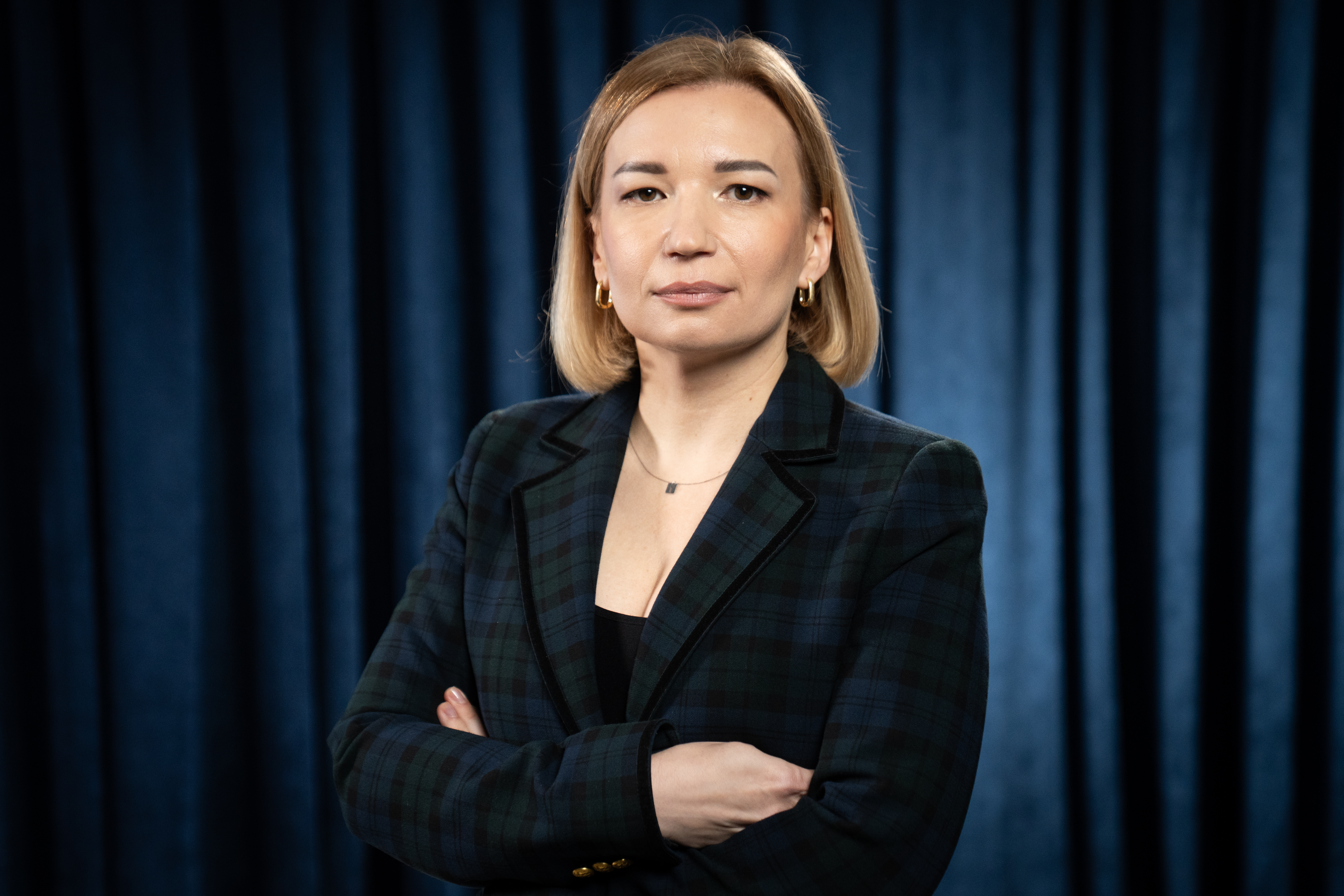
Speech by Olga Aivazovska, Chair of the Board of the OPORA Civil Network, at an event marking the Anniversary of the signing of the “Declaration of Principles for International Election Observation,” held in Geneva on December 10–12, 2025.
I am grateful for the opportunity to address this distinguished audience at the United Nations headquarters in Geneva today. The last time I was here, I came with my 10-year-old son in April 2022, two days after the liberation of the Kyiv region, when the world first learned about the atrocities committed by the Russian army in Bucha and Irpin. I testified about the crimes of the Kremlin’s authoritarian regime against democratic Ukraine and its people.
Yesterday, from early morning until late evening, I spoke with Ukrainian and international media about why Donald Trump is wrong and why forcing a country to surrender is not peace, and why holding elections during wartime endangers national security.
Five years ago, when the world went into COVID lockdowns, we adapted our elections with new protocols - masks, sanitizers, distancing, vaccines. But five years from now, the world that will require international election observation missions may no longer exist. I do not want to sound dramatic, but we are living through a profound identity crisis. And this crisis is becoming the new normal.
The role of respected international monitoring organisations is not secondary - not if they see their mission as something more than simply recording problems and violations. In an era of aggression, systemic cyber threats, and Russian interference, election monitoring reports could become the epitaphs of once-independent nations. Today, peace and democracy must be actively defended. And if observers are recognised as human rights defenders, then this is not only a status - it is also about the responsibility to act.
I’ve heard a lot about artificial intelligence on social media here, shaping voters’ opinions with massive amounts of content. But let’s bring it closer to reality. In Kherson, a regional center in southern Ukraine liberated by Ukraine’s Armed Forces three years ago, less than 25% of the population remains. Russians are hunting civilians with FPV drones.
Angelina Jolie recently visited the city and this was a truly courageous act. Yet, even in areas controlled by Ukraine and far from the front line, life is almost impossible. FPV drones which are small, lightweight, AI-powered, with video cameras and 30–40 km strike range, can fly long distances using solar batteries and even recognize faces on their own. They can be made at home with 3D printers, making it nearly impossible to trace the owner.
OPORA has been doing a security audit of frontline communities. The findings show that from August to October, Kherson alone suffered 3,861 attacks, killing 45 civilians and injuring 425. Imagine what this means during an election: candidates, commission members, and observers could be tracked and attacked by drones, even in supposed “safe” areas because they are equipped with video cameras and can recognise faces. Therefore, the temporary ceasefire is designed for artillery, ballistics, and tanks, but not for drones, which can be secretly delivered to any territory.
I want to highlight three key areas as we enter a period of conflict, long wars of attrition, and probably short ceasefires - issues that will remain relevant for the foreseeable future:
- Security in post-conflict countries is essential for genuinely free and fair elections. It requires investing time, resources, and ideas in the inter-election period, not when it is too late.
- Political violence, polarization, and societal divisions are the goal; social media and AI are just tools. Behind them are the interests of states - TikTok from China, Telegram from Russia. Tackling this means more than regulation. We need to create a safe digital environment that is competitive. I honestly expect Europe to have its own popular social media platforms and AI, fostering diversification and resilience.
- Political rights can only be truly protected if voters can still freely form their political will.
Ukrainian civil society and international observer organisations must focus on an objective assessment of the security conditions for Ukraine’s first post-war elections. Blackmailing Ukraine is destructive - not only for us but for all democracies - and it must stop immediately. Security guarantees for free elections are mandatory.
Pre-election security assessments should go beyond the possibility of deploying international observers. They must consider the conditions for safe participation for both voters and organisers. After the assessment, it’s essential to move to practical steps: protocols, equipment, and countermeasures, where coordination between state, non-governmental, and international actors is crucial.
When we lost direct funding from USAID, my biggest fear was that our colleagues wouldn’t have the security training or equipment they needed at a critical moment. Yet, within months, we implemented projects that allowed our teams to train for hostile environments, obtain personal protective gear, and even anti-drone detectors. In our circumstances, these measures are very important - not just for security, but for safeguarding elections themselves.
The mandate of international organisations in election observation will be significantly strengthened if they choose to remain active. There are three things we cannot recover: time, opportunity, and word. We still have time and opportunity to prepare - but it is much harder with words. Sadly, some partners have already lost their sense of integrity.
In 2025, OPORA is conducting 15 pilot security audits in communities liberated after occupation, near the front line or the Russian-Ukrainian border. Supported by the UK Foreign Office, and with plans to expand to 20 more communities next year with EU support, these audits will test the methodology, identify where it is most needed, and ensure it is practical and cost-effective for a large-scale security assessment ahead of Ukraine’s first post-war elections.
A security audit is a universal tool for monitoring organisational capacity and ensuring a transparent decision-making process on whether elections can safely take place. It also highlights critical infrastructure risks that must be addressed during early reconstruction and recovery. The assessment covers basic prerequisites, physical security, socio-economic factors, and the state of democratic processes - providing a comprehensive picture of election readiness in challenging conditions.
The audit allows us to analyse three key areas:
- Readiness to respond to security challenges: How secure is the community, and can local authorities respond effectively to potential threats?
- Dynamics of socio-economic processes: Do residents have access to essential services like health care, financial support, logistics, that guarantee basic social and economic stability?
- Ability to implement electoral procedures: Are conditions in place for free and fair elections, and do local actors have the capacity to carry out the electoral process?
The assessment uses 35 indicators, grouped into four blocks and four stages. Data is collected by OPORA’s network of regional consultants through field observation, desk research, public information requests, interviews with officials and residents, and open-source data.
Each stage is scored as 1 point (successful) or 0 (failed). Communities that score 4 out of 4 points are considered ready for elections. Lower scores indicate areas that need improvement, allowing us to identify specific gaps and take targeted action.
We truly believe that:
- Security audits should be mandatory for assessing the readiness of physical and social infrastructure in de-occupied communities and those near combat zones. Interestingly, security risks do not always correlate with distance from the front line - 50 or 100 km can make little difference. Regular audits can also encourage early investment in restoring critical infrastructure, even before a political reset.
- A legislative framework is needed to identify areas where safe and democratic elections cannot be held. Any decisions affecting constitutional rights must be based on verified data.
- Security is multi-dimensional, determined by the intensity of hostilities, the condition of infrastructure, the availability of shelters, the ability to respond to emergencies, and access to basic services.
- Identified risks highlight the need for approved security protocols for all election participants, aligned with international standards and best practices. These protocols are also essential for ensuring the full functioning of international observation missions.
The results of the audit show a mixed picture:
- If martial law were lifted, 3 out of 11 communities would pass the physical security assessment. Key issues include shelling, lack of shelters near election commission premises, and an underdeveloped emergency warning system.
- Four communities maintain adequate education and healthcare services, with digital access via mobile, internet, TV, and radio. However, shelling of the Ukrainian power grid in October-November 2025 caused blackouts of over 12 hours in some areas, affecting the assessment.
- Only 2 communities scored positively for democratic processes. Main obstacles were additional bans on peaceful assemblies, destruction of electoral infrastructure, and limited capacity to recruit election commission members due to population decline.
- Communities in combat zones, near the Russian border, or de-occupied in 2022 generally showed the weakest results across all indicators.
- Even in areas with ongoing hostilities, communities continue to provide essential services - educational, medical, and administrative - and local governance structures remain functional.
- Police response times meet recommended standards in 7 out of 11 communities (7–10 minutes in cities, 20–40 minutes in rural areas), and staffing levels range from 70–93%.
- Landmines remain a significant logistical obstacle for elections.
- State Emergency Service response times are within peacetime norms in 8 out of 11 communities (up to 25 minutes).
- Importantly, all communities retain access to justice; courts continue to operate and ensure citizens’ legal rights.
This shows that free and fair elections are only possible if security is guaranteed, political rights are protected, and civil society and international partners work together to safeguard democracy. Thank you so much for your attention.