What is the problem?
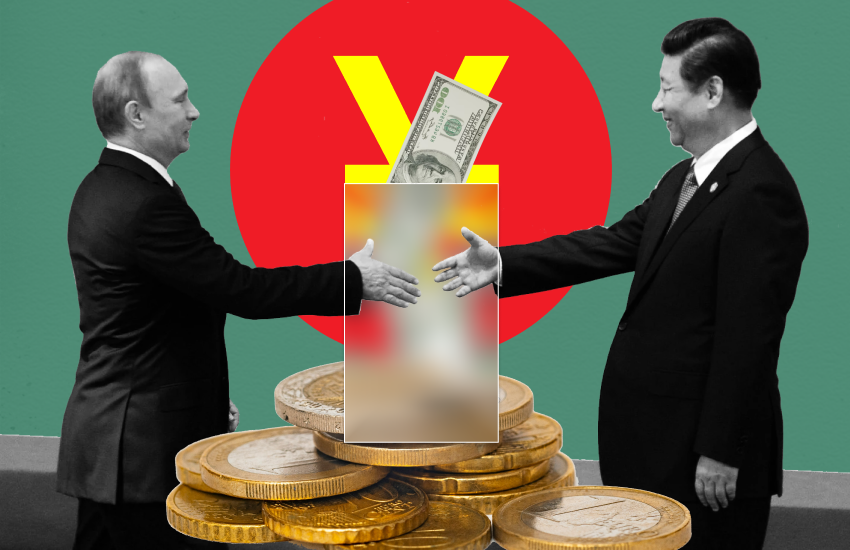
Abuse of administrative resources, bribery, exclusion of some voters from the electoral rolls, limited access to the media, and other forms of electoral violations undermine trust in the process and delegitimize its results. However, there is one type of violation that not only breaches the democratic order of power transfer but also poses a threat to the sovereignty and security of the state in general—foreign interference in elections.
The attempts by Russia to influence elections and referenda as part of the Kremlin’s aggressive policy are officially recognised. In its recent Resolution, “Foreign interference: a threat to democratic security in Europe” (2593), released in 2025, the Parliamentary Assembly of the Council of Europe directly stated the escalation of Russian interference, citing specific examples such as:
- 2016 Brexit referendum in the United Kingdom;
- 2016 US presidential election;
- 2017 coup d’état by Catalonian regional government leaders against the Spanish constitutional order;
- 2017 French presidential election;
- 2024 Romanian presidential elections;
- 2024 Moldovan presidential elections;
- German politics in general.
The same threats prompted the European Parliament to establish, in 2020, the Special committee on foreign interference in all democratic processes (INGE) and adopt the Resolution on new allegations of Russian interference in the European Parliament, in the upcoming EU elections and the impact on the European Union (2024/2696(RSP) in 2024.
For Ukraine, whose political environment has long been filled with pro-Russian politicians and parties, the outlined problem is not new. Yet, in light of the full-scale war and the examples of the Georgian or Belarusian scenarios, the threat of Russian influence on elections is critical—the very existence of the Ukrainian state may depend on it, even if hostilities cease.
Therefore, OPORA has initiated a legal research devoted to countering foreign financial influence on parties and electoral processes. In this text, we examined the experiences of countries that have recently introduced relevant legal changes (the UK and Australia), have extensive regulation of the issue (the USA), or whose electoral processes have recently been subjected to Russian interference (Moldova and Romania).
United Kingdom
General regulation. In 2023, the National Security Act was adopted in the UK, which introduced new crimes, such as foreign interference and foreign interference in elections; established a clear definition of a “foreign power" and the conditions under which an action is considered to be performed “for or on behalf of" such a power; strengthened penalties for classic espionage, sabotage, and electoral offences when they are connected to a foreign power; introduces the Foreign Influence Registration Scheme (FIRS)—a system for the mandatory registration of political activity carried out at the direction of foreign entities; granted broader investigative powers to law enforcement agencies.
How are foreign interference entities identified? According to Section 32 of the National Security Act, the term “foreign power” means:
- the sovereign or other head of a foreign State in their public capacity,
- a foreign government, or part of a foreign government,
- an agency or authority of a foreign government, or of part of a foreign government,
- an authority responsible for administering the affairs of an area within a foreign country or territory, or persons exercising the functions of such an authority, or
- a political party which is a governing political party of a foreign government.
What are “foreign interference”, “prohibited conduct”, “interference effect”, and “foreign power condition”? In Section 14 of the National Security Act, criminal responsibility is established for actions conducted under the influence or in the interest of a foreign state, while Sections 13 and 14 define the interference effect and prohibited conduct. In particular, the person commits an offence if:
- the person engages in a prohibited conduct;
- the foreign power condition is met in relation to prohibited conduct;
- the person intends or is reckless as to whether the prohibited conduct, or the course of conduct of which it forms a part, has an interference effect.
A person who commits an offence is liable on conviction on indictment to imprisonment for a term not exceeding 14 years or a fine (or both).
However, to qualify the offence, it is important to establish such elements as prohibited conduct, interference effect, and the foreign power condition.
What is a “prohibited conduct”? According to Section 15 of the National Security Act, the conduct is prohibited:
- if it takes place in a country or territory outside the United Kingdom, it would constitute an offence if it took place in any part of the United Kingdom;
- it involves coercion of any kind (by using or threatening to use violence against a person; damaging or destroying, or threatening to damage or destroy, a person’s property; damaging or threatening to damage a person’s reputation; causing or threatening to cause financial loss to a person; causing spiritual injury to, or placing undue spiritual pressure on, a person).
What is an “interference effect”? According to Article 14 of the National Security Act, an “interference effect” means any of the following effects:
- interfering with the exercise by a particular person of a Convention right in the United Kingdom (Section 1 of the Human Rights Act 1998);
- affecting the exercise by any person of their public functions;
- interfering with whether, or how, any person makes use of services provided in the exercise of public functions,
- interfering with whether, or how, any person (other than in the exercise of a public function) participates in relevant political processes or makes political decisions,
- interfering with whether, or how, any person (other than in the exercise of a public function) participates in legal processes under the law of the United Kingdom, or
- prejudicing the safety or interests of the United Kingdom.
In turn, “relevant political processes” mean:
- an election or referendum in the United Kingdom,
- the proceedings of a local authority,
- the proceedings of a UK registered political party, or
- the activities of an informal group consisting of or including members of one or both of Houses of Parliament, the Northern Ireland Assembly, the Scottish Parliament, or Senedd Cymru.
What is a “foreign power condition”? At the same time, Article 31 of the National Security Act defines the meaning of the “foreign power condition” that allows connecting the person with a foreign state. In particular, the “foreign power conditions” is met in relation to a person’s conduct if:
- the conduct in question, or a course of conduct of which it forms part, is carried out for or on behalf of a foreign power, and
- the person knows, or having regard to other matters known to them ought reasonably to know, that to be the case.
The conduct in question, or a course of conduct of which it forms part, is in particular to be treated as carried out for or on behalf of a foreign power if:
- it is instigated by a foreign power,
- it is under the direction or control of a foreign power,
- it is carried out with financial or other assistance provided by a foreign power for that purpose, or
- it is carried out in collaboration with, or with the agreement of, a foreign power.
The following aspects also apply:
- both direct or indirect relationship between the conduct, or the course of conduct, and the foreign power are taken into account (for example, there may be an indirect relationship through one or more companies);
- A person’s conduct may form part of a course of conduct engaged in by the person alone, or by the person and one or more other persons;
- The foreign power condition is also met in relation to a person’s conduct if the person intends the conduct in question to benefit a foreign power;
- The foreign power condition may be met in relation to the conduct of a person who holds office in or under, or is an employee or other member of staff of, a foreign power, as it may be met in relation to the conduct of any other person.
Foreign interference in elections. In Article 16 of the National Security Act, the “foreign interference in elections” is defined. It applies when both of the following are met:
- a person commits a relevant electoral offence =, and
- the foreign power condition is met in relation to the conduct of the person which constitutes the offence (see section 31).
The list of the relevant electoral offences is given in Part 1 of Schedule 1 of the National Security Act with references to the electoral and referendum legislation. Such offences include:
- bribery;
- treating;
- undue influence;
- false declaration about source of donation;
- failure to return donations;
- evading restrictions on donations;
- failure to comply with requirements about recording donations.
Commonwealth of Australia
General regulation. Australia introduced criminal liability for foreign interference in 2018 (Criminal Code Act 1995, Division 92), adopted the Foreign Influence Transparency Scheme Act (FITSA), and the National Strategy on Countering Foreign Interference in Australia 2024. The Australian Electoral Commission established the Electoral Integrity Assurance Taskforce, which, among other activities, monitors the information environment for potential interference or disinformation and facilitates information sharing with relevant services in the areas of elections and referendums.
The aforementioned Strategy emphasizes that foreign interference can challenge Australians’ commitment to democratic values and reduce public confidence in the integrity of the democracy. Globally, foreign governments have attempted to undermine democracies through electoral, political and bureaucratic interference, using methods such as:
- attempting to sway an electoral outcome towards a candidate or political party whose policies are more favourable to the foreign government;
- attempting to covertly influence, coerce or corrupt political candidates, political staff or government officials to serve foreign interests over Australia’s interests;
- spreading disinformation to reduce voter confidence in the integrity of electoral processes and democratic government.
How are foreign interference entities identified? In FITSA (Part 1, Division 2), along with the concept of a “foreign country” (any country other than Australia or an external Territory (whether or not an independent sovereign State)), the definition of the term "foreign principal" is provided, which means:
- a foreign government (the government of a foreign country or of part of a foreign country, its authority);
- a foreign government related entity (taking into account the degree of connection to a foreign principal through the percentage of the issued share capital or voting power in the company, referring not only to companies but also to control over them, as well as the fact of whether executive committee (however described) of the person are accustomed, or under an obligation (whether formal or informal), to act in accordance with the directions, instructions or wishes of the foreign principal, etc.);
- a foreign political organisation (a foreign political party and a foreign organisation that exists primarily to pursue political objectives);
- a foreign government related individual (the person who is related to a foreign principal in either or both of the following ways: (i) the individual is accustomed, or under an obligation (whether formal or informal), to act in accordance with the directions, instructions or wishes of the foreign principal; (ii) the foreign principal is in a position to exercise, in any other way, total or substantial control over the individual).
According to Clause 92.2 of the Criminal Code Act, a person commits an interference if:
- the person engages in the conduct on behalf of, or in collaboration with, a foreign principal or a person acting on behalf of a foreign principal;
- the conduct is directed, funded or supervised by a foreign principal or a person acting on behalf of a foreign principal.
At the same time, the person does not need to have in mind a particular foreign principal and they may have in mind more than one foreign principal.
How is “benefit” defined? According to FITSA (Part 2), benefit includes any advantage and is not limited to property.
How is foreign influence defined? Clause 12 of Part 2 of FITSA contains a definition of activity for the purpose of political or governmental influence. A person undertakes such an activity if the sole or primary purpose, or a substantial purpose, of the activity is to influence one or more of the following
- a process in relation to a federal election or a designated vote;
- a process in relation to a federal government decision;
- proceedings of a House of the Parliament;
- a process in relation to a registered political party;
- a process in relation to a member of the Parliament who is not a member of a registered political party;
- a process in relation to a candidate in a federal election who is not endorsed by a registered political party;
- processes in relation to a person or entity registered under the Commonwealth Electoral Act 1918 as a political campaigner.
The examples of processes in relation to a registered political party include:
- processes relating to the party’s activity;
- the conduct of the party’s campaign in relation to a federal election or a designated vote;
- the selection or endorsement of the party’s candidates in relation to a federal election;
- the allocation of the party’s preferences in relation to a federal election;
- the selection of officers of the party’s executive or delegates to party conferences.
Moreover, a person also undertakes an activity for the purposes of political or governmental influence if the sole or primary purpose, or a substantial purpose, of the activity is to influence the public, or a section of the public, in relation to the abovementioned processes.
What constitutes an offence? Division 92 of the Criminal Code Acct 1995 differentiates offences into foreign interference generally and interference involving targeted person. In either case, the conduct is criminal if it possesses the following combination of elements:
- the conduct is done:
- on behalf of, or in collaboration with, a foreign principal or a person acting on behalf of a foreign principal;
- is directed, funded or supervised by a foreign principal or a person acting on behalf of a foreign principal;
- the person intends that the conduct will:
- influence a political or governmental process of the Commonwealth or a State or Territory; or
- influence the exercise (whether or not in Australia) of an Australian democratic or political right or duty; or
- support intelligence activities of a foreign principal; or
- prejudice Australia’s national security; and
- any part of the conduct:
- is covert or involves deception; or
- involves the person making a threat to cause serious harm, whether to the person to whom the threat is made or any other person; or
- involves the person making a demand with menaces
Such an offence is penalised by imprisonment for 20 years. The penalties for reckless foreign interference (imprisonment for 15 years) and preparing for a foreign interference offence (imprisonment for 10 years) are established, too.
United States of America
General regulation. In the USA, the problem of illegal financing was part of the Watergate scandal, which occurred back in the early 1970s. Currently, the US Code of Federal Regulations (CFR) contains two parts related to foreign funding of political activity:
- Part 110: "Contribution and Expenditure Limitations and Prohibitions";
- Part 300: "Non-Federal Funds."
Part 300 was introduced after the passage of the Bipartisan Campaign Reform Act (BCRA) in 2002 (also known as the McCain–Feingold Act), and its purpose was to close loopholes through which large contributions could be directed around federal limits via parties or committees—especially for "pseudo-non-federal" activity. The adoption of this law was intended to restrict so-called "soft money"—contributions not formally used to support a specific candidate but that can de facto influence elections, for example, through advertisements "supporting the ideas" of a certain party, voter registration or turnout campaigns, and indirect (hidden) campaigning. Thus, CFR §110.20 primarily concerns "hard money" (direct funding), and CFR §300.2 concerns "soft money" (indirect funding).
How are foreign interference entities identified? In CFR §110.20(a), in addition to the typical concept of a “foreign national,” the term “foreign principal” is also provided.
CFR §611(b) stipulates that the term “foreign principal” encompasses:
- a government of a foreign country and a foreign political party;
- a person outside of the United States, unless it is established that such person is an individual and a citizen of and domiciled within the United States, or that such person is not an individual and is organized under or created by the laws of the United States or of any State or other place subject to the jurisdiction of the United States and has its principal place of business within the United States; and
- a partnership, association, corporation, organization, or other combination of persons organized under the laws of or having its principal place of business in a foreign country.
CFR §300.2 (a) (b) defines the entities of "indirect" funding:
- organization that plans to make expenditures or disbursements in connection with an election for Federal office including for Federal election activity; or pay a debt incurred from the making of expenditures or disbursements in connection with an election for Federal office (including for Federal election activity) in a prior election cycle.
- agents who plan to solicit, direct, or receive any contributions, donations, or transfers of funds, raise any money, or make or direct any donations to the aforementioned organizations (with certain conditions and exceptions).
According to CFR § 300.2 (c) (2), to determine whether a sponsor directly or indirectly established, finances, maintains, or controls an entity, several factors must be examined. However, the fulfillment of all criteria is not mandatory—the presence of one or more is sufficient to conclude that funding, maintenance, creation, or control of the organization is being conducted, either directly or indirectly. Such factors include, but are not limited to:
- organizational control (e.g. when a sponsor has the authority or ability to direct or participate in the governance of the entity through provisions of constitutions, bylaws, contracts, or other rules, or through formal or informal practices or procedures), or to hire, appoint, demote, or otherwise control the officers, or other decision-making employees);
- personal connection (e.g. when a sponsor has common or overlapping officers or employees with the entity, or when there has been a transfer of personnel from one entity to another (for example, former party employees working in a related NGO);
- financial influence (e.g. when a sponsor, directly or through its agent, provides funds or goods in a significant amount or on an ongoing basis to the entity, such as through direct or indirect payments for administrative, fundraising, or other costs, or causes or arranges for funds in a significant amount or on an ongoing basis to be provided to the entity);
- formation of the entity and its functioning model (e.g. when a sponsor, directly or through its agent, had an active or significant role in the formation of the entity and when the sponsor and the entity have similar patterns of receipts or disbursements that indicate a formal or ongoing relationship between the sponsor and the entity).
How is “donation” defined? According to CFR § 300.2 (e). donation means a payment, gift, subscription, loan, advance, deposit, or anything of value given to a person, but does not include contributions. The “contribution” is not defined, but it usually refers to direct contributions in the form of money or other proprietary benefits.
How is the knowing nature of soliciting funds identified? According to CFR § 110.20 (a), the term "knowingly" means a person must:
- have actual knowledge that the source of the funds solicited, accepted or received is a foreign national;
- be aware of facts that would lead a reasonable person to conclude that there is a substantial probability that the source of the funds solicited, accepted or received is a foreign national; or
- be aware of facts that would lead a reasonable person to inquire whether the source of the funds solicited, accepted or received is a foreign national, but the person failed to conduct a reasonable inquiry.
It is further explained that pertinent facts include, but are not limited to:
- The contributor or donor uses a foreign passport or passport number for identification purposes;
- The contributor or donor provides a foreign address;
- The contributor or donor makes a contribution or donation by means of a check or other written instrument drawn on a foreign bank or by a wire transfer from a foreign bank; or
- The contributor or donor resides abroad.
Which communication is solicitation funds? The advantage of US regulation is the provision of examples of what communication indicates the solicitation of funding. According to CFR § 300.2 (m), a solicitation is an oral or written communication that, construed as reasonably understood in the context in which it is made, contains a clear message asking, requesting, or recommending that another person make a contribution, donation, transfer of funds, or otherwise provide anything of value. The special features of this regulation are:
- Broad Definition. Soliciting funds is any request, ask, or recommendation (direct or indirect) for another person to make a contribution, donation, or provide another item of value. It does not matter whether you speak directly or merely hint.
- Emphasis on Context. Any communication is analyzed in the context in which it was made. If a reasonable person in that specific situation would understand the message as a call to make a contribution, it will be considered a solicitation of funds.
- Indicating the method of making a contribution is also considered the solicitation of funding. If you provide someone with an envelope with an address for donations, a link to an online payment page, or a special phone number for contributions—this is automatically considered the solicitation of funds.
- Indirect hints are equated to direct requests. The regulation covers clever and veiled phrases. For example:
- "I won't forget those who help us at this stage."
- "I see you're not on our donor list."
- "I'm not allowed to ask, but here's the address where contributions are accepted."
- Even an affirmative nod in response to a question about a donation is considered the solicitation of funding.
- Exceptions are provided. These are general expressions of thanks and political support that lack a specific call to financial action. For example, phrases such as "Thank you for supporting our party" or "It is critical to support our entire list in the election" are permitted because they do not contain a request to provide money or other value.
Moldova
General regulation. The situation in Moldova is very close to the Ukrainian context due to the existence of temporarily occupied territories, active Russian interference, territorial proximity, and a similar legal system. Moldova also has a Law on Political Parties and an Electoral Code, which serve as the material basis for establishing restrictions on the financing of political parties, electoral, and referendum campaigns. At the same time, in preparation for Russian interference in the 2024–2025 elections and referendum, the Moldovan authorities introduced Article 181−3 into the Criminal Code in 2022, which provides for criminal liability for the illegal financing of political parties, initiative groups, electoral contestants, or referendum participants. In addition, certain legislative changes were introduced in 2025 for to counter the phenomenon of electoral corruption and its related aspects.
Legislation on political parties and elections. As in Ukraine, Moldova's Law on Political Parties (Part 6, Article 26) and the Electoral Code (Part 5, Article 54) prohibit the financing of parties and elections by foreign nationals, stateless persons, and foreign legal entities, including those with foreign or mixed capital.
At the same time, Moldovan legislation explicitly establishes a prohibition on financing from third parties, and maximum contribution limits are additionally tied to a percentage of the annual income of a specific category of individuals, besides general restrictions. For example, according to Part 4, Article 57 of the Electoral Code, the size of a contribution cannot exceed:
- For natural persons, including entrepreneurs—30 percent of their annual income registered for the previous calendar year;
- For state workers and civil servants—10 percent of their annual income;
- For those who receive only scholarships or other social benefits—30 percent of the annual scholarship or other social benefits received for the previous calendar year.
Such restrictions are intended to combat straw donors, who are often an instrument for the illegal financing of elections and political parties, including by foreign states.
Legislation on legal liability. In 2022, Article 181−3 "Illegal financing of political parties, initiative groups, electoral contestants, or referendum participants" was introduced into the Criminal Code of Moldova, which stipulates:
- (1) Financing of political parties, initiative groups, electoral contestants, or referendum participants from sources prohibited by law, committed on a large scale, shall be punished by imprisonment for a term of 3 to 6 years with the imposition of a fine ranging from 850 to 1,350 conventional units and with the deprivation of the right to hold certain positions or engage in certain activities for a term of 2 to 7 years, and in the case of a legal entity—a fine ranging from 9,000 to 13,000 conventional units with the deprivation of the right to engage in certain activities or with the liquidation of the legal entity.
- (2) The acts provided for in Part (1), committed:
a) in the interests of an organized criminal group or criminal organization;
b) by a person who knew or should have known that the promised, offered, or provided money, property, services, or other benefits originated from an organized criminal group or criminal organization;
c) by a person who knew or should have known that the promised, offered, or provided money, property, services, or other benefits originated from a foreign state, foreign organization, unconstitutional entity, or their representatives;
d) on an especially large scale,— shall be punished by imprisonment for a term of 7 to 15 years with the imposition of a fine ranging from 1,850 to 2,350 conventional units and with the deprivation of the right to hold certain positions or engage in certain activities for a term of 5 to 10 years, and in the case of a legal entity—a fine ranging from 16,000 to 20,000 conventional units with the deprivation of the right to engage in certain activities or with the liquidation of the legal entity.
According to Article 126 of the Criminal Code of Moldova, the valuation of the scale of the offense is determined by linking it to the value of assets acquired, received, produced, destroyed, contaminated, used, transported, sold, moved across the customs border, or held in storage, as well as the value of the damage caused by a person or group of persons, which exceeds:
- For a large scale—20 projected average monthly salaries across the economy, established by the Government decision in force at the time the act was committed;
- For an especially large scale—40 projected average monthly salaries across the economy, established by the Government decision in force at the time the act was committed.
Even before the appearance of Article 181−3, separate provisions of Article 181−2 "Violation of the procedure for managing the financial means of political parties or electoral funds" were applied (the Constitutional Court of Moldova referenced its separate parts during the banning of the pro-Russian political party "Șor"):
- (1) Falsification of financial management reports of initiative groups and political parties and/or reports on the financing of election campaigns with the aim of substituting or concealing the identity of donors, the volume of funds raised, or the purpose or volume of funds used, as well as the use of undeclared, improper, or foreign-sourced funds, committed on a large scale (the heaviest sanction for individuals is up to 5 years imprisonment, for legal entities—liquidation).
- (3) Solicitation or receipt through extortion of donations for political parties, electoral funds, and/or funds intended for initiative groups (the heaviest sanction for individuals is 1 to 5 years imprisonment, for legal entities—liquidation).
- (5) Knowing acceptance by a political party, initiative group, or electoral contestant of financing from an organized criminal group or criminal organization or grouping (the heaviest sanction for individuals is 7 to 10 years imprisonment, for legal entities—liquidation).
- (6) A person who, for the first time, committed the acts provided for in Parts (1) or (5) as an accomplice may be released from criminal liability at the criminal prosecution stage if they appeared voluntarily or exposed the perpetrator, organizer, or instigator of the crime and actively contributed to the disclosure or prevention of the crime.
Legislation on countering extremism. In Moldova, the Law on Countering Extremist Activity has been in effect since 2003. Article 1 of this law defines extremism as the position or doctrine of certain political currents that, based on extreme theories, ideas, or views, seek to impose their agenda through violent or radical measures. The law also provides examples of forms of extremist activity. With the aforementioned 2025 legislative changes, separate amendments were also made to this law, and new articles were introduced into the Criminal Code of Moldova, namely:
- Article 346−1. Leadership of an extremist organization, organizing its activities, or participating in it (the heaviest sanction is 4 to 8 years of imprisonment);
- Article 346−2. Dissemination of materials of an extremist nature (the heaviest sanction is up to 3 years of imprisonment).
Equally important is the fact these articles were enshrined in Division XVII, which concerns crimes against public authority and state security, including treason, espionage, usurpation of state power, separatism, and others.
Romania
General regulation. The experience of Romania is particularly interesting given the annulment of the presidential election results by the country's Constitutional Court in 2024. Although national legislation (unlike in Moldova) has not undergone special changes aimed at countering foreign financial interference, this did not prevent the court from annulling the election results with reference to relevant facts. Specifically, in Decision No. 32 of December 6, 2024, while establishing violations of electoral legislation regarding campaign financing, the Romanian Constitutional Court referred not to its specific provisions, but to Article 37 of the Constitution (the right to be elected), the principle of transparency of election campaign financing, as well as international standards (for example, paragraphs 107 and 108 of the Explanatory Report to the Code of Good Practice in Electoral Matters).
Legislation on the financing of political parties and elections. In Romania, a specialized Law on the Financing of Political Parties and Election Campaigns No. 334 was adopted on July 17, 2006. According to Parts 1 and 2 of its Article 15, the acceptance of donations from other states or from organizations abroad, as well as from natural persons who do not hold Romanian citizenship or from legal entities of a nationality other than Romanian, is prohibited. However, three exceptions exist:
- Donations from citizens of European Union member states who are residents of Romania and are members of the political party to which they donated;
- Donations in the form of material means necessary for political activity, which are not electoral campaign materials, received from international political organizations to which the respective political party is affiliated, or from political parties or political formations that are in relations of political cooperation;Campaign materials used exclusively during the election campaign for the election of Romania’s representatives to the European Parliament.
The initial draft of the law established only a ban on foreign financing, and the exceptions appeared after the 2015 amendments, which also permitted the use of cash loans from individuals and legal entities as sources of political party financing. However, the risks of such changes were emphasized in academic literature, citing the example of the Russian bank lending to the "National Front" party in France given the fact that Marine Le Pen (the party leader) constantly praised Russia's actions in Ukraine and blamed the West for the crisis, and members of this party in the European Parliament voted against a resolution condemning Russia.
Legislation on legal liability. The Criminal Code of Romania (Law No. 286/2009) does not contain specific articles regarding criminal liability for the foreign financing of political parties or election campaigns (including in Division IX "Electoral Offenses"). Only other acts related to such financing can be qualified, particularly corruption offenses (Division V), and falsification or forgery of documents (Division VI).
However, Article 52 of the Law on the Financing of Political Parties and Election Campaigns No. 334 of July 17, 2006, stipulates that a violation of Part 1 of Article 15 is recognized as an administrative offence (if it wasn't committed under conditions that would qualify it as a crime under criminal law) and is punishable by a fine of RON 10,000 to 25,000. Sanctions may be applied (depending on the case) to the political party, political alliance, organization of citizens belonging to national minorities, independent candidate, financial representative, and/or donor, as well as to other persons. In addition, a 3-year statute of limitations from the date the act was committed is provided.
Also noteworthy is the provision of Article 53 of the Law on the Financing of Political Parties and Election Campaigns No. 334 of July 17, 2006, which stipulates that the offender must transfer to the state budget the monetary amounts and/or the monetary equivalent of the assets and services that constituted the subject of the offence, based on a decision by the Permanent Electoral Authority (Romania's main body responsible for organizing and overseeing elections and party financing). Similarly, donations accepted by a political party that is in the process of dissolution or a political party operating under an amended statute are also subject to being credited to the state budget.
Preliminary conclusions
Despite the fact that final recommendations can be made based on the results of a comprehensive study, an analysis of the legislation of Great Britain, Australia, the USA, Moldova, and Romania allows for preliminary conclusions on the necessity of adopting the following measures for Ukraine:
- Countering Strategy. Countering foreign financial interference in elections and party activities must be part of a general strategy to increase transparency in politics, which involves introducing special registers to distinguish between illegal interference and lawful influence (for example, as with FIRS in the UK), adopting separate strategies and regulations (Australia), strengthening reporting rules, and countering third-party financing (Moldova).
- Special (framework) legislation. To counteract foreign financial interference, a separate framework law may be adopted (as in the United Kingdom). However, in Ukraine, this is complicated by the fact that amendments to the Criminal Code and the Code of Administrative Offences must be introduced separately. The absence of specific regulation can undermine the electoral process and necessitate a reaction by annulling voting results using general principles (Romania). However, this is significantly more complicated and depends on the model (which body makes the decision and on what grounds) and the very possibility of declaring voting results invalid. Therefore, special legislation is necessary for using less radical means of counteraction.
- Equating foreign interference with threats to national security or grave crimes. The public danger of foreign financial interference in elections and party activities should not be underestimated or placed on the level of ordinary offences in the sphere of elections or political financing. Such offences should be considered a threat to national security (such as under the National Security Act in the United Kingdom), and sanctions for them must be provided at the level of grave crimes (felonies). For example, the maximum penalty in the UK is 14 years of imprisonment, in Moldova 15 years, and in Australia 20 years.
- Introducing clear and detailed legal definitions. Clear legal regulation is necessary for effective investigation. For example, Australia broadly interprets the concept of a "foreign principal," including not only governments but also related persons and companies acting on their "directions, instructions or wishes." The United Kingdom defines in detail "prohibited conduct," "interference effect," and the "foreign power condition." The USA defines the concepts of "knowingly," "solicitation of funds," and "foreign principals." Overall, the regulation of all elements of the causal link between the unlawful act and the dangerous consequences is appropriate.
- Facilitating proof through the formulation of intent. Foreign regulation provides for certain flexibility in the formulations of offences, especially concerning intent, purpose, and the terms "knowingly" and identical concepts. Specifically, it may be required that the person involved in foreign interference: "ought reasonably to have known that they were acting in the interest of, or on behalf of, a foreign power" (United Kingdom); "intends that the conduct will influence the exercise of any Australian democratic or political right or duty" (Australia); "be aware of facts that would cause a reasonable person to conclude there is a substantial probability that the source of the solicited, accepted, or received funds is a foreign national" (United States of America); "knew or should have known that the promised, offered, or provided money, property, services, or other benefits originated from a foreign state, foreign organization, unconstitutional entity, or their representatives" (Moldova).
- Countering indirect foreign financing. Foreign financial interference in elections and party activities often occurs covertly, which requires the use of indirect counter-measures. Specifically, this involves countering straw donors, linking contribution limits to an individual's income (Moldova), prohibiting indirect financing (the equivalent of "soft money" in the United States of America), and adopting a broad definition of the concepts of "contribution," "benefit," or "donation" (Australia, United States of America).
This material has been funded by UK International Development from the UK government; however, the views expressed do not necessarily reflect the UK government’s official policies.