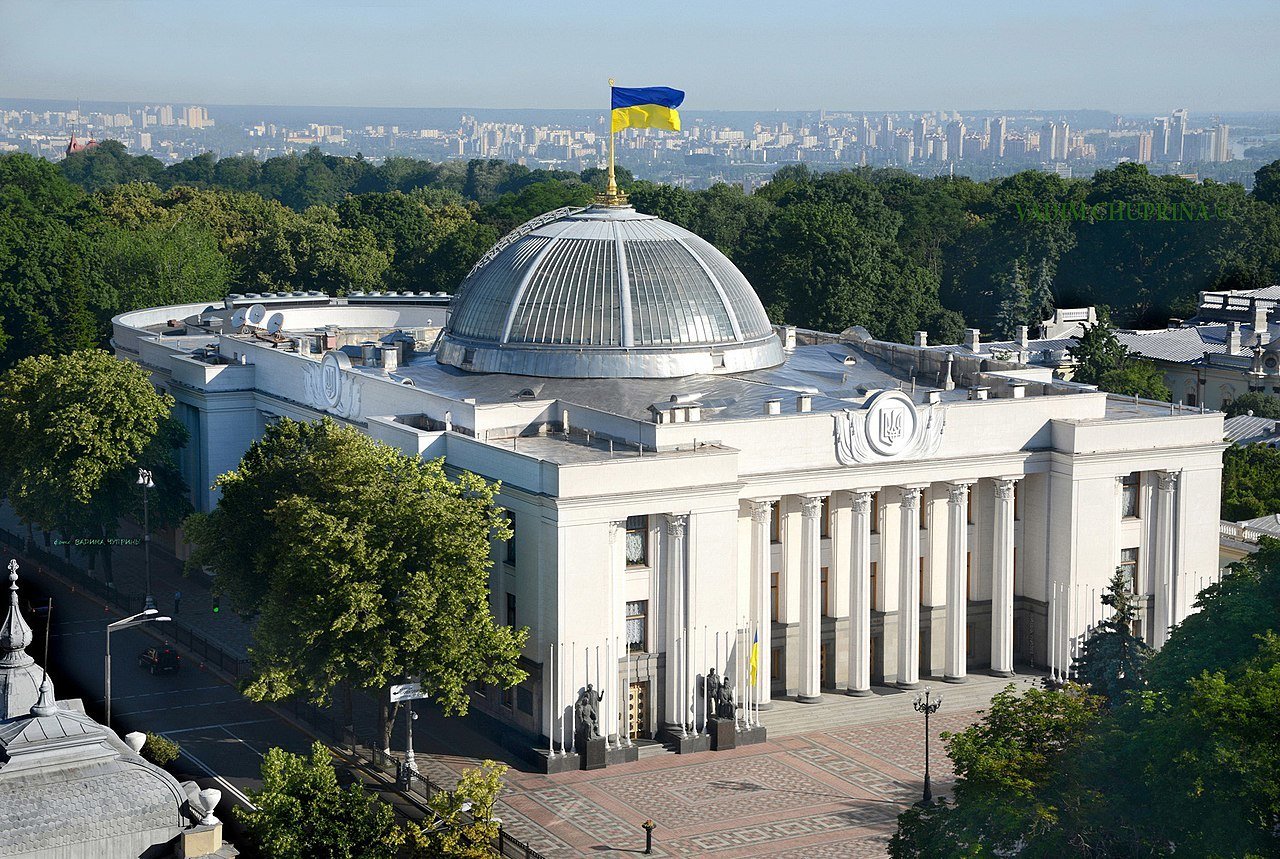
Introduction. Monitoring Methodology
The Roadmap on the Functioning of Democratic Institutions (hereinafter — the RFDI or the Roadmap) was approved by the Cabinet of Ministers of Ukraine on 11 May 2025. The RFDI defines priority areas and reform objectives in the fields of ensuring democracy, electoral processes, parliamentary reform, and the functioning of civil society. For each reform area, the RFDI sets out a list of measures to be taken to achieve the reform objectives, along with deadlines for their implementation. All reforms in the RFDI are divided into four groups, covered by four separate sections: “General Framework of Democracy”, “Electoral Processes”, “Functioning of Parliaments in a Democratic System”, and “Role of Civil Society”.
Between May and July 2026, the Civil Network OPORA conducted a preliminary assessment of the state of implementation of the reforms across all sections of the RFDI. The results of this assessment will be verified during August 2026, while a full report on the progress of RFDI measures as of the end of October 2026 will be prepared by the end of October 2026.
The assessment of each measure under every section of the RFDI was carried out according to two parameters: the importance of the measure for achieving the objectives of the relevant reform and the status of its implementation. Depending on its importance, each measure was assigned a weight from 1 to 3 points. If the implementation of a measure would allow substantial progress in the overall implementation of the reform (for example, improving parliamentary oversight or the legislative process significantly enhances the institutional capacity of the Verkhovna Rada) or is critical to Ukraine’s European integration path, it was given a weight of 3 points. If a measure has a secondary impact on reform implementation (for example, holding a round table or information campaign on a newly adopted law), its weight is 1 point.
The status of implementation was assessed on a scale from 0 to 5 points, where 0 points corresponds to the complete absence of any activity towards implementation, and 5 points corresponds to full implementation in accordance with the wording of the measure in the RFDI. Measures whose implementation is impossible without the lifting of martial law, or (in the case of elections) measures that are to be implemented after the start of the electoral process for the first post-war elections, were excluded from the assessment.
This document presents the main preliminary results of the monitoring of RFDI implementation across all sections of the Roadmap, as well as general recommendations for improving the effectiveness of RFDI implementation.
1. General Framework of Democracy
Implementation of measures under the “General Framework of Democracy” section is the least satisfactory of all those analysed by OPORA.
The only notable success in this section has been the Government’s approval of the Strategy for reforming local self-government and the territorial organisation of power under martial law, and the submission to the Verkhovna Rada of several bills addressing specific, narrow, local self-government issues. These include bills on the division of powers between levels of public governance, ensuring the continued functioning of local councils under martial law, and defining the status of staff in military administrations of communities (bills Nos. 14412, 14405 and 14319). However, even this success is limited: the submitted bills do not resolve all problems facing local self-government under martial law; the government strategy itself is vague and requires further revision; and its implementation requires the Ministry of Community and Territorial Development to approve an action plan, which is still being drafted.
No meaningful progress has been made on any other measures in this section. Instead of restoring local self-government on Ukrainian-controlled territory, there has been a trend towards its further curtailment through the transfer of local authority powers to military administrations. Periodic review of the justification for rights and freedoms restrictions introduced under martial law is not being carried out at central level. No legal framework has been established for such reviews, no responsible body has been designated, and there are no provisions on its powers, the frequency of reviews or the procedure for documenting their outcomes.
2. Electoral Processes
The most visible achievements in electoral reform (Section II of the Roadmap) have been the launch in December 2025 of systematic updating of the State Voter Register database and the submission to parliament of several important bills: on reforming legislation on political parties (No. 14289), on exceptions to the residency requirement and ensuring the effectiveness of gender quotas in elections (No. 11300), and on improving oversight of election campaign financing (No. 11462). At the same time, the fact that none of these bills has even been adopted in first reading raises serious doubts about the existence of genuine political will to implement electoral reform.
Systematic updating of the State Voter Register database is critical to enabling voters to exercise their right to vote, preventing abuse/fraud during voting, and ensuring the overall administration of elections. However, full updating is hampered by mass forced migration of voters, the occupation of part of Ukraine’s territory, the lack of data on voters in occupied areas, the inability of register-maintenance bodies to operate in active combat zones, and the absence of reliable data on voters abroad. Until these issues are resolved, the SVR database will remain incomplete and inaccurate. Even after comprehensive updating, the accuracy and relevance of the data should be verified through an independent external audit, for which no legal basis has yet been created.
No noticeable progress has been made on other important electoral measures. Recommendations from the OSCE/ODIHR on improving electoral legislation remain unimplemented. Considerable hopes had been placed on the Working Group established by the Speaker of the Verkhovna Rada in December 2025 to prepare legislative proposals for elections in the special or post-war period. This WG was tasked with drafting a special law on the conduct of the first post-war nationwide elections, which was expected to take into account most of the European Commission’s 2025 recommendations, i.e. concerning voting rights for military personnel and displaced persons (external migrants and IDPs), regulation of political advertising, countering disinformation and cyber threats, and updating and auditing the SVR. The WG was formed on an inclusive basis, and its seven thematic sub-groups produced proposals for the bill in February–March 2026. However, work on the draft effectively ceased since May 5, 2026, even though the Verkhovna Rada’s leadership publicly stated that the WG will further focus on specific election-related issues, such as election system reform, lustration of elected officials/candidates for elections, and election dispute resolution. Despite these statements, no WG schedule and agendas for its meetings in the next few months have been made public so far. Even if the Working Group was to finalise the draft special law and if the bill was agreed upon by the stakeholders and submitted to the Verkhovna Rada, this would not have guaranteed its swift adoption as proposed by the WG. The group’s role in electoral reform is also significantly limited by the fact that its mandate covers only the first post-war nationwide elections. It does not cover first post-war local elections, referendums, implementation of ODIHR recommendations (except for regulation of media in elections) and other non-war-related issues.
3. Functioning of Parliaments in a Democratic System
Achievements in parliamentary reform (Section III of the Roadmap) are even more modest than in electoral legislation reform. The greatest progress has been made in increasing the transparency of parliament’s work and implementing the Law “On Lobbying in Ukraine”. Other achievements include the registration of bills necessary for the reform of parliamentary service (No. 4530), an accelerated procedure for considering European-integration bills (Nos. 8242, 13653 and 13653-1), and the submission of a draft Code of Ethics (No. 8327). However, as with the electoral bills, doubts remain about the political will to adopt them: some have been awaiting consideration for more than five years, and none has been adopted even in first reading.
Key tasks of parliamentary reform — legislative regulation of the status of the parliamentary opposition, improving the quality of the legislative process, strengthening parliamentary oversight, introducing procedures for harmonising Ukrainian legislation with EU law (particularly ex ante and ex post monitoring), and preventing corruption and undue influence on the legislative process — remain unfulfilled.
As with electoral reform, a Working Group on the Preparation of Comprehensive Legislative Proposals for Amendments to Ukrainian Laws in the Field of Parliamentary Law was established by the Speaker of the Verkhovna Rada back in 2021. In the nearly five years since its creation, its main outputs have been only a few bills (including the aforementioned draft No. 8327), which do not provide for systemic reform of parliamentary legislation.
4. Role of Civil Society
Progress in implementing measures under the RFDI section “Role of Civil Society” is the most noticeable compared with the other sections of the Roadmap. Key successes include the implementation of the majority of the Action Plan for the Implementation in 2025–2026 of the National Strategy for Promoting the Development of Civil Society in Ukraine for 2025–2026. Notable progress has also been made in the introduction of training programmes for public servants and representatives of civil society organisations on civic participation in decision-making by public authorities (although the target audience and overall intensity of such training need to be further strengthened), in measures to involve the non-governmental sector more actively in the provision of social services, the exemption of all social service providers from VAT, the introduction of additional tax incentives for charity and support for volunteer activity (including foreign volunteers), and in the implementation of pilot projects to establish citizens’ assemblies. An important step towards strengthening electronic interaction between the public and government was the launch of the “VzaiemoDiia” electronic platform in pilot operation.
At the same time, the implementation of a number of important measures under Section IV of the RFDI remains at an initial stage. The draft law on introducing mechanisms to counter strategic lawsuits against civil society activists and journalists (SLAPP suits) — although developed in an inclusive manner and taking into account Council of Europe and EU standards — has not yet been submitted to the Verkhovna Rada for consideration. A new version of the Law “On Bodies of Self-Organisation of the Population” has also not been adopted. Tools for interaction between law enforcement bodies (in particular, the prosecution service) and civil society, as well as tools for public oversight of these bodies, remain generally ineffective. The pace of development of secondary legislation necessary for the implementation of the Law “On Public Consultations” (although the legislation allows the adoption of relevant acts only after the end of martial law) is slow. The same applies to the implementation of European Commission recommendations on promoting the involvement and effective participation of citizens and civil society institutions in public policy development, and the preparation of amendments to legislation on countering the legalisation of proceeds of crime in a manner that would exclude the application of such measures to civil society organisations engaged in legitimate activities (the need to develop appropriate exceptions and rules is emphasised in the 2025 European Commission’s Report on Ukraine). Comprehensive updating of the procedures for holding competitions for NGO projects funded from the state budget has not taken place. Preparation of the National Strategy for Promoting the Development of Civil Society in Ukraine for 2027–2032 is at the stage of collecting proposals from civil society organisations — even though its implementation (as well as the execution of the Government's Action Plan developed for this Strategy, which has also not been prepared) is due to begin in less than six months.
5. Conclusions
Overall, the main achievements in implementing RFDI measures remain modest and isolated in nature. Most have amounted to little more than submitting draft bills to the Verkhovna Rada of Ukraine that pursue narrow objectives or address very specific issues. Moreover, in the vast majority of cases, none of the key bills submitted to Parliament have even been passed at first reading. The implementation of many core RFDI measures has either not begun at all or remains at the planning stage or the stage of preparing proposals that may, in future, form the basis of corresponding legislative initiatives. Indeed, for nearly a third (29.67%) of measures across all four sections of the RFDI, there has been no activity whatsoever. A further 28.57% are still at the initial planning stage, while the share of measures that have been completed or are close to completion stands at just 13.19% overall.
The least successful area has been the implementation of reforms under Section I of the RFDI, “General Framework of Democracy”, where only 6.67% of reforms have been put in place. By contrast, the most successful has been Section IV, “Role of Civil Society”, where 41.08% of reforms have been implemented. Progress on reforms relating to parliament and elections has been particularly limited (with overall implementation rates, taking into account the importance of the measures, standing at 16.79% and 26.89% respectively). Even in the most successful block – strengthening the role of civil society – a number of important measures designed to enhance the institutional capacity of civil society organisations, their role in public decision-making, and public oversight of government bodies have yet to be carried out.
6. Recommendations
- The Verkhovna Rada of Ukraine should accelerate consideration and final adoption of bills that implement Roadmap measures, in particular bills Nos. 8242, 8327, 11300, 11462, 14289, and 15165. Any further refinement after first reading should be conducted openly with the involvement of all interested parties.
- Parliament and the Cabinet of Ministers should prioritise legislative reforms related to the following issues:
- Under Section I “General Framework of Democracy”:
-
- creation of a legal basis for the periodic review of restrictions on human rights and freedoms during martial law (including designation of the responsible body, its powers, review frequency and procedure for recording outcomes);
- definition of the grounds for establishing military administrations; and
- ensuring the functioning of local self-government under martial law and its comprehensive reform through the adoption of necessary legislation.
- Under Section II “Electoral Processes”:
-
- accelerated adoption of a special ad hoc law on the conduct of the first post-war nationwide and local elections, taking into account the recommendations of the European Commission’s 2025 Ukraine Report;
- continuation of comprehensive updating of the State Voter Register, establishment of procedures for its independent external audit, and conduct of that audit before the start of the first post-war electoral process;
- definition of the grounds and procedures for decisions on the impossibility of holding elections in certain parts of Ukraine due to security or other factors; and
- amendments to the Electoral Code and related legislation to address problems identified during the 2019–2020 election campaigns and to implement relevant OSCE/ODIHR recommendations (concerning voting rights of specific voter groups, strengthening the professionalism and independence of election administration, reform of campaign financing, revision of grounds for cancelling elections or declaring them invalid, improvement of appeal procedures and the system of sanctions for electoral violations, etc.).
- Under Section III “Functioning of Parliaments in a Democratic System”:
-
- internal reform of parliament, improvement of parliamentary oversight and government accountability procedures, and reform of the legislative process in line with the recommendations of the Report and Roadmap on Internal Reform and Enhancement of the Institutional Capacity of the Verkhovna Rada of Ukraine prepared by the European Parliament’s Needs Assessment Mission chaired by Pat Cox;
- introduction of ex ante and ex post monitoring and definition of special procedures for considering and adopting European-integration bills; and
- introduction of effective mechanisms to prevent corruption and ensure integrity in parliamentary activities.
- Under Section IV "Role of Civil Society":
- drafting and approval (in an open and inclusive manner) of the National Strategy for Promoting the Development of Civil Society in Ukraine for 2027–2032 and the government Action Plan for its implementation;
- further strengthening of civil society institutes by stimulating charitable and volunteer activity, enhancing competitive conditions in the social services market, expanding non-governmental organisations’ access to “government grants” (programmes for funding non-governmental organisation projects from the state budget), and narrowing the scope for applying anti-money laundering measures (such as account blocking) to non-governmental organisations engaged in legitimate activities;
- introduction of effective tools for public oversight of law enforcement bodies, including the prosecution service, as well as effective mechanisms for interaction between these bodies and the public; and
- adoption of the necessary secondary legislation for the implementation of the Law “On Public Consultations”, and an appropriate legislative basis for the development of local democracy and the activities of bodies of self-organisation of the local communities.
- The main role in providing legislative support for reforms in the areas of parliamentarism and elections should be given to the Working Groups already established by the Speaker of the Verkhovna Rada: the Working Group on the Preparation of Legislative Proposals for Elections in the Special or Post-War Period and the Working Group on the Preparation of Comprehensive Legislative Proposals for Amendments to Ukrainian Laws in the Field of Parliamentary Law. The work of these groups should be conducted transparently with the involvement of all interested parties, and their mandates should cover all issues requiring legislative regulation in the course of these two reforms.
Annex 1. Assessment of RFDI Implementation
І. GENERAL FRAMEWORK OF DEMOCRACY
|
RFDI measure |
Deadline under RFDI |
Scores |
Comments |
|
I.1.1. Periodic review of the justification and proportionality of temporary restrictions on fundamental rights and freedoms (introduced to implement measures under the martial law regime) has been ensured at all stages of decision-making on extension or termination of martial law regime. |
During the period when the martial law regime is in force
|
0 points |
Periodic review of the validity and proportionality of temporary restrictions on fundamental rights and freedoms requires adoption of a proper legislation for such review. This must include: defining the body authorised to conduct reviews, setting out its functions and powers, establishing requirements for documenting the review results, and determining the frequency of reviews. No steps have been taken to draft or adopt such legislation. The Government Report on the implementation of the RFDI claims that the relevant reviews are carried out on a regular basis. However, according to the Report, the content of these reviews essentially amounts to the introduction of new restrictions under the Law “On the Legal Regime of Martial Law” or the application of existing ones (such as document and vehicle checks, evacuation of the population, forced deportation of foreigners, and the involvement of citizens in community works, etc.). When decisions are taken to extend martial law, restrictions are established in a framework manner by listing the constitutional rights that are being limited. A significant number of specific restrictions are also introduced by bodies that do not take direct participation in the adoption of decisions on the extension of martial law. In the absence of proper regulation and oversight, this allows for a broad interpretation of the scope of permissible restrictions. An example of this is the inconsistent practice of establishing rules for the conduct of peaceful assemblies at the regional level. Therefore, the RFDI measure I.1.1. has not been implemented. |
|
I.1.2. The specific features of the functioning of local self-government in territories controlled by Ukraine have been defined, taking into consideration the martial law regime, security conditions and other challenges related to martial law
|
Q4 2026, but no later then after cancelation of martial law regime |
1 point |
On 12 December 2025, the Cabinet of Ministers of Ukraine adopted Resolution No. 1748 titled “Certain Issues of Reforming Local Self-Government and the Territorial Organisation of Power under Martial Law and in Preparation for Ukraine’s Accession to the European Union”. The Resolution identifies a list of problems requiring solutions within a framework of local self-government and territorial governance reform, along with ways of addressing them. At the same time, it lacks a coherent conceptual vision for the resumption and continuation of local self-government reform. In implementation of this resolution, two bills have been submitted to the Verkhovna Rada: Draft Law No. 14412 of 30 January 2026 “On the Principles of Delimitation and Distribution of Powers between Levels of Public Governance” (adopted at first reading on 7 April 2026; it provides for amendments to various laws to clarify the powers of local councils at the relevant layers of governance) and Draft Law No. 14405 of 27 January 2026 “On Ensuring the Powers of Local Councils under Martial Law” (which lowers quorum requirements in local councils, allows the termination of a community mayor’s powers by decision of the local council (by a two-thirds majority), and provides for the establishment of military administrations when council composition falls below the legally defined minimum, among other measures). The Draft Law No. 14405 has yet to be adopted at first reading. However, even if adopted in full, these two bills would not resolve the key problems listed in Cabinet Resolution No. 1748. Furthermore, the Resolution itself also requires substantial revision, as well as adoption of a separate Action Plan for its implementation given that measures proposed in the Resolution are to vague to be effectively implemented. As of June 2026, the Ministry for Communities and Territorial Development was still drafting this Action Plan to implement the Resolution, but this was still at an early stage (proposals from stakeholders were collected in May 2026). On 18 December 2025, Draft Law No. 14319 was submitted to the Verkhovna Rada of Ukraine for consideration. The bill defines the specifics of concluding employment contracts with employees of military administrations of settlements, the extension to them of the Law “On Service in Local Self-Government Bodies” for the period they hold the relevant positions. However, this bill does not define mechanisms for the restoration of local self-government or clear grounds for the establishment of military administrations - that is, it does not ensure the achievement of the objectives of measure I.1.2 of the RFDI. Moreover, it was not considered in the first reading. |
|
I.2.4. The restoration and proper functioning of local self-government on territories controlled by Ukraine has been ensured, taking into account security conditions, the situation in de-occupied territories, and other challenges. |
After the termination or lifting of the martial law regime (in accordance with the requirements of the law and taking into account security conditions and the situation in de-occupied territories)
|
0 points |
In Ukrainian-controlled territory, the current trend is not towards restoring and ensuring the functioning of local self-government, but rather towards further establishing military administrations that exercise all or part of local self-government powers. Such administrations are being created not only in communities near the line of contact, but also in communities where local self-government is functioning more or less effectively and where there are no serious security or other war-related threats except for regular Russian missile strikes (e.g. in Odesa in 2025). The lack of clearly defined legal grounds for their creation effectively allows them to be set up in any community in arbitrary/politically biased manner. This may increase centralisation of state power and lead to conflicts between local self-government bodies and the relevant military administrations (such conflicts have been already noted in Sumy, Chernihiv and some other communities). As of June 2026, no legislative initiatives/draft laws have been prepared or registered in parliament to clarify the grounds for establishing military administrations or to restore the activities of local self-government bodies in relatively “safe” communities. |
ІІ. ELECTORAL PROCESS
|
RFDI measure |
Deadline under RFDI |
Scores |
Comments |
|
II.A.1.1. Amendments have been made to the electoral legislation of Ukraine to ensure citizens’ active and passive electoral rights, taking into account the negative consequences caused by the military aggression of the Russian Federation. |
Before the start of the electoral process of the first post-war elections |
1 point |
On December 26, 2025, the Speaker of the Verkhovna Rada of Ukraine created a Working Group tasked with preparing legislative proposals on the first post-war national elections in Ukraine. The Group included representatives of parliamentary factions, relevant ministries, state authorities (including the Central Election Commission), law enforcement agencies, civil society organisations, and academic institutions. Within the Working Group, seven thematic sub-groups were formed to develop proposals on regulating specific issues related to preparations for the first post-war elections (e.g., the administration of elections, the electoral rights of military service personnel, etc.). The subsequent discussions were based on the draft law prepared by the CEC, titled "On the peculiarities of the organisation and conduct of nationwide elections following the termination or lifting of martial law in Ukraine" (CEC legislative proposals), dated 7 January 2026, as well as on previous work carried out in the area of electoral reform between 2022 and 2025. Ensuring the effective exercise of active suffrage requires the updating of the State Voters Register, since voter lists are compiled on the basis of its data. The accuracy of this information therefore has a significant bearing on whether voters are able to exercise their electoral rights properly. At present, 1.4 million voters have no electoral address at all, while both the CEC and NGOs openly acknowledge substantial discrepancies between the Register’s data on voters’ electoral addresses and their actual places of residence. These discrepancies result both from hostilities (the occupation of territories and destruction of infrastructure) and from large-scale population movements. Although the CEC began updating the Register database in 2025, it remains outdated and incomplete.
In 2025, the European Commission identified the updating and auditing of the State Voters Register as one of the four priorities for electoral reform. However, as of June 2026, the Working Group had not developed a draft law that would create an adequate legal framework for the proper updating of the Register database and the conduct of an independent audit of it; only certain proposals on regulating these matters had been prepared.
The Constitution of Ukraine establishes five- and ten-year residence requirements for standing as a candidate in elections to the Verkhovna Rada of Ukraine and for President, respectively. As a result of the mass departure of Ukrainian citizens abroad immediately following the start of Russia’s full-scale invasion, a significant proportion of them will be unable to stand in nationwide elections because they do not meet these residence criteria. Exceptions to the residency requirements are provided for in Draft Laws No. 11300 of 27 May 2024 and No. 11300-1 of 5 June 2024; however, neither of them was adopted in the first reading. Creating appropriate conditions for candidacy also requires greater accessibility of electoral procedures, including the digitalisation of the electoral process and the clarification of grounds for refusing candidate registration. Since the Working Group has not produced a draft law on the first post-war elections, these problems remain unresolved. |
|
ІІ.А.1.2. Objective criteria and the procedure for deciding whether or not elections can be held in specific territories of Ukraine have been established by law |
Before the start of the electoral process |
1 point |
Under the CEC draft legislative proposal, the procedure and criteria for conducting an initial election security assessment, as well as the criteria and procedure for deciding whether or not to hold elections, are to be set out in a separate law. Although the Working Group has discussed these issues, it has not produced a corresponding draft law. |
|
ІІ.А.2.1. Amendments have been made to Ukrainian legislation aimed at implementing the OSCE/ODIHR recommendations issued following the results of election observation missions in Ukraine, as well as European Union standards, including Commission Recommendation (EU) 2023/2829 of 12 December 2023 on inclusive and sustainable electoral processes in the Union and on strengthening the European character and the effective conduct of elections to the European Parliament, in particular, with a view to ensuring the stability of electoral legislation, enhancing the capacity of electoral commissions, including the professionalisation of their members and ensuring their independence, strengthening legislative provisions on liability for electoral offences, and reinforcing the secrecy of the vote. Legislative safeguards and procedures promoting inclusion and equal opportunities have been introduced |
Before the start of the electoral process |
1 point |
On 3 October 2025, the Central Election Commission adopted Resolution No. 48 “On Measures to Take Account of the Recommendations of the OSCE/ODIHR Following Election Observation Missions in Ukraine”. The Resolution proposed amendments to legislation to implement a number of OSCE/ODIHR recommendations for 2019 - 2020 nationwide and local elections. However, these changes do not provide for the implementation of all ODIHR recommendations, while some changes are vague (for example, with regard to ensuring the secrecy of the ballot) or require alignment with the CEC recent draft law put forward in January 2026. To promote the inclusiveness of elections, on 24 April 2025 the CEC adopted a Resolution “On the Procedure for Ensuring Reasonable Accommodation (Assistive Devices) for Voters with Health Impairments (Related to Disability, Temporary Health Disorders, or Age) in Election Precincts”. This Resolution would contribute to a better accessibility of elections for voters with disabilities. Certain OSCE/ODIHR recommendations were also considered by the Working Group, but they were not incorporated into a finalised and agreed draft law. |
|
ІІ.А.2.3. An inclusive expert dialogue was held, involving, where possible, representatives of the OSCE/ODIHR, to address, in accordance with the provisions of the Constitution of Ukraine, the issues raised in the OSCE/ODIHR recommendations, in particular regarding the exercise of electoral rights in relation to intellectual or psychosocial disabilities, the annulment of election results and the recount of votes, as well as to develop further steps for their resolution |
Q4 2025
|
3 points |
On 15 December 2025, an inclusive expert dialogue entitled “On the Path to the EU: Review of OSCE/ODIHR Recommendations on Elections in Ukraine” was held. Among other topics, it addressed the state of implementation of OSCE/ODIHR recommendations, the invalidation of ballots cast at polling stations and the recounting of votes, and the realisation of electoral rights by persons with intellectual and psychosocial disabilities. The dialogue brought together national stakeholders (representatives of parliament, the Central Election Commission, the Cabinet of Ministers, the Supreme Court, and civil society institutions) and international stakeholders (representatives of the OSCE/ODIHR and the European Union). Following the dialogue, the CEC published a report summarizing the proposals suggested during discussion. However, the recommendations contained in the report are vague and cannot serve as the basis for specific legislative initiatives aimed at implementing OSCE/ODIHR proposals. Moreover, the expert dialogue did not cover all the OSCE/ODIHR recommendations. |
|
ІІ.А.3.1. An inclusive process has been ensured for the development of the Central Election Commission’s communication strategy for the post-war elections in Ukraine, which sets out, in particular, its objectives, as well as the principles of building communications, target audiences and communication channels |
Q4 2025
|
3 points |
The Communication Strategy of the Central Election Commission for Post-War Elections in Ukraine was approved by CEC Resolution No. 70 of 23 December 2025 Shortcomings of the Strategy include the absence of clear performance indicators that meet SMART criteria (i.e. specific, measurable, achievable, relevant, and time-bound) and the lack of a clear answer to the question of precisely what information is communicated to stakeholders and by what means. This precludes any meaningful assessment of the Strategy’s effectiveness in practice. |
|
ІІ.А.4.1. The functioning of the State Voters Register and its electronic services has been ensured, taking into account security factors and cyber security requirements |
Q4 2026 |
4 points |
The restoration of the functioning of the State Voters Register took place from 2022 to 2025. As part of this process, the Voter’s Electronic Cabinet was also restored, enabling citizens to check their data online and update it if necessary. The CEC draft legislative proposal provides for the possibility of submitting applications to change an electoral address or to change the place of voting temporarily through the Diia mobile application. Although the Law of 27 March 2025 No. 4336-IX introduced certain enhancements to the protection of information and cybersecurity of state information resources, including Voter Register, the level of protection of the Register against potential interference must be confirmed by an independent audit, which has not yet been conducted. |
|
ІІ.А.4.2. The Unified Automated Information and Analytical System of the Central Election Commission (UAIAS CEC) has been developed and implemented (in phases, subject to the availability of funding), including new electronic services for voters, candidates, political parties and electoral commissions, as well as robust cyber security |
Q4 2027 |
1 point |
In 2021, the Central Election Commission approved the Concept for the Creation of a Unified Automated Information and Analytical System. In 2026, amendments were made to it and the Architectural Principles of the System were approved. According to information from the CEC, the state provided no funding for the development of this system between 2023 and 2026. On 7 February 2026, the Commission approved the Technical Requirements for the Creation of the Unified Automated Information and Analytical System of the Central Election Commission (Stage I). This first stage envisages the creation of automated information and communication systems for the organisation, preparation, and conduct of nationwide elections, access management, and information security; as well as automated information systems for “Electoral Process and Referendum Participants”, “Electronic Services”, and others. On 9 March 2026, the Central Election Commission and International IDEA signed a Memorandum of Understanding and Cooperation under the “U-VOTE – Ukrainians Voting: Organising Reliable Elections” project, which provides for support in the phased creation of the CEC’s Unified Automated Information and Analytical System and the procurement of relevant software. |
|
ІІ.А.4.3. The functioning of the Training Centre for Election Process Participants as a legal entity under public law has been ensured (gradually, depending on available funding) |
Q4 2027 |
1 point |
On 3 October 2025, the Central Election Commission adopted Resolution No. 48 “On Measures to Take Account of the Recommendations of the OSCE/ODIHR Following Election Observation Missions in Ukraine”, which envisages implementation of ODIHR recommendations concerning the training of election commissioners on electoral matters, strengthening their independence, and ensuring the operation of a Centre for Training Electoral Process Participants. The Commission approved the regulations for this Centre, and in April 2026 the Cabinet of Ministers of Ukraine regulated the remuneration conditions for its staff (Cabinet of Ministers Resolution No. 585 of 22 April 2026). Nevertheless, as of June 2026, the Centre is not fully operational: its head has not been appointed, the staff structure and budget have not been approved, and the implementation of training programmes has not begun. |
|
ІІ.А.4.4. The operation of the Central Election Commission’s regional and territorial offices has been ensured (gradually, depending on available funding) |
Q4 2027 |
1 point |
Although the Electoral Code provides for the establishment of regional and territorial offices of the Central Election Commission, these offices have not been created. Budgetary funding for their establishment was suspended in 2025. Thus, as of June 2026, only the legal framework for their functioning has been put in place. |
|
ІІ.А.4.5. The procedure for forming the Central Election Commission has been improved with a view to enhancing its continuity, professionalism and integrity |
Q4 2027 |
0 points |
No draft law has been registered to improve the procedure for forming the Central Election Commission with a view to strengthening its continuity, professionalism, and integrity. |
|
ІІ.А.5.1. A law has come into force, ensuring that party legislation complies with key international standards and previous recommendations from the Venice Commission and the OSCE |
Q4 2027 |
2 points |
On 10 December 2025, a draft of a new version of the Law on Political Parties (No. 14289) was registered in parliament. It was developed jointly by the CEC, the National Agency on Corruption Prevention (NACP), representatives of OPORA, IFES, and other organisations. The draft introduces significant changes to the procedures for the establishment, regulation, financing, and prohibition of political parties. On 30 December 2025, an alternative draft of a new version of the Law on Political Parties (No. 14289-1) was also registered. This alternative draft received a negative assessment from the NACP, the Parliamentary Committee on Freedom of Speech,and experts. Although draft law No. 14289 largely aligns the regulation of political parties with European standards, as of June 2026 it had not been adopted even at first reading. |
|
ІІ.B.2.1. Amendments to the electoral legislation have come into force, designating the National Council of Ukraine on Television and Radio Broadcasting as the sole regulator for all types of media in the electoral process; the extension of rules governing offline campaigning to online campaigning (political advertising, content restrictions, funding from the funds of electoral process participants, labelling); the regulation of campaigning in non-linear audiovisual media (online cinemas, OTT services, etc.) in accordance with European Union legislation (the acquis), in particular the European Act on Media Freedom, the Digital Services Act and Regulation (EU) 2024/900 of the European Parliament and of the Council of 13 March 2024 on the transparency and targeting of political advertising |
Q4 2026 |
1 point |
On 27 December 2022, draft law No. 8310 was submitted to the Verkhovna Rada of Ukraine. It addresses the most significant problems in the regulation of pre-election campaigning. The draft law defines the concept of covert campaigning, regulates campaigning on the internet, designates the National Broadcasting Council as the sole body responsible for oversight in the area of information coverage of elections and campaigning in media. The parliamentary Working Group used this draft as the basis for discussions on further reforms in the regulation of pre-election campaigning and political advertising. As of June 2026, these discussions were ongoing. |
|
ІІ.B.2.2. The rules on political advertising have been harmonised with the aim of resolving existing inconsistencies between various laws and ensuring overall transparency, based on Regulation (EU) 2024/900 of the European Parliament and of the Council of 13 March 2024 on the transparency and targeting of political advertising, as well as Commission Recommendation (EU) 2023/2829 of 12 December 2023 on inclusive and sustainable electoral processes in the European Union and on strengthening the European character and the effective conduct of elections to the European Parliament |
Q4 2027 |
0 points |
A comprehensive draft law to bring the regulation of political advertising into line with Regulation (EU) 2024/900 and Commission Recommendation (EU) 2023/2829 had not been prepared. |
|
ІІ.B.3.1. The Law of Ukraine, which strengthens the institutional capacity of the media regulator, has entered into force, and funding has been secured for the National Council of Ukraine on Television and Radio Broadcasting to perform its functions as the single regulator for all types of media, thereby facilitating the effective, timely and transparent implementation of the decisions of the National Council of Ukraine on Television and Radio Broadcasting |
Q4 2026 |
1 point |
On 10 October 2024, draft law No. 12111 “On Amendments to Certain Laws of Ukraine on Media Activities” was registered in parliament. It was adopted at first reading on 5 December 2024. The draft expands the concept of media, declares the state’s obligation to ensure the legal, organisational, and functional independence of the National Broadcasting Council, and clarifies the procedure for appointing and dismissing its members. However, the mechanisms provided for in the draft to ensure the independence of the National Broadcasting Council are too vague to secure that independence in practice. |
|
ІІ.C.1.1. At the legislative level, with a view to implementing the recommendations of the OSCE/ODIHR and the Venice Commission, a single independent supervisory body has been established to monitor (analyse) financial reports on the receipt and use of election fund resources in all types of elections; this body possesses sufficient powers and institutional capacity for this purpose |
Q4 2026 |
2 points |
On 5 August 2024, draft law No. 11462 was registered in parliament. It aims to improve the rules governing the financing of election campaigns and oversight of that financing. The draft was developed jointly by the CEC, NACP, representatives of OPORA, IFES, and other organisations. It designates the NACP as the sole body responsible for overseeing the financing of election campaigns, introduces a risk-based approach to the analysis of reports on the receipt and use of election funds (with risk criteria to be approved by the Agency). Almost two years after its registration, parliament has not yet considered this draft law even at first reading. |
|
ІІ.C.1.2. Legislation has been introduced to apply a risk-based approach to the analysis of reports on the receipt and use of funds from candidates’ election funds in elections for Members of the Verkhovna Rada of Ukraine and in local elections, taking into account the risks associated with financial, economic and other activities |
Q4 2026
|
2 points |
A risk-based approach toward analyzing campaign finance reports is introduced by the draft law No. 11462 (for further details see analysis of implementation of the RFDI measure ІІ.C.1.1.). As of June 2026, draft law No. 11462 had not been adopted at first reading.
|
|
ІІ.C.1.3. Amendments have been introduced to the legislation, expanding the functionality of the POLITDATA register as an electronic service for the submission, verification (including automated verification) and publication of reports on the receipt and use of election fund resources for all types of elections |
Q4 2026 |
2 points |
The draft law No. 11462 (for further details see analysis of implementation of the RFDI measure ІІ.C.1.1.) provides for the electronic compilation and submission of campaign finance to the electronic NACP Register, as well as the introduction of automated logical and arithmetical checks on the accuracy of their preparation. As of June 2026, this draft law had not been adopted at first reading.
|
|
ІІ.C.1.4. Amendments to the legislation have been introduced to ensure voters’ access to information on the transfer of funds, as well as the receipt and use of donations to election funds in all types of elections, which is published in the public section of the POLITDATA register. |
Q4 2026 |
2 points |
Under the draft law No. 11462 (for further details see analysis of implementation of the RFDI measure ІІ.C.1.1.), information from the NACP Register on transfer of funds in the current accounts of election funds and reports on the receipt and use of such funds are to be published, with the relevant information presented in a machine-readable format. As of June 2026, this draft law had not been adopted at first reading.
|
|
ІІ.C.1.5. An information and awareness-raising campaign on the new procedure for reporting on election funds has been conducted with stakeholders |
Q4 2026 |
0 points |
An information and awareness-raising campaign on the new reporting procedure for election funds requires the introduction of this procedure at the legislative level. Draft law No. 11462 has not been adopted by parliament.
|
|
ІІ.C.2.1. Legislation prohibits political parties from using state funding |
Q4 2026 |
2 points |
Draft law No. 14289 (for further details see analysis of implementation of the RFDI measure ІІ.А.5.1.) provides for a list of prohibitions on the use of state funding by political parties. As of June 2026, it had not been considered even at first reading. |
|
ІІ.C.2.2. Amendments to the legislation have been introduced, aimed at reducing the risk of hidden funding of political parties and election campaigns |
Q4 2026 |
1 point |
Draft laws Nos. 11462 and 14289 (for further details see analysis of implementation of the RFDI measures ІІ.А.5.1. and ІІ.C.1.1.), which have been registered in parliament, limit the size of contributions in support of political parties and to election funds to 20 per cent of total income over the last five calendar years. This would significantly reduce the possibility of financing parties or candidates through proxy donors. Neither of these draft laws has been adopted at first reading.
In September 2025, the Civil Network OPORA initiated the creation of a working group to prepare a draft law on improving the regulation of legal liability. The group included representatives of the NACP, CEC, law enforcement agencies, and experts. The draft law prepared by the working group was presented at a round table on 16 February 2026. It provides for the decriminalisation of most offences with criminalisation of only the most dangerous violations, the possibility of holding to account the “organisers of networks” involved in illegal financing and proxy donors, and strengthened liability for foreign funding, among other measures. However, as of June 2026, this draft law had not been registered in parliament. |
|
ІІ.C.2.3. Amendments have been introduced to the legislation, providing for the supervisory body to monitor political parties’ financial, economic and other activities through a system of continuous monitoring, by obtaining information from the public, engaging individual monitoring groups on a contractual basis, and using software tools to collect and organise information with a view to identifying risks that may affect the accuracy and integrity of the information contained in political parties’ reports, including the subject of non-monetary contributions |
Q4 2026 |
1 point |
The implementation of the relevant action (apart from the engagement of monitoring groups on a contractual basis) is provided for in draft law No. 14289 (for further details see analysis of implementation of the RFDI measure ІІ.А.5.1.). However, this draft has not been adopted at first reading.
|
|
ІІ.C.2.4. An information and awareness-raising campaign has been conducted with stakeholders regarding the new rules on the financing of political parties and their use of state funding |
Q4 2026 |
0 points |
The introduction of the relevant new rules is required for an information and awareness-raising campaign to be conducted. The necessary legislative changes have not been adopted. |
|
ІІ.C.3.1. Clear legal definitions of offences relating to the financing of political parties and election campaigns have been established at the legislative level; depending on the degree of public danger, these offences are subject to administrative and criminal liability, with the specific party liable being identified |
Q4 2026 |
1 point |
The draft of the relevant legislative changes was prepared (for further details see analysis of implementation of the RFDI measure ІІ.C.2.2.) but has not been registered in parliament. |
|
ІІ.C.3.2. Amendments have been made to the legislation, introducing more proportionate (balanced) and effective penalties for administrative and criminal offences relating to the financing of political parties and election campaigns |
Q4 2026 |
1 point |
The draft of the relevant legislative changes was prepared (for further details see analysis of implementation of the RFDI measure ІІ.C.2.2.) but has not been registered in parliament. |
|
ІІ.C.3.3. An information and awareness-raising campaign has been carried out regarding new provisions on liability for offences relating to the financing of political parties and election campaigns |
Q4 2026 |
0 points |
Since the legislative changes on liability for violations in the area of financing of political parties and election campaigns have not been adopted, no information and awareness-raising campaign has been conducted.
|
ІІІ. FUNCTIONING OF PARLIAMENT IN DEMOCRATIC SYSTEM
|
RFDI measure |
Deadline under RFDI |
Scores |
Comments |
|
ІІІ.А.1.1. Implementation of the Law of Ukraine “On Lobbying” has been carried out by ensuring the functioning of the Transparency Register; developing and adopting the necessary secondary legislation required for its implementation; and putting the Law into practice while improving the legislative regulation of lobbying in full compliance with fundamental rights and values. |
Q3 2027
|
3 points |
The Transparency Register was established in 2025 and it is fully operational. As of June 2026, 183 lobbying entities had been registered, of which 160 were active. To ensure implementation of the Law “On Lobbying in Ukraine” (hereinafter – the Law), it expressly provides for the adoption of two by-laws: the Regulation on the Transparency Register and the Rules of Ethical Conduct for Lobbying Entities. Both have been adopted and they comply with the requirements of the Law "On Lobbying in Ukraine".
In 2025, the National Agency on Corruption Prevention (NACP) also issued clarifications on the application of the Law. The Law provides for monitoring compliance with lobbying legislation. The procedure for such monitoring was approved by NACP Order No. 303/25 of 3 October 2025. This approach – whereby the body carrying out the monitoring defines the procedure for itself – creates risks of conflicts of interest and selective or biased monitoring, as the NACP is setting the rules for its own oversight of compliance with lobbying legislation (including the list of documents used for monitoring, the scope of its control powers, deadlines for providing explanations by those being monitored, etc.) and the principles governing its relations with the entities it oversees. Although the Law has been criticised by NGOs, including for its lack of alignment with EU law, it has not been reviewed since the RFDI was approved. Several bills (Nos. 13339 and 13339-1) have been submitted to the Verkhovna Rada to address certain shortcomings in the current Law, but they do not resolve its key problems. On September 4, 2025, both bills were rejected by parliament. The OECD recommendation to legally define the rules of conduct for persons providing expert support in the development of public policy also remains unimplemented. Hence, progress on implementing this RFDI measure remains limited: the Transparency Register has been created and is functioning, the necessary by-laws for implementing the Law on Lobbying have been adopted, but no amendments have been made to the Law on Lobbying itself to address its main shortcomings and bring it into line with international standards and EU law. |
|
ІІІ.А.1.2. Legislation has been developed, adopted and implemented to improve government reporting procedures within the framework of parliamentary oversight, taking into account the principles of public administration (SIGMA, 2023). |
Q4 2027
|
0 points |
During 2023–2025, a number of bills were submitted to the Verkhovna Rada of Ukraine aimed to improve the procedures for the Government’s reporting to the Verkhovna Rada of Ukraine:
At the same time, these bills do not provide for bringing the Government’s reporting procedures into line with the SIGMA principles of public administration - they regulate only certain procedural aspects of the Government’s accountability to Parliament. |
|
ІІІ.А.1.3. The Communication Strategy of the Verkhovna Rada of Ukraine for 2025–2028 has been approved and implemented. It aims to expand existing communication channels and introduce new ones between the Verkhovna Rada and its internal and external audiences.
|
Q4 2027
|
0 points |
Following the expiry of the Verkhovna Rada’s Communication Strategy for 2017–2021, no new parliamentary communication strategy has been drafted or adopted, and no public discussions of any draft or its key provisions have taken place. |
|
ІІІ.А.1.4. The Strategy for Building an Innovative Digital Parliament in the Verkhovna Rada of Ukraine for 2025–2028 has been developed, adopted and implemented. The strategic objectives and projects of this Strategy have been delivered (open Parliament, innovative Parliament, smart Parliament, green Parliament, safe Parliament). Full transparency and accountability to voters have been achieved in accordance with the criteria set out in the Strategy. |
Q4 2027
|
1 point |
According to the Report of the Ministry of Justice of Ukraine on the state of implementation of the Roadmap on the functioning of democratic institutions, the Secretariat of the Verkhovna Rada of Ukraine has completed the development of the draft Strategy for the Formation of an Innovative Digital Parliament in the Verkhovna Rada of Ukraine and was due to submit it to the leadership of the Verkhovna Rada of Ukraine for approval by 15 April 2026. No public discussions of this draft were held, the draft is not available in the public domain, and as of June 2026 it had not been approved. In addition to the draft Strategy, parliamentary applications supported on the website of the Verkhovna Rada of Ukraine have also been introduced; in 2017 the “Citizen’s Electronic Cabinet” was created, which allows citizens to communicate with Members of Parliament (to send appeals, requests for public information, etc.). In the absence of an approved Strategy, the impact of these measures remains limited. Since the draft Strategy has not been approved, its strategic objectives and projects have not been implemented. |
|
ІІІ.А.1.5. Legislation has been developed, adopted and implemented to introduce a special procedure for the preparation, initiation, consideration and adoption of European integration bills. |
Q4 2025 |
2 points |
In 2022, the Verkhovna Rada of Ukraine adopted Resolution No. 2483-IX, which identified the adaptation of Ukrainian legislation to EU law as one of the priorities of the Verkhovna Rada’s work, with the Government as the main initiator of European integration bills. The Resolution introduced the conduct of an expert assessment of compliance with EU law for draft laws before the second reading and obliged parliamentary committees to establish sub-committees on European integration within their composition. By this Resolution, the Verkhovna Rada also instructed the Cabinet of Ministers to ensure official translations of EU legislative acts and the creation of a single information database on the adaptation of legislation. Although the Resolution provided for a mechanism for European integration scrutiny of draft laws, it cannot replace the full procedure for adopting legislative decisions provided for by the Rules of Procedure of the Verkhovna Rada. n 28 November 2022, the Chairman of the Verkhovna Rada of Ukraine and his deputies (in the status of Members of Parliament as subjects of the right of legislative initiative) submitted Draft Law No. 8242 to Parliament. It establishes the priority of the Cabinet of Ministers of Ukraine in submitting European integration bills to Parliament; provides for the inclusion of such bills in the agenda on an extraordinary basis without a vote; expands the list of documents to be submitted together with a bill (including a table of correspondence of the bill to EU legal acts in that list); establishes the mandatory translation of EU legal acts by an institution designated by the Cabinet of Ministers, and so on. In 2023, the Verkhovna Rada of Ukraine Committee on the Rules of Procedure, Deputy Ethics and Organisation of Work of the Verkhovna Rada of Ukraine recommended that the bill be adopted in the first reading. Although the bill was included in the agenda of the fifteenth session of the Verkhovna Rada of Ukraine of the current convocation, it was not adopted in the first reading. In addition to this bill, two other bills have been registered in Parliament that provide for the introduction of a special procedure for the preparation, initiation, consideration and adoption of European integration bills. Draft Law No. 13653 of 17 August 2025 and Draft Law No. 13653-1 of 1 September 2025 propose to introduce an accelerated procedure for the consideration of European integration bills under a single-reading (first reading) procedure, their inclusion in the agenda of the Verkhovna Rada without a vote, strengthening the role of the Cabinet of Ministers in initiating such bills, shortening the deadlines for submitting proposals/amendments to such bills, and so on. The main difference between them is that Draft Law No. 13653-1 entrenches the right of the relevant parliamentary committee on European integration to determine the status of a bill as a European integration bill. As of June 2026, none of these bills had been adopted in the first reading. |
|
ІІІ.А.1.6. Taking into account the level of threats, an adaptive review of restrictions affecting the public and journalists in relation to the activities of the Verkhovna Rada of Ukraine and its bodies, arising from the martial law regime, has been ensured in line with the security situation.
|
During the period when the martial law regime is in force |
3 points |
On 8 May 2024, the Chairman of the Verkhovna Rada of Ukraine signed an order on admitting journalists to Parliament following the adoption of a resolution on the partial restoration of access to it. On 14 January 2025, parliament adopted the Law “On Amendments to Certain Laws of Ukraine to Strengthen Certain Guarantees of Media and Journalists’ Activities and Ensure Citizens’ Right to Access Information”, which entered into force on 20 January 2026. The law establishes the possibility of holding committee meetings via videoconference with broadcasting, the mandatory publication of video recordings of open meetings within 24 hours of their conclusion, the publication of agendas and draft bills 24 hours before a committee meeting, the publication of minutes and transcripts no later than the next working day, and the right of journalists and the public to attend open committee meetings - including remotely - without additional accreditation. At the same time, the transparency mechanisms provided for in the law apply only to parliamentary committees and local self-government bodies, and not to parliament as a whole or other bodies of the Verkhovna Rada of Ukraine. On 4 September 2025, the Verkhovna Rada of Ukraine also adopted Resolution No. 4597-IX “On Certain Issues of Coverage of the Activities of the Verkhovna Rada of Ukraine of the Ninth Convocation”, which restored live broadcasts of open plenary sessions during martial law. However, adaptive review of restrictions on the public and journalists implies periodic review, the identification of authorised bodies, and a procedure for those bodies to take into account the security situation and other factors affecting the content of such restrictions. This periodicity, the list of relevant bodies, their powers and the procedure for adaptive review have not been defined at the legislative level. |
|
ІІІ.А.1.7. Due to the impossibility of holding in-person public receptions because of security challenges, digital formats have been introduced to enable communication between officials of the Verkhovna Rada of Ukraine and citizens. |
During the period when the martial law regime is in force |
4 points |
The procedure for personal reception of citizens by the Verkhovna Rada is set out in an Order of the Chairman of the Verkhovna Rada dated 5 March 2021. Only one amendment has been made to this Order since its adoption (on 29 December 2022). Information on the Verkhovna Rada website indicates that the most recent citizens’ receptions in parliament took place in March 2020. No schedules for such receptions are published, and the link to the appointment form is inactive. At the same time, the “Citizen’s Electronic Cabinet” was created on the website of the Verkhovna Rada of Ukraine in 2017, which allows any citizen (subject to registration using an electronic digital signature) to submit electronic appeals, track their status, participate in public discussion of bills, submit electronic petitions and requests for public information. These communication channels are an effective alternative to citizens’ receptions; however, their use may be difficult for citizens who lack experience with IT tools (for example, elderly people, etc.).
|
|
ІІІ.А.1.8. The practice of applying shortened procedures has been improved in proportion to needs, particularly in the post-war context. |
After the termination or lifting of the martial law regime (taking into account the transitional period)
|
0 points |
On 4 September 2019, Draft Law No. 2060 was submitted to the Verkhovna Rada of Ukraine. It sets a maximum time limit between the preparation of the main committee’s conclusion on a bill and its consideration by parliament; restricts the use of the expedited procedure for considering bills and limits the number of issues that may be examined in a single week under the expedited procedure to no more than five; and prohibits the adoption of bills in the first reading and in full at the same time. Although the bill has been included in the agenda of the 15th session of the current Verkhovna Rada, in 2020 the Committee on Rules of Procedure, Deputy Ethics and Organisation of the Work of the Verkhovna Rada recommended returning it for further refinement. Consequently, its chances of being adopted at first reading are minimal.At the same time, no changes were made to the practice of applying expedited procedures for considering bills between the approval of the RFDI and the end of June 2026.
|
|
ІІІ.В.1.1. Legislation on the rules of conduct for MPs (Code of Parliamentary Ethics) has been drafted, adopted and implemented in accordance with the recommendations of the OSCE/ODIHR, GRECO and the European Parliament’s Needs Assessment Mission. |
Q4 2027
|
2 points |
On 24 November 2021, the Chairman of the Verkhovna Rada established a working group to prepare comprehensive legislative proposals for amendments to Ukrainian laws in the field of parliamentary law. The subgroup on “Status of MPs. Code of Ethics” prepared a draft Code of Ethics. This was developed with the involvement of representatives of parliamentary factions and groups, as well as civil society organisations (such as the OPORA Civil Network and the Agency for Legislative Initiatives) and was submitted to parliament on 30 December 2022 (draft No. 8327). OPORA and the Agency for Legislative Initiatives consider the draft a positive step towards regulating the conduct of Members of Parliament. It does not contain any flaws that could not be fixed after its adoption at first reading. On March 11, 2026, the bill was significantly improved and resubmitted to parliament. However, it has still not been adopted at first reading, despite being included in the agenda of the 15th session of the current (9th) convocation of the Verkhovna Rada. |
|
ІІІ.В.1.2. Legislation on a gifts policy has been developed, adopted and implemented in accordance with GRECO recommendations. |
Q4 2027
|
0 points |
Restrictions on the acceptance of gifts by public officials are listed in Article 23 of the Law “On Prevention of Corruption”. The value of permitted gifts under this Law is high (a total of two minimum monthly wages per year from one person), while the restrictions can easily be circumvented (for example, by splitting a gift among several donors or fictitiously receiving gifts from close persons, for whom no restrictions apply). No bills have been registered in parliament that would review the existing regulation of gifts policy in line with GRECO recommendations. |
|
ІІІ.В.1.3. Legislation has been developed, adopted and implemented to improve the monitoring of compliance with restrictions after Members of the Verkhovna Rada of Ukraine leave office, including the designation of the authorised body, the means and procedures for such monitoring, and liability for breaches of the restrictions. |
Q4 2027 |
0 points |
Post-employment restrictions for MPs and other officials are provided for in Article 26 of the Law “On Prevention of Corruption”, with oversight powers vested in the NACP. These restrictions can be circumvented (for example, an MP could effectively represent another person’s interests in cases involving the Verkhovna Rada through a proxy, or use information obtained in the course of parliamentary duties for shadow lobbying of business interests, etc.). No bills have been prepared or registered to improve monitoring of compliance with these restrictions or to review the restrictions themselves for MPs. |
|
ІІІ.В.1.4. Amendments to the Law of Ukraine “On Committees of the Verkhovna Rada of Ukraine” have been developed, adopted and implemented to improve rules on managing conflicts of interest, in line with GRECO recommendations. In particular, these cover the participation of a Member of Parliament who is a member of the relevant committee in discussions and decision-making on matters in which they have a conflict of interest. |
Q4 2027 |
0 points |
A Member of Parliament may participate in debates at plenary sessions and vote provided they publicly declare the existence of a conflict of interest (Articles 31-1 and 37 of the Rules of Procedure of the Verkhovna Rada). This mechanism for managing conflicts of interest is imperfect, as it does not restrict MPs’ participation in decision-making on matters in which they have a conflict. The Law “On Committees of the Verkhovna Rada of Ukraine” contains no specific provisions on conflict of interest; such conflicts are governed by the Law “On Prevention of Corruption” (Articles 28, 35-1). However, its provisions cannot be effectively applied to Members of Parliament due to the absence of monitoring of private interests, a system for detecting actual or potential conflicts of interest, and uncertainty regarding methods of resolving them. No amendments to the Law on Committees have been prepared or registered to regulate conflicts of interest in MPs’ work when committees consider matters within their competence. Draft Law No. 8327 of 30 December 2022 (see the more detailed analysis of the implementation of measure III.V.1.1 of the RFDI) declares the principle of integrity for Members of the Verkhovna Rada of Ukraine, but does not contain provisions on the procedure for resolving conflicts of interest in parliamentary activities. |
|
ІІІ.С.1.1. An updated Resolution of the Verkhovna Rada of Ukraine on internal reform and strengthening the institutional capacity of the Verkhovna Rada has been developed, adopted and implemented. This was done in accordance with the recommendations of the European Parliament’s Needs Assessment Mission regarding the organisation of the Verkhovna Rada’s work in the context of Russian military aggression and its consequences. |
Q4 2027
|
0 points |
On 17 March 2016, parliament adopted a resolution “On Measures to Implement Recommendations on Internal Reform and Strengthening the Institutional Capacity of the Verkhovna Rada of Ukraine”. According to the Agency for Legislative Initiatives, as of July 2021 only 45.7% of the 52 recommendations in the Report and Roadmap on internal reform and institutional capacity (prepared by the European Parliament Needs Assessment Mission led by Pat Cox) had been implemented, mostly only partially. In 2022–2023, the working group on parliamentary law decided to develop proposals to update the 2016 Verkhovna Rada resolution by the end of December 2022. However, as of June 2026, no draft updated resolution had been prepared. |
|
ІІІ.С.1.2. In accordance with democratic standards on relations between the parliamentary majority and the minority (opposition) developed by the European Commission for Democracy through Law (Venice Commission), including the principle of proportional distribution of leadership positions in the Verkhovna Rada and its committees, legislation has been developed, adopted and implemented on the activities of coalitions of deputy factions and on ensuring the interests of the parliamentary minority (opposition). |
Q4 2027 |
0 points |
Several bills on the status of the parliamentary opposition and certain rights of the parliamentary minority have been registered in the Verkhovna Rada of Ukraine:
Draft Laws Nos. 1211 and 1211-1 contain significant shortcomings and contradict both the Constitution and international standards, while the other bills regulate only narrow aspects of opposition activity and do not provide for comprehensive regulation of the status of the opposition. |
|
ІІІ.С.1.3. Amendments to the Rules of Procedure of the Verkhovna Rada of Ukraine and to the Laws of Ukraine “On Committees of the Verkhovna Rada of Ukraine”, “On the Cabinet of Ministers of Ukraine” and “On Central Executive Bodies” have been developed, adopted and implemented. These concern the procedure for impact assessment of draft laws and ex post legal monitoring of adopted laws, as well as the implementation of other provisions of the Law of Ukraine “On Law-Making Activity”. |
Q4 2027 |
1 point |
No draft legislative acts providing for the introduction of ex post monitoring had been prepared as of June 2026. At the same time, the Parliamentary Research Service, together with the NGO “Centre for Political and Legal Reforms”, has prepared a Guide to Post-Legislative Scrutiny. However, it is purely recommendatory in nature and cannot fill the gaps in the regulation of ex post monitoring. According to the report on the Roadmap for Democratic Institutions, the Ministry of Justice Order No. 934/7 of 19 September 2025 established a working group to develop recommendations on the application of general rules of legislative drafting technique and the preparation of other acts related to the implementation of the Law of Ukraine “On Legislative Activity”, taking into account the measures set out in the Roadmaps. The group includes representatives of the Verkhovna Rada Secretariat, the Cabinet of Ministers Secretariat, ministries and international experts. Amendments to the relevant laws are to be developed by this working group.
|
|
ІІІ.С.1.4. The mechanism of ex post legal monitoring provided for by the Law of Ukraine “On Law-Making Activity” has been introduced as a systematic and comprehensive oversight activity aimed at tracking, analysing and evaluating the implementation of adopted laws. |
Within 3 years from the date of entry into force of the Law of Ukraine “On Law-Making”
|
0 points |
As of June 2026, ex post monitoring has not been introduced. |
|
ІІІ.С.1.5. Legislation to improve the legislative process (including addressing the problem of “legislative spam” and strengthening the capacity of parliamentary committees to carry out mandatory scrutiny of draft laws) has been developed, adopted and implemented, taking into account best practices and the recommendations of the Venice Commission and the European Parliament’s Needs Assessment Mission. |
Q4 2027
|
0 points |
During 2019–2021, several bills were submitted to Parliament to improve the regulation of certain narrow aspects of the legislative process:
Although these bills address certain problems of the legislative process, none of them provides for a comprehensive solution to the problem of legislative spam or the strengthening of the capacity of parliamentary committees to conduct expert examination of bills. Moreover, the likelihood of their adoption (taking into account the position of the Committee on the Rules of Procedure, Deputy Ethics and Organisation of Work of the Verkhovna Rada of Ukraine) in the proposed version is minimal. |
|
ІІІ.С.1.6. Legislation has been developed, adopted and implemented to ensure the effective operation of the Verkhovna Rada of Ukraine under martial law or a state of emergency (organisation of work, coverage of activities, public access to documents, etc.) |
Q4 2027 |
2 points |
Since May 2025, several bills aimed at eliminating certain problems in the law-making process have been submitted to the Verkhovna Rada of Ukraine (for example, Draft Law No. 15256 of 18 May 2026, which defines the procedure for the publication of laws in the event that they are not signed by the President within the established period and are not returned to the Verkhovna Rada with the President’s proposals; Nos. 15135 of 6 April 2026 and 15330 of 15 June 2026 on mandatory assessment of the constitutionality of bills at the stage of their preliminary consideration). However, none of them concerned increasing the effectiveness of the Verkhovna Rada of Ukraine specifically under martial law and none was adopted in the first reading. On 14 January 2025, Parliament adopted the Law “On Amendments to Certain Laws of Ukraine on Strengthening Certain Guarantees of the Activities of the Media and Journalists and Ensuring Citizens’ Right to Access Information”, which entered into force on 20 January 2026 (see the more detailed analysis of the implementation of measures III.A.1.6 and III.C.1.5). |
|
ІІІ.С.1.7. Legislation has been developed, adopted and implemented to provide for gender-legal expertise of draft laws. |
Q4 2027
|
2 points |
On 2 February 2021, MPs submitted Bill No. 5005 “On Amendments to Certain Legislative Acts of Ukraine on Ensuring Equal Rights and Opportunities for Women and Men, Countering Discrimination, and Compliance with Ethics by Members of Parliament”. The bill provides mechanisms for balanced representation of women and men in the formation of parliamentary committees, the introduction of gender quotas for leadership positions in committees, and mandatory gender analysis of draft laws. On 14 December 2024, the Verkhovna Rada Committee on Rules of Procedure, Deputy Ethics and Organisation of Work recommended its adoption at first reading. However, it has not been considered at first reading, despite being included in the agenda of the fifteenth session of the ninth convocation of the Rada. |
|
ІІІ.С.1.8. Legislation on the establishment and functioning of a parliamentary service capable of effectively supporting the work of the Verkhovna Rada of Ukraine has been adopted and implemented. |
Q4 2026
|
2 points |
On 21 December 2020, a group of MPs submitted a draft Law “On Parliamentary Service”. While the bill represents a step forward in creating a parliamentary service, a number of its provisions contain significant shortcomings that cannot be eliminated during preparation for second reading. It does not provide for a rethinking of the role of the Verkhovna Rada Secretariat in its relations with parliament, retains the Chairman’s control over the Head of the Secretariat, provides for a different procedure for service in parliamentary committees from the general one, and maintains dual subordination of committee secretariats to both the committee chair and the Head of the Secretariat. The bill was adopted at first reading on 28 January 2021 but has not been considered at second reading, and no comparative table for second reading has been prepared. The five-year delay in considering the bill may indicate its low priority and the absence of genuine political will to reform the parliamentary service. |
|
ІІІ.С.1.9. An Office of Legislative Drafting has been established in the Verkhovna Rada of Ukraine to assist Members of Parliament in exercising their legislative initiative. This includes: preparation of a concept for the Office based on international best practice; development and adoption of normative documents governing its activities, staffing and training; and phased implementation of the Office’s competences (preparation of proposals and amendments to draft laws, and, in the future, draft laws themselves). |
Q4 2027
|
0 points |
In 2023, the USAID programme “RADA: Next Generation” prepared a Concept for the establishment of a Legislative Drafting Office within the Verkhovna Rada Secretariat. There was no broad discussion of this Concept involving all stakeholders: the programme organised only one workshop in April on “Aspects of Digitalisation of Legislative Drafting” and ran an information campaign on its Facebook page (March–May 2023) about the experience of foreign legislative drafting offices. During discussions on the implementation of the Law “On Legislative Activity” on 12 April 2024, the Chairman of the Verkhovna Rada stated the need to create a Legislative Drafting Office and a Budget Office. However, no steps have been taken to implement these statements since then.
|
|
ІІІ.С.1.10. Amendments to the Law of Ukraine “On Public Consultations” have been developed, adopted and implemented to extend its requirements to draft laws submitted by Members of the Verkhovna Rada of Ukraine. |
Q4 2027 |
0 points |
During consideration of the draft Law “On Public Consultations”, a number of civil society organisations emphasised the need to extend its requirements to bills introduced by Members of Parliament. This proposal was not taken into account in the adopted law. No bills addressing this shortcoming have been publicly discussed or submitted to the Verkhovna Rada since RFDI approval. |
|
ІІІ.С.1.11. Updated legislative regulation concerning parliamentary assistants to Members of the Verkhovna Rada of Ukraine has been developed, adopted and implemented, particularly regarding their registration and submission of declarations. |
Q4 2027 |
0 points |
Since the exclusion of MPconsultants from the list of declarants and from other anti-corruption restrictions in 2020, no legislative initiatives have been prepared to restore the cancelled norms. No other amendments updating the regulation of the status of parliamentary assistants have been prepared either.
|
|
ІІІ.С.1.12. Comprehensive legislation has been adopted and implemented to ensure: the procedure for determining Ukraine’s priority European integration commitments and corresponding urgent draft laws; submission of a table of compliance with each European integration bill; additional expert review of all new legislative proposals (draft laws, amendments and proposals prepared for first and subsequent readings) concerning European integration that are initiated by Members of Parliament; and translation of the relevant law into one of the official languages of the European Union within one month of its adoption. |
Q4 2026 |
2 points |
Several bills have been submitted to the Verkhovna Rada of Ukraine that provide for the implementation of this RFDI measure, in particular Draft Laws Nos. 8242, 13653 and 13653-1 (see the more detailed analysis of the implementation of measure III.A.1.5 of the RFDI). None of these bills was adopted in the first reading. |
|
ІІІ.С.2.1. Comprehensive legislation has been developed, adopted and implemented to ensure effective parliamentary oversight of government policy formulation and the coherence of policy and legislation. |
Q4 2027
|
0 points |
On 10 March 2020, Draft Law No. 3195 was registered in Parliament. It proposes to establish the obligation of a member of the Cabinet of Ministers of Ukraine to be present and report on his or her activities when considering the issue of his or her dismissal (on the basis of his or her personal resignation statement) at a meeting of a Verkhovna Rada committee and at a plenary session of the Verkhovna Rada of Ukraine, and to regulate the procedure for submitting and considering such a report. On 17 December 2025, the law was adopted and sent for signature by the President; however, as of June 2026 the President had not exercised his right of veto and had not signed the adopted law. At the same time, this bill does not provide for comprehensive assurance of effective parliamentary control over the Government’s policy formation and the ensuring of consistency between policy and legislation. No other draft legislative acts providing for the implementation of the RFDI measure have been prepared. |
|
ІІІ.С.3.1. A Budget Office has been established in the Verkhovna Rada of Ukraine. Its main tasks are to prepare analytical information for Members of Parliament and to provide them with assistance on public finance issues when scrutinising draft laws, analysing and evaluating the implementation of adopted laws, and developing legislative initiatives with appropriate financial and economic justifications. |
Q4 2027
|
1 point |
The idea of creating a Parliamentary Budget Office has been under discussion since 2021. However, beyond surveys of MPs on the need for its creation (RADA: Next Generation programme, 2024), several opinion pieces in electronic media by MP Pavlo Frolov (“Servant of the People”), discussions of the concept in January 2025, and an information note prepared by the Verkhovna Rada Research Service, the idea has not advanced. No comprehensive bills on the establishment and status of such an office have been prepared or registered in parliament. |
ІV. ROLE OF CIVIL SOCIETY
|
RFDI measure |
Deadline under RFDI |
Scores |
Comments |
|
IV.A.1.1. The Action Plan for the implementation in 2025 - 2026 of the National Strategy for Promoting the Development of Civil Society in Ukraine for 2021–2026 (approved by Presidential Decree No. 487 of 27 September 2021) has been approved and its implementation ensured. The Action Plan sets out measures aimed at delivering the tasks of the National Strategy concerning public participation, creating favourable conditions for the establishment and operation of civil society organisations, their involvement in socio-economic development and cross-sector cooperation, as well as the timelines and indicators for these measures. |
Q4 2026
|
4 points |
The Action Plan for the implementation of the National Strategy for Promoting the Development of Civil Society in Ukraine for 2025–2026 was approved by Cabinet of Ministers' Resolution No. 246-r of 21 March 2025. The Plan was prepared in cooperation with civil society organisations. It sets out a list of measures to implement the Strategy, along with deadlines for each measure, implementing partners (including civil society organisations and international donors/technical assistance projects), performance indicators, and expected results. According to information from the Secretariat of the Cabinet of Ministers on the status of implementation of the Action Plan as of 1 January 2026 (no information on subsequent monitoring periods has been published), most measures are being implemented in full and timely. However, some measures are not being implemented at all or have experienced delays. The implementation of a number of measures is hampered by a lack of international funding for civil society development objectives. |
|
IV.A.1.2. The National Strategy for Promoting the Development of Civil Society in Ukraine for 2027–2032 has been approved. Following public consultations, it defines the main directions and tasks for public authorities in supporting the development of civil society and further strengthening a favourable environment for civil society in Ukraine. |
Q1 2027
|
1 point |
According to the Ministry of Justice’s report on the implementation of the State Programme for the Development of Civil Society for the first quarter of 2026, preparation of the draft National Strategy for Promoting the Development of Civil Society in Ukraine for 2027–2032 was at an initial stage during that quarter. This involved meetings between Secretariat of the Cabinet of Ministers representatives and international organisations to discuss issues related to the development of the draft Strategy, among other activities. On 12 June 2026, ISAR Ednannia began collecting proposals from civil society organisations on the priorities for the draft Strategy. Given the current pace of work on the draft, its approval is unlikely to occur before the fourth quarter of 2026. Therefore, after the end of the first quarter of 2026, no significant progress was made in preparing the draft Strategy. |
|
IV.A.1.3. The Action Plan for the implementation of the National Strategy for Promoting the Development of Civil Society in Ukraine for 2027–2032 has been approved and its implementation ensured. |
Q4 2027 |
0 points |
As of the end of July 2026, preparation of the draft Strategy was still ongoing, and an Action Plan for its implementation had not yet been prepared or approved. |
|
IV.A.2.1. The practice of applying European Union and Council of Europe standards on strategic lawsuits against public participation, as well as relevant national legislation on protecting individuals and legal entities engaged in public activities of public interest (including journalists, publishers, media outlets, whistle-blowers, human rights defenders, artists, academics and researchers, as well as civil society organisations, trade unions and other civil society institutions) from lawsuits intended to hinder their public activities, has been studied. Proposals have been prepared to improve national legislation. |
Q4 2026 |
5 points |
On 25 June 2025, at the initiative of the Verkhovna Rada Committee on Freedom of Speech, a special Working Group was established to develop effective mechanisms to counter strategic lawsuits against public participation (SLAPP suits). The WG was tasked with proposing a clear legislative definition of a SLAPP suit, developing legal safeguards to prevent the abuse of procedural rights, and introducing procedural mechanisms to protect against such court abuses. The WG comprised 25 members, including representatives of civil society organisations, the Ombudsman, media experts, lawyers, MPs, and other stakeholders. The WG examined the EU and the Council of Europe standards and practice in this area and, according to one of its members, sought to adapt it to Ukrainian legislation and judicial practice. On 7 April 2026, the WG announced the launch of public consultations on the draft law it had prepared — “On the Protection of Persons Engaged in Public Participation from Manifestly Unfounded Claims or Abuses of Court Proceedings” — with a deadline for submitting proposals of 25 April 2026. On 10 July 2026, the results of these public consultations were presented at the National Council of Ukraine on Television and Radio Broadcasting.
|
|
IV.A.2.2. Amendments have been made to legislation to harmonise it with Directive (EU) 2024/1069 of the European Parliament and of the Council of 11 April 2024 on protecting persons engaged in public activities from manifestly unfounded claims or abusive court proceedings (“Strategic lawsuits against public participation”). |
Q4 2027 |
1 point |
Asof the end of July 2026, the draft Law “On the Protection of Persons Engaged in Public Participation from Manifestly Unfounded Claims or Abuses of Court Proceedings” has been prepared by the WG. Public consultations on the draft were held in April 2026, and their results were presented in July 2026 (see the analysis of the implementation of the RFDI measure IV.A.2.1 for further details). However, the finalised version of the draft law has not yet been registered in Parliament. According to the Chairman of the Verkhovna Rada Committee on Freedom of Speech, the MPs plan to submit it for parliamentary consideration during August–September 2026. According to the Ministry of Justice’s report on the implementation of the RFDI for the first quarter of 2026, further refinement of the draft law (prior to its registration in Parliament) will also take into account the recommendations contained in the Council of Europe’s Opinion on the draft. At the same time, certain legislative initiatives pending in the Verkhovna Rada are incompatible both with this draft law and with EU and Council of Europe standards on countering SLAPP suits. For example, on 21 September 2026, Draft Law No. 14057 “On Amendments to the Civil Code of Ukraine in Connection with the Updating (Recodification) of the Provisions of Book Two of the Civil Code of Ukraine” was submitted to Parliament. This draft provided for expanded opportunities for the pre-publication court blocking of materials, introduced an excessively broad right of reply, and allowed the blocking of online media websites as a means of protecting personal rights. The draft has received critical assessments from civil society organisations, and was withdrawn from consideration on 28 April 2026. |
|
IV.A.2.3. Potential and actual obstacles have been removed and persons engaged in civic activities have been protected from manifestly unfounded claims or abusive court proceedings, in line with European Union and Council of Europe standards on strategic lawsuits against public participation. |
Constantly
|
0 points |
On 13 February 2025, a seminar entitled “Law and the Media: Judicial Practice in the Context of Digital Transformations” was held for judges of local and appellate courts. During the seminar, Judge Yan Bernaziuk of the Supreme Court (Cassation Administrative Court within the Supreme Court) delivered a presentation “SLAPP Suits as a Challenge to Justice: Tools for Identification, Legal Approaches, and Protection of the Right to Freedom of Expression”. However, this presentation does not constitute the legal position of the Supreme Court and cannot influence the court practice in this area. According to the Ministry of Justice’s report on the RFDI implementation for the first quarter of 2026, this measure has not been implemented during that quarter. Its proper implementation is not even possible until the draft Law “On the Protection of Persons Engaged in Public Participation from Manifestly Unfounded Claims or Abuses of Court Proceedings” is adopted. At present, this draft has not even been registered in the Verkhovna Rada of Ukraine (see the analysis of the implementation of measure IV.A.2.2 for further details). |
|
IV.B.1.1. Uniform approaches to ensuring the exercise of citizens’ right to public oversight have been introduced by developing and approving a model regulation on public oversight councils at law enforcement and prosecution bodies. |
Q4 2025
|
0 points |
Civic oversight boards operate within various law enforcement bodies (the State Bureau of Investigation, the National Anti-Corruption Bureau, etc.; regulations on such boards were approved in the early 2020s). However, a unified approach to defining their legal status, powers, and relationship with the bodies under which they were established has not been developed. No such civic oversight boards have been established at the Office of the Prosecutor General or local prosecutor’s offices. A model regulation on civic oversight boards at law enforcement and prosecution bodies had not been developed, presented at public events, or approved. |
|
IV.B.2.1. With the involvement of civil society organisations, proposals have been developed to improve competitive procedures for selecting programmes (projects and measures) designed by civil society organisations — in particular regarding the list of eligible costs and the components of costs for implementation — and corresponding amendments have been made to the relevant orders of the Ministry of Social Policy of Ukraine, the Ministry of Youth and Sports of Ukraine, and the Ministry of Veterans Affairs of Ukraine. |
Q4 2026 |
1 point |
The Procedure for Holding Competitions to Select Programmes (Projects, Activities) Developed by Civil Society Institutes for Which State Financial Support Is Provided was approved by Cabinet of Ministers Resolution No. 1049 of 12 October 2011. No systemic changes were made during 2025 and 2026 to improve the competitive procedures for selecting programmes (projects, activities) developed by civil society institutes — in particular regarding the list of eligible costs and the components of costs for implementing such programmes. Draft amendments were not discussed with civil society institutes. The only notable development in the implementation of this RFDI measure was the adoption by the Cabinet of Ministers on 1 October 2025 of Resolution No. 1252 “On the Approval of the Procedure for Providing State Support to Youth and Children’s Public Associations and Other Youth Work Actors through Budgetary Grants as Project Support from the State Budget, and Amendments to Certain Cabinet of Ministers Resolutions.” The changes introduced relate to the specific features of funding projects in the youth sector but did not alter the overall competition mechanism. On 18 March 2026, the Ministry of Youth and Sports also clarified (in its Order No. 1548) the rules for competitive selection and allocation of budgetary funds to sports associations, defining the criteria and conditions for support, the list of eligible costs, requirements for competition participants, permissible areas and items of expenditure, and criteria for evaluating proposals. The Order implements the basic provisions of Cabinet of Ministers Resolution No. 1049 but does not change its core procedures. The Ministries of Veterans Affairs, of Social Policy, and of Youth and Sports, as well as regional (Kyiv City) state administrations, apply the general procedure set out in Resolution No. 1049 when organising and conducting competitions. |
|
IV.B.2.2. Training events have been organised and held for representatives of civil society organisations on preparing programmes (projects and measures) for competitive selection processes. |
Constantly until Q4 2026
|
3 points |
The Ministries of Veterans Affairs, Social Policy, Youth and Sports, as well as regional (Kyiv City) state administrations, periodically organise training events for civil society organisation representatives on preparing grant applications, participating in competitions, etc. (e.g., online workshops for veterans’ NGOs organised by the Ministry of Veterans Affairs entitled “Grant Application Writing: Turning an Idea into a Competitive Project Proposal”; webinars by the same Ministry in 2024 to build the capacity of veterans’ organisations; fundraising training for civil society organisations held in 2025 by the Ministry of Culture, etc.). The main problem with these events is that they target small groups of participants (usually several dozen), are not organised by all ministries and state administrations, and focus on narrow, specific issues (fundraising, writing grant applications, etc.). As a result, they lack a comprehensive approach and broad audience reach. Their organisation also depends on the availability of non-state funding (in many cases, ministries have held them with the support of ISAR Ednannia). |
|
IV.B.2.3. Training events have been held for representatives of executive authorities on the organisation and conduct of competitions for selecting programmes (projects and measures) developed by civil society organisations. |
Constantly until Q4 2026
|
3 points |
As part of the implementation of the RFDI measure, in April 2025 the Ministry of Youth and Sports held a nationwide training entitled “Cooperation” for 55 representatives of executive bodies, local self-government bodies, and youth centres on the use of the electronic competition system (the “E-Competitions” module of the “VzaiemoDiia” platform). The Social Protection Fund for Persons with Disabilities has also posted training materials, webinar recordings, and clarifications on its website. Training events on organising and conducting competitions have also been held by regional state administrations (for example, in 2025, the Volyn Regional State Administration conducted training for 200 civil servants and local self-government officials; similar events were held by the Zhytomyr, Sumy, Chernihiv, Ternopil, Rivne, and other regional state administrations). However, the coverage of civil servants and local self-government officials by such training remains relatively low and does not cover all aspects of organising and conducting competitions (with significant emphasis placed on the features of e-competitions). |
|
IV.B.2.4. With the involvement of civil society organisations, issues relating to the improvement of the mechanism for competitive support of public associations of persons with disabilities and war veterans have been examined, and amendments have been made to the relevant regulations. |
After termination or lifting of the martial law (including transitional period) |
0 points |
The Procedure for Holding Competitions to Select Programmes (Projects, Activities) Developed by Public Associations of Persons with Disabilities and War Veterans, for Which State Financial Support Is Provided, is governed by Cabinet of Ministers Resolution No. 1049 of 12 October 2011, which applies to competitions for all civil society institutes without separate differentiation. Since no comprehensive amendments to this Resolution had been developed as of the end of July 2026 (see the analysis of measure IV.B.2.1 for further details), no specific mechanisms for the competitive support of public associations of persons with disabilities and war veterans have been defined either. |
|
IV.B.2.5. With the involvement of civil society organisations, legislation has been developed and introduced on preventing and countering the legalisation (laundering) of proceeds from crime, the financing of terrorism, and the financing of the proliferation of weapons of mass destruction. The legislation implements the relevant FATF and EBA Recommendations by introducing targeted, proportionate and risk-oriented measures that do not disrupt or obstruct the legitimate activities of non-profit organisations. |
Q4 2027
|
1 point |
As of the end of July 2026, a draft law amending legislation on the prevention and counteraction of the legalisation (laundering) of proceeds of crime — aimed at implementing FATF and EBA recommendations on introducing targeted, proportionate, and risk-oriented measures that do not disrupt or hinder the legitimate activities of non-profit organisations — had not been prepared. According to the Ministry of Justice’s report on the RFDI implementation for the first quarter of 2026, on 26 March 2026 the Ministry of Finance held a working meeting with representatives of the National Bank of Ukraine, the State Financial Monitoring Service, the Ministry of Justice, and the Centre for Democracy and the Rule of Law (CEDEM) to discuss stages and further steps towards developing the relevant legislative amendments. In April 2025, CEDEM, together with the Academy of Financial Monitoring and with the support of the Council of Europe Office, launched a training course on financial monitoring in the civil society sector. In December 2025, the State Financial Monitoring Service prepared a study entitled “Risks and Threats of Legalisation (Laundering) of Proceeds of Crime and Terrorist Financing in the Context of Russian Federation Military Aggression – 2025” (a separate section of the study is devoted to the use of non-profit organisations in illegal activities and the abuse of charitable assistance). CEDEM has also prepared a number of studies and recommendations on partner/donor due diligence, on minimising the risk of blocking civil society organisations’ activities, and on a model policy for civil society organisations on countering money laundering and terrorist financing. However, none of these documents or initiatives have resulted in the development of the necessary draft legislative amendments. |
|
IV.B.3.1. A resolution of the Cabinet of Ministers of Ukraine has been adopted on the procurement of social services from non-governmental providers using state budget funds. |
Q4 2026
|
4 points |
On 14 January 2026, the Cabinet of Ministers adopted Resolution No. 64 “Certain Issues of Organising the Provision of Social Services,” which approved the Procedure for Organising the Provision of Social Services, Case Management, and Determining the Number of Social Managers Responsible for Ensuring and Managing Cases. It also introduced amendments to a number of other government resolutions concerning the procurement of social services from non-governmental providers using state budget funds (in particular, regarding criteria for social service providers, control over compliance with the Law of Ukraine “On Social Services,” the establishment of differentiated fees for social services, monitoring and quality assessment of social services, etc.). This Resolution forms part of the social protection reform, decentralisation, and the strengthening of the role of communities in providing social services. Its main positive aspects include the establishment of clear rules for involving NGOs in the provision of social services through contracts and social commissioning, ensuring these organisations’ access to budgetary funding, raising professional standards in the NGO sector, and shifting from passive assistance to active support. At the same time, the Resolution has a number of shortcomings and/or poses some threats/risks: e.g., it increases the administrative burden on NGOs (for instance, through burdensome reporting and compliance requirements), makes service providers dependent on the financial capacity of communities, creates a risk of formal application of competition procedures and competition between NGOs and municipal institutions, and potentially leads to excessive regulation of NGO providers. On 25 June 2025, the Government also adopted a Resolution on the implementation of an experimental project for the procurement of the social service of comprehensive development and care for children with disabilities. This launched a two-year experimental project to test a new social service — comprehensive development and care for children with disabilities. The Resolution is part of the broader reform of the social services system (that includes demonopolisation, the “money follows the child” principle, and greater involvement of the non-governmental sector). However, the project is limited in scope (communities are selected by the Social Protection Fund for Persons with Disabilities; the experiment covers only one service and is time-limited), depends on budgetary allocations and providers’ capacity, and requires high-quality monitoring and coordination with educational services. |
|
IV.B.3.2. With the involvement of civil society organisations, the issue of establishing uniform VAT rules for social services provided by state and non-state providers has been examined, and relevant proposals have been submitted to the Cabinet of Ministers of Ukraine. |
Q4 2025 |
5 points |
On 18 June 2025, the Verkhovna Rada adopted the Law “On Amendments to the Tax Code of Ukraine and Other Laws of Ukraine on Expanding Patients’ Access to Medicinal Products Procured by a Person Authorised to Carry Out Procurements in the Healthcare Sector through Managed Access Agreements.” Among other things, this Law introduced a single VAT exemption for social services provided by all providers included in the Register of Social Service Providers and Recipients. The draft law was prepared with the involvement of civil society organisations, including the Ukrainian Centre for Independent Political Research (UCIPR). |
|
IV.B.4.1. An assessment has been carried out of the effectiveness of tax incentive mechanisms for charitable activities and financial support for civil society organisations by citizens and businesses, along with an analysis of the relevant experience of European Union member states. Proposals have been prepared to improve these mechanisms in Ukraine. |
Q4 2027
|
4 points |
According to the Ministry of Justice’s report on the RFDI implementation for the first quarter of 2026, in 2025 the State Tax Service prepared an analysis of the effectiveness of tax incentives for charitable activities, including the threshold for the volume of funds, goods, works, and services provided free of charge to non-profit organisations. The impact on budget revenues was assessed on the basis of corporate profit tax declarations for 2024, taking into account taxable profit indicators for 2023. The analysis modelled three scenarios for increasing the established limit (from 4% to 8%, 10%, and 15%), which allowed an assessment of the potential fiscal effect and the impact on stimulating charitable activity. On 25 February 2025, the Law “On Amendments to the Tax Code of Ukraine on Stimulating Charity during Martial Law” was adopted. It increased the limit for corporate profit taxpayers to 8% of taxable income for the previous year (instead of 4%) for charitable assistance, provided that more than 4% is directed specifically to charitable organisations registered in the Register of Non-Profit Institutions and Organisations (the provision applies until the end of the year in which martial law is lifted). A full assessment of the effectiveness of this limit will only be possible in 2026 based on the results of the annual corporate profit tax declaration (i.e., data for 2025). In 2025, the Ministry of Finance, together with the State Tax Service and civil society organisations (UCIPR, CEDEM, ISAR Ednannia, and the Ukrainian Philanthropists Forum), examined the effectiveness of tax incentives for charity. However, further “percentage philanthropy” (increasing the limits) was not supported by the Ministry of Finance due to potentially significant budget losses from reduced corporate profit tax revenues. |
|
IV.B.5.1. The State Target Programme for the Development of Volunteer Activity in Ukraine up to 2030 has been approved and its implementation ensured. The programme includes measures to strengthen the institutional capacity of organisations working with volunteers, establish effective dialogue with state authorities and local communities, improve social protection and expand social guarantees for volunteers, and raise the profile of volunteering in society. |
Q4 2027
|
4 points |
On 29 April 2026, the Cabinet of Ministers approved the State Target Social Programme for the Development of Volunteer Activity until 2030. Implementation of the Programme will be monitored through the submission by central executive bodies and regional (Kyiv City and military) administrations to the Ministry of Social Policy, Family and Unity of information on its progress (by 1 February each year). The first public report on Programme implementation will therefore only be available in the first quarter of 2027. The Programme was developed by the Ministry of Social Policy in cooperation with civil society organisations (CEDEM, UCIPR, etc.). Although the Programme has a number of significant advantages, it also contains shortcomings and risks: it envisages excessive reporting and administrative burdens on civil society organisations, unequal access to state support, a risk of centralisation and reduced autonomy for CSOs due to the strengthened role of central executive bodies in coordinating volunteering, and uncertainty regarding mechanisms for protecting volunteers in high-risk areas, among other issues. In the view of UCIPR, the Programme has considerable potential to strengthen the volunteer movement in Ukraine, but its effectiveness will strongly depend on the quality of its implementation, which can be assessed in 2027. |
|
IV.B.5.2. With the involvement of civil society organisations, options have been examined for simplifying the conditions for long-term stays in Ukraine by foreign volunteers and foreign staff of humanitarian non-governmental organisations, including possible improvements to migration legislation. Relevant proposals have been submitted to the Cabinet of Ministers of Ukraine. |
Q4 2025 |
4 points |
On 11 March 2025, Draft Law No. 13071 “On Amendments to the Law of Ukraine ‘On the Legal Status of Foreigners and Stateless Persons’ on the Abolition of Visa Requirements for Foreigners and Stateless Persons Who Are Humanitarian Workers and Volunteers during Martial Law” was submitted to the Verkhovna Rada.. It was adopted as law on 12 March 2026, signed by the President of Ukraine, and entered into force on 1 July 2026. The Law abolished the requirement to obtain a long-term Type D visa to obtain a temporary residence permit (TRP). A TRP can now be obtained without leaving Ukraine, directly from the territorial body of the State Migration Service or an administrative services centre at the place of applicant's residence. The simplification applies to foreigners/stateless persons working in Ukrainian branches/offices of foreign legal entities that are recipients of humanitarian aid, participants in international/regional volunteer programmes, and persons involved in the activities of organisations working with volunteers. The simplification will apply throughout the period of martial law and for one year after its termination or cancellation. The main shortcomings of the adopted Law include the lack of regulation on the procedure for granting work permits, potential difficulties in confirming the status of a humanitarian or volunteer organisation, and potential challenges in inter-agency coordination between the State Migration Service, the Ministry of Internal Affairs, the State Border Guard Service, and the Ministry of Social Policy. According to UCIPR, the effectiveness of the innovations introduced by the Law will depend on the consistency of secondary legislation and administrative practice in its application, which cannot yet be assessed given the short time that has elapsed since the Law entered into force. |
|
IV.C.1.1. To introduce innovative forms of participation in the formation of state policy, address local issues, promote pluralism and accountability in decision-making, and foster a safe and enabling environment for civil society organisations, legislation has been adopted to take into account the European Commission Recommendation of 12 December 2023 C(2023) 8627 on promoting the engagement and effective participation of citizens and civil society organisations in policy-making processes, Recommendation CM/Rec(2023)6 of the Committee of Ministers of the Council of Europe to member States on deliberative democracy, Recommendation CM/Rec(2018)4 of the Committee of Ministers of the Council of Europe to member States on the participation of citizens in local public life, and others. |
Q4 2026
|
1 point |
According to the Ministry of Justice RFDI Implementation Report, on September 11, 2025, the Ministry of Justice (Ministry's Order No 1894/7) established a Working Group to implement measures provided for by the Action Plan for the Implementation in 2025–2026 of the National Strategy for Promoting the Development of Civil Society in Ukraine for 2021–2026, as well as by the Roadmaps on the Rule of Law, on the Functioning of Democratic Institutions, and on Public Administration Reform (including the implementation of the Law “On Public Consultations” and the incorporation of European standards on public participation into national legislation). The WG includes representatives of state institutions, civil society organisations, and international experts. In addition, according to the Ministry of Justice RFDI Implementation Report, proposals are being prepared by stakeholders on amendments to national legislation. To this end, the Ministry of Justice has also requested relevant proposals from the Secretariat of the Cabinet of Ministers of Ukraine, the Ministry of Communities and Territorial Development of Ukraine, the Ministry of Economy, Environment and Agriculture of Ukraine, and others. However, there has been no wide-scale public communication in open sources about the results of this Working Group’s activities. Neither the concept of the relevant legislative changes, a comparative table of the compliance of national legislation with the recommendations of the European Commission and the Committee of Ministers of the Council of Europe, nor any draft legal act prepared on the basis of the work of the inter-agency Working Group has been published. The current status of implementation of the RFDI measure indicates a high likelihood of missing the deadline for its implementation set out in the RFDI. |
|
IV.C.1.2. The experience of the European Union and its member states in implementing deliberative democracy tools (citizens’ assemblies and others) has been studied and their promotion in Ukraine supported. |
Q4 2026
|
3 points |
In 2025–2026, study and sharing of EU and Council of Europe standards and practice/experience related to deliberative democracy tools was carried out primarily through practical piloting. The Council of Europe Office in Ukraine, within the framework of the project “Strengthening Multi-Level Governance and Local Democracy in Support of Ukraine’s Recovery” (Council of Europe Action Plan for Ukraine 2023–2026 “Resilience, Recovery and Reconstruction”), supported the holding of Ukraine’s first citizens’ assemblies. The first Council of Europe-supported citizens’ assemblies in Ukraine were established and completed their work in Zviahel and Slavutych municipalities in 2024. In Zviahel, participants drafted a concept of the development of public spaces and an advocacy plan for relevant initiatives, created eight initiative groups, and proposed the establishment of a civil society organisation focused on improving public spaces, attracting funding, and participating in relevant activities. In Slavutych, the Assembly developed a list of practical proposals for improving waste management policy in the community, which was submitted to the local authorities. In 2025–2026, the Council of Europe supported a new cycle of three assemblies — in Rivne, Obolon District of Kyiv, and the Public Assembly of the Greater Lviv, which united 13 municipalities. In spring 2026, two pilot assemblies completed their work: in Rivne municipality, participants prepared 20 recommendations on conditions for retaining young people in the community, while in Obolon District of Kyiv, 24 recommendations were developed on support for veterans and their families. In July 2026, the Public Assembly of the Lviv Agglomeration completed its work, producing 19 recommendations on the preservation of water resources. At the same time, the assemblies conducted remain pilot projects, and no summarized guiding document has been prepared on the procedure for introducing citizens’ assemblies, their funding, the consideration of their recommendations, or the scaling up of their establishment and activities. |
|
IV.C.2.1. The provisions of the Law of Ukraine “On Public Consultations” have been implemented, including through amendments to Cabinet of Ministers of Ukraine Resolution No. 996 of 3 November 2010 “On Ensuring Public Participation in the Formation and Implementation of State Policy” and the approval of methodological recommendations on the preparation of the annual report on public consultations and its indicators. |
Within 12 months after lifting/ termination of martial law
|
1 point |
To implement the Law “On Public Consultations”, the Ministry of Justice has established a Working Group (see the analysis of the implementation of the RFDI measure IV.C.1.1. for further details). As of the end of July 2026, no amendments had been made to Cabinet of Ministers Resolution No. 996 of 3 November 2010 “On Ensuring Public Participation in the Formation and Implementation of State Policy”. This is partly due to the fact that the Law “On Public Consultations” will enter into force only 12 months after the lifting of martial law (the Cabinet of Ministers is required to ensure the preparation of the relevant regulations before the Law enters into force, meaning they may be prepared even after martial law is lifted).
|
|
IV.C.2.2. Clarifications and recommendations have been developed and disseminated for civil servants, local councillors and local self-government officials on standards and best practices for conducting public consultations. |
Q4 2026
|
1 point |
On 17 November 2025, the Ministry of Communities and Territorial Development published Guidelines and Recommendations on the Drafting of a Statute/Charter of Territorial Community which provides guidance on engaging community members and standards for public consultations. The USAID programme “RADA: Next Generation,” as a part of the “Model Committee” project implemented in cooperation with the Verkhovna Rada Committee on the Organisation of State Power, Local Self-Government, Regional Development and Urban Planning, developed Guidelines for Holding Public Consultations (in accordance with the Law “On Public Consultations”). However, these Guidelines have narrow scope of appliation and unofficial, i.e. not legally binding. No comprehensive official guidance or recommendations for the relevant target audience have been approved and shared with the stakeholders. |
|
IV.C.2.3. Training has been provided to civil servants, local councillors and local self-government officials on standards and best practices for conducting public consultations. |
Constantly |
4 points |
During 2025–2026, a number of training events were held for civil servants, local councillors, and local self-government officials on standards and best practices for conducting public consultations. These included:
Despite significant progress in raising public servants’ awareness of public consultation practices, the training events have not covered all public servants. Participation by local councillors still remains the exception rather than the rule. |
|
IV.C.2.4. Information events have been held for citizens, civil society organisations and business associations on public consultations. |
Constantly |
3 points |
In the area of public consultations for citizens, civil society institutes, and business associations in 2025–2026, a number of training and information events were held, including:
The level of coverage of the public/civil society and business associations by these events is noticeably lower than the coverage of public servants (the events held have primarily targeted civil servants and local self-government officials). At the local level, educational/information events are held with varying frequency, on different issues, and for a relatively narrow circle of participants. |
|
IV.C.2.5. An online platform for interaction with citizens and civil society organisations has been introduced. |
Within 3 months after lifting/ termination of martial law
|
3 points |
As of the end of July 2026, the RFDI measure has been partially implemented through the launch of the electronic platform “VzaiemoDiia: A Guide to the World of E-Democracy” in pilot operation. The platform enables electronic participation in competitions for projects of CSOs that have received financial support, and the submission of petitions to local self-government bodies (i.e., two of its modules have been launched). Modules under development include “Government Information Space,” “E-Consultations Space,” “E-Polls Space,” “E-Appeals and E-Requests Space,” “Public Councils Space,” and “Participatory Budgeting Space”. In June 2026, the Ministry of Digital Transformation presented the concept of the platform’s operation on the Diia web portal, which will allow all electronic services to be combined in one place. The platform concept was developed with the involvement of CSOs and international partners. |
|
IV.C.3.1. The provisions of the Law of Ukraine “On Amendments to Certain Laws of Ukraine on People’s Power at the Level of Local Self-Government” have been implemented, including through the development of draft regulations to give effect to the Law. |
Q4 2026 |
1 point |
The Law No. 3703-IX of 9 May 2024 “On Amendments to Certain Laws of Ukraine on People’s Power at the Level of Local Self-Government” entered into force on 8 January 2025. It amends the Law “On Local Self-Government in Ukraine” and provides detailed regulation of the procedures for implementing various forms of public participation — general meetings of residents, local initiatives, public hearings, and civic evaluation of officials. The Law required the Cabinet of Ministers of Ukraine to bring its regulations in line with the new requirements within one month of the Law’s entry into force. Local self-government bodies were given until 1 January 2027 to approve or update the statutes/charters of local communities. On 17 November 2025, the Ministry of Communities and Territorial Development presented and published Guidelines on the Preparation of a Statute of a Territorial Community. The document serves as a useful practical guide for communities but it is not legally binding (see the analysis of the implementation of RFDI measure IV.C.3.2. for further details). No secondary legislation aimed directly at implementing Law No. 3703-IX has been developed or adopted. As a result, the Law’s requirement to bring Cabinet of Ministers acts in line with the law within a one-month period has not been fulfilled in practice. Moreover, the current status of implementation of the measure indicates possible non-compliance with the RFDI deadline. |
|
IV.C.3.2. Methodological recommendations have been developed on promoting the involvement of residents in addressing issues of local importance, developing forms of local democracy, regulating these matters in the statutes of territorial communities and other local self-government documents, and on the application of the relevant forms by military administrations and temporary administrations during a special period. |
Q4 2026 |
4 points |
The Guidelines on the Preparation of a Statute of a Territorial Community were developed by a Working Group at the Ministry of Communities and Territorial Development with the participation of the Ukrainian Centre for Independent Political Research (UCIPR) and with the support of the International Renaissance Foundation as part of a project aimed to implement Law No. 3703-IX. The Ministry held a public presentation of the document involving MPs, representatives of executive bodies, associations of local self-government bodies, civil society and international organisations, territorial communities, and experts. At the same time, neither the Ministry of Communities and Territorial Development nor any other central executive body is summarising or publishing information on the updating of territorial community statutes in accordance with these Guidelines. Consequently, the issue of monitoring of how the Guidelines are implemented by communities remains open (although local self-government bodies have until 1 January 2027 to approve or update their statutes). Moreover, the Guidelines primarily concern drafting procedures for territorial community statutes and do not contain a separate comprehensive model for the application of forms of public participation by military administrations and temporary administrations during the transitional (post-war) period. |
|
IV.C.3.3. Training has been provided to civil servants, local councillors and local self-government officials on various forms and tools for engaging the public in decision-making. |
Constantly |
4 points |
The Dnipro Professional Training Centre, in agreement with the National Agency of Ukraine on Civil Service (NACS), provides ongoing training for civil servants and local self-government officials under the programme “Public Consultations and Public Involvement in Decision-Making.” The training programmes are short-term (5 days, held twice a month), conducted remotely, and aimed at civil service positions in categories “B” and “C,” as well as categories IV–VII positions in local self-government bodies. Up to 100 civil servants/local self-government officials can participate each month (50 places per course). A similar short-term programme (“Public Consultations: Implementation of the Law of Ukraine ‘On Public Consultations’ by Local Self-Government Officials”) is being implemented by the Volyn Regional Qualification Improvement Centre in agreement with NACS. Issues relating to the organisation of public consultations are also included in the qualification improvement programmes of the Higher School of Public Administration. Under these programmes, 1,619 civil servants and 2,043 local self-government officials were trained in the second to fourth quarters of 2025, while in the first quarter of 2026 (according to the Ministry of Justice’s report on the RFDI implementation), 1,788 civil servants, 1,142 local self-government officials, and 32 local councillors received training. Several training events on tools for involving the public in decision-making were organised in 2025 by the Secretariat of the Cabinet of Ministers with the support of international donors (UNDP, OSCE Support Programme for Ukraine). These included the course “Dialogue and Public Consultations: How to Cooperate Effectively with Civil Society,” the training “Effective Communications and Assistive Technologies for Involvement in Public Consultations,” and online seminars for representatives of state administrations in Dnipropetrovsk and Odesa regions. However, the training has covered only a relatively small proportion of public servants. The involvement of local councillors in training remains the exception rather than standard practice. |
|
IV.C.3.4. Information events have been held for citizens, civil society organisations and business associations on the application of forms and tools of public participation. |
Constantly
|
3 points |
See the analysis of the RFDI measure IV.C.2.4. implementation for further details. |
|
IV.C.3.5. Conditions have been created for greater involvement in state and local decision-making by young people and children, national minorities, persons with disabilities, internally displaced persons and other vulnerable groups (including through the preparation of recommendations on engaging these groups, their inclusion in advisory and consultative bodies, and the conduct of public consultations in line with the principles of inclusiveness and accessibility). |
Q4 2026
|
3 points |
The most notable step at the central level was the adoption by the Cabinet of Ministers on 10 December 2025 of Resolution No. 1627, which approved the Model Regulation on a Youth Council at a Central Executive Body. The document establishes unified approaches to the establishment and operation of youth councils at ministries and provides for the participation of young people (aged 14–35) in the development of regulations, monitoring, and the formation of youth policy. It specifically provides for taking into account the needs of young people with disabilities and representatives of national minorities. In 2025, the Ministry of Communities and Territorial Development established its own Youth Council. The main instrument for engaging the persons with disabilities in decision-making is the Barrier-Free Council at the Cabinet of Ministers of Ukraine — a permanent advisory body that includes representatives of CSOs, international organisations, and central executive bodies. In May 2026, the new composition of the Council was approved (CMU Executive Order No. 487-r of 22 May 2026). On 25 March 2025 (CMU Executive Order No. 374-r), the Cabinet of Ministers approved an Action Plan for 2025–2026 on the Implementation of the National Strategy for Creating a Barrier-Free Space in Ukraine until 2030. The mechanism for the participation of internally displaced persons (IDPs) in resolving local issues is based on two parallel tools: specialised IDP councils at local authorities (as of 2024, 815 such councils were operating across Ukraine, while the CMU has approved a model regulation on IDP Councils) and the expansion of general participation rights for IDPs through the entry into force of Law No. 3703-IX, under which IDPs are officially recognised as residents of the communities in which they live. With regard to national minorities, the Council of Civic Associations of National Minorities (Communities) of Ukraine operates at the central level — a permanent consultative and advisory body under the State Service of Ukraine for Ethnopolitics and Freedom of Conscience (DESS). In 2026, amendments were made to the Regulation on this Council. In addition, in 2025 DESS initiated the holding of the All-Ukrainian Forum of National Minorities (Communities) and Indigenous Peoples of Ukraine — a new platform for broad consultations. Furthermorw, the Cabinet of Ministers approved the Operational Plan for the Implementation of the Roma Strategy for 2026–2028 (Executive Order No. 231-r of 12 March 2026). It provides for the involvement of Roma youth and Roma civil society organisations in the activities of collegiate, consultative, and advisory bodies, as well as the holding of consultations with the relevant public associations. In addition, the Operational Plan for the Implementation of the State Strategy for Ensuring Equal Rights and Opportunities for Women and Men for 2025–2027 provides for the participation of representatives of civil society associations representing various groups of women in the formation, implementation, and monitoring of state policy. However, a comprehensive set of recommendations on the involvement of all stakeholder groups has yet to be prepared and approved. |
|
IV.C.4.1. An information audit of public information held by information holders has been conducted to analyse the availability, status, formats, management processes and use of all information in their possession for subsequent publication in the form of open data. |
Q4 2025 |
1 point |
The obligation to conduct an annual information audit was imposed by the Regulation on Datasets Subject to Publication in Open Data Format (Cabinet of Ministers Resolution No. 835 of 21 October 2015). According to the Regulation, conducting an information audit is mandatory and must be carried out at least once a year; therefore, data holders were required to complete it for 2025 by the end of the fourth quarter. The results of the audit must be published on the Unified State Web Portal of Open Data (the Portal), and the Ministry of Digital Transformation has approved recommendations on the publication of the relevant datasets. The Portal’s “Data Holders” section shows 1,174 pages in search results, with 10 holders per page (one on the last page) — totalling 11,741 data holders. At the same time, a search for “Audit Results” returns only 108 datasets (the Ministry of Justice RFDI Implementation Report states that 103 datasets had been published as of 25 December 2025). This indicates a rather limited number of data holders that have conducted an information audit of public information. While the necessary tools (the Portal, the Regulation, and recommendations) have been introduced and the relevant obligation has been established, effective implementation by all data holders requires oversight or, at a minimum, analysis and publication of information on those who have not fulfilled this obligation. |
|
IV.C.4.2. The publication of high-value datasets on the Unified State Web Portal of Open Data has been ensured, in accordance with the requirements of Directive (EU) 2019/1024 of the European Parliament and of the Council of 20 June 2019 on open data and the re-use of public sector information. |
Q4 2027 |
3 points |
Datasets of high value are defined by Cabinet of Ministers Resolution No. 835 of 21 October 2015. The Resolution requires 37 data holders to publish 83 specific high-value datasets. The largest volumes are held by the Ukrainian National Office for Intellectual Property and Innovation (10 datasets), the High Qualification Commission of Judges of Ukraine (9 datasets), the Ministry of Justice of Ukraine (8 datasets), etc. According to data from the Better Regulation Delivery Office (BRDO), as of the end of 2025, 24 out of 37 data holders had published all the high-value datasets assigned to them, with a total of 62 out of 83 datasets published. However, according to the Ministry of Justice’s report on the RFDI implementation for the first quarter of 2026, as of the end of the first quarter of 2026 the measure was at an initial stage. The implementation into Ukrainian legislation of European Commission Implementing Regulation (EU) 2023/138 of 21 December 2022, which establishes a list of specific high-value datasets and the procedure for their publication, was at the planning stage. Certain high-value datasets (for example, those under the responsibility of the State Tax Service of Ukraine, including financial statements and information on tax debt) remain temporarily restricted for security reasons during martial law. According to BRDO data, some datasets are updated with delays. A persistent challenge remains the development of APIs for data access, without which full implementation of Directive (EU) 2019/1024 of the European Parliament and of the Council of 20 June 2019 on open data and the re-use of public sector information is impossible. |
|
IV.C.5.1. Information campaigns have been developed and conducted to raise public awareness of various aspects of the work of law enforcement and prosecution bodies. Citizens have been familiarised with tools for exercising democratic civilian oversight over these bodies. |
Constantly |
3 points |
During 2025–2026, law enforcement and prosecution agencies actively carried out information activities through digital channels. The Office of the Prosecutor General publishes daily on its website and via official social media channels (Facebook, Telegram, YouTube, X) information on the results of the prosecution service work, annual reports, statistics on criminal proceedings, and interactive analytical briefs. The “Stop Pressure” portal also operates — a specialised tool for recording instances of pressure by law enforcement bodies on business, which constitutes a specific mechanism of civil oversight. The Ministry of Internal Affairs has implemented the campaigns “Switch on Security” and “We are changing" and promotes the ongoing “Community Police Officer” programme, which includes, among other things, the officer’s reporting to the community. In parallel, the National Agency on Corruption Prevention (NACP) conducted the information campaign “Tools of Civic Oversight” aimed at explaining oversight mechanisms over public authorities. Although this campaign concerns oversight of public authorities in general (and not only law enforcement agencies), it is directly relevant to the objectives of the RFDI measure. Despite the regularity and significant scale of communication activities, the majority of campaigns focus on the general coverage of law enforcement activities and building public trust, rather than on the targeted explanation of tools for democratic civil oversight. It would be advisable to implement more comprehensive campaigns and training programmes specifically aimed at teaching citizens mechanisms for overseeing law enforcement and prosecution bodies. |
|
IV.C.5.2. Inter-agency working groups and other mechanisms of interaction between civil society and prosecution bodies have been established to identify key directions and problems in preventing and combating crime at the local level. |
Q4 2026 |
1 point |
On 11 August 2023, by Order of the Prosecutor General No. 224, the Concept of Interaction between Prosecution Bodies and Communities (“Prosecutor of the Community”) was approved. It provides for the establishment of an inter-agency working group on cooperation between state bodies, non-governmental organisations, international partners, and business associations to implement the Concept’s tasks; the creation of a structural unit within the Office of the Prosecutor General responsible for managing and coordinating implementation of the Concept in the regions; the identification of pilot regions; the development of implementation plans for each region; and other measures. The pilot project “Prosecutor of the Community” was launched in four prosecutor’s offices (the Prosecutor’s Office of the Autonomous Republic of Crimea and Sevastopol, the Halytskyi District Prosecutor’s Office in Lviv, the Bolhrad District Prosecutor’s Office in Odesa Region, and the Bucha District Prosecutor’s Office in Kyiv Region; three community prosecutors were appointed in each). No assessment of the effectiveness of the work of community prosecutors has been conducted, and the pilot experiment is limited to only four prosecutor’s offices. As of the end of July 2026, inter-agency working groups were functioning in only some prosecutor’s offices and tend to specialise in specific narrow issues (e.g., adolescent crime and protection of children’s interests in Odesa and certain other regional prosecutor’s offices; countering environmental crimes in Chernihiv Regional Prosecutor’s Office, investigation of crimes against journalists in Zakarpattia Regional Prosecutor’s Office, etc.). Representatives of law enforcement bodies (Ministry of Internal Affairs, Security Service, State Bureau of Investigation, State Border Guard Service, etc.) rather than civil society organisations usually participate in these inter-agency groups. According to the Ministry of Justice’s report on the RFDI implementation for the first quarter of 2026, as of the end of the first quarter the creation of inter-agency groups and the introduction of other mechanisms for interaction between civil society and prosecution bodies remained at the “initial stage” — i.e., the stage of summarising proposals from units of the Office of the Prosecutor General on the establishment of the relevant groups. |
|
IV.C.6.1. Amendments have been made to the Law of Ukraine “On Bodies of Self-Organisation of the Population” to improve the legal conditions for the operation of such bodies. The amendments simplify the procedure for their establishment, define their powers and territory of activity, eliminate inaccuracies regarding the procedure for their creation and the term of office of their members, provide for their legalisation, clarify the procedure for terminating the powers of their members and the bodies themselves. |
Q4 2025 |
2 points |
On 18 November 2021, Draft Law No. 6319 “On Amendments to the Law of Ukraine ‘On Bodies of Self-Organisation of the Population’ on Improving the Procedure for the Establishment, Operation, and Termination of Bodies of Self-Organisation of the Population” was submitted to Parliament. The draft provided for a comprehensive update of the Law, clarification of the status and levels of self-organisation bodies, alignment of the system of these bodies with the administrative-territorial structure, simplification of the procedure for their establishment and formation of membership, and the definition of procedures for their termination, among other things. In 2023, Parliament adopted the draft in the first reading. However, on 11 March 2026 it was not adopted in the second reading and was therefore deemed rejected. On 10 April 2026, a group of MPs (Ruslan Stefanchuk, Oleksandr Korniienko, and others) submitted a new version of the Law “On Bodies of Self-Organisation of the Population” (No. 15165), which was essentially an updated version of the rejected Draft Law No. 6319. The draft is supported by civil society organisations. The Committee on the Organisation of State Power recommended its adoption in the first reading, but as of the end of July 2026 it had not been adopted. |
|
IV.C.6.2. Clarifications and recommendations have been prepared and disseminated, and training has been provided for civil servants and local self-government officials on the specific procedures for the establishment, operation and termination of bodies of self-organisation of the population. |
Q4 2027
|
0 points |
Since Draft Law No. 15165 has not been adopted (see the analysis of RFDI measure IV.C.6.1. for further details), no clarifications or recommendations on the specific features of the procedure for the establishment, operation, and termination of bodies of self-organisation of the population have been prepared, and no training for civil servants and local self-government officials on these issues has been conducted. |
|
IV.C.6.3. Information events have been held for residents to explain the procedures for the establishment, operation and termination of bodies of self-organisation of the population. |
From the entry into legal force of the amendments to the Law on Bodies of Self-Organisation of Population until Q4 2027
|
0 points |
Since Draft Law No. 15165 has not been adopted (see the analysis of measure IV.C.6.1. for further details), no information campaigns for residents on the procedure for the establishment, operation, and termination of bodies of self-organisation of the population have been carried out. |
This material was produced as part of the project “Inclusive Dialogues for Democratic Reform in Ukraine”, funded by the Department of Foreign Affairs and Trade of Ireland. However, the views expressed herein do not reflect the official policy of the Government of Ireland.